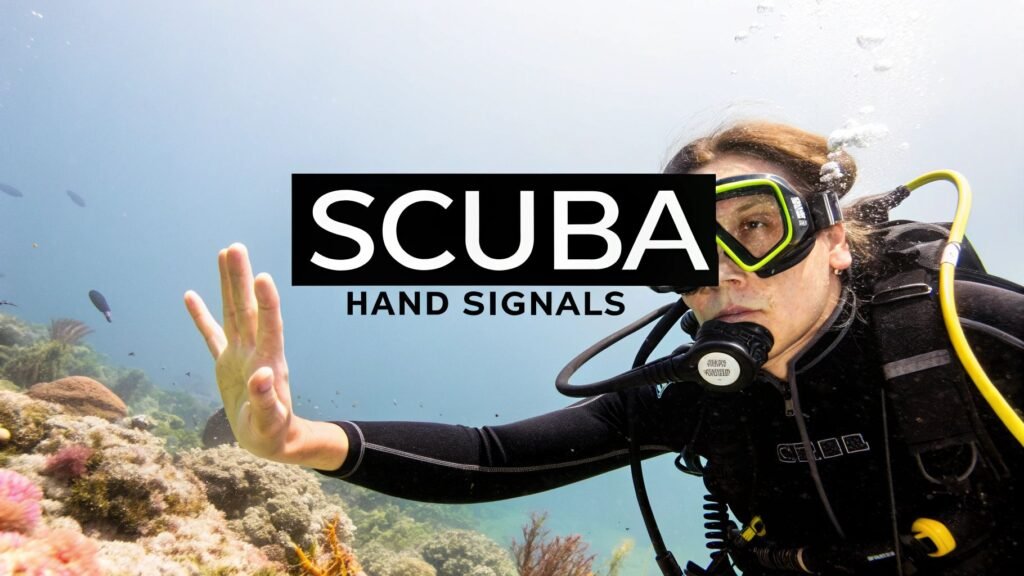
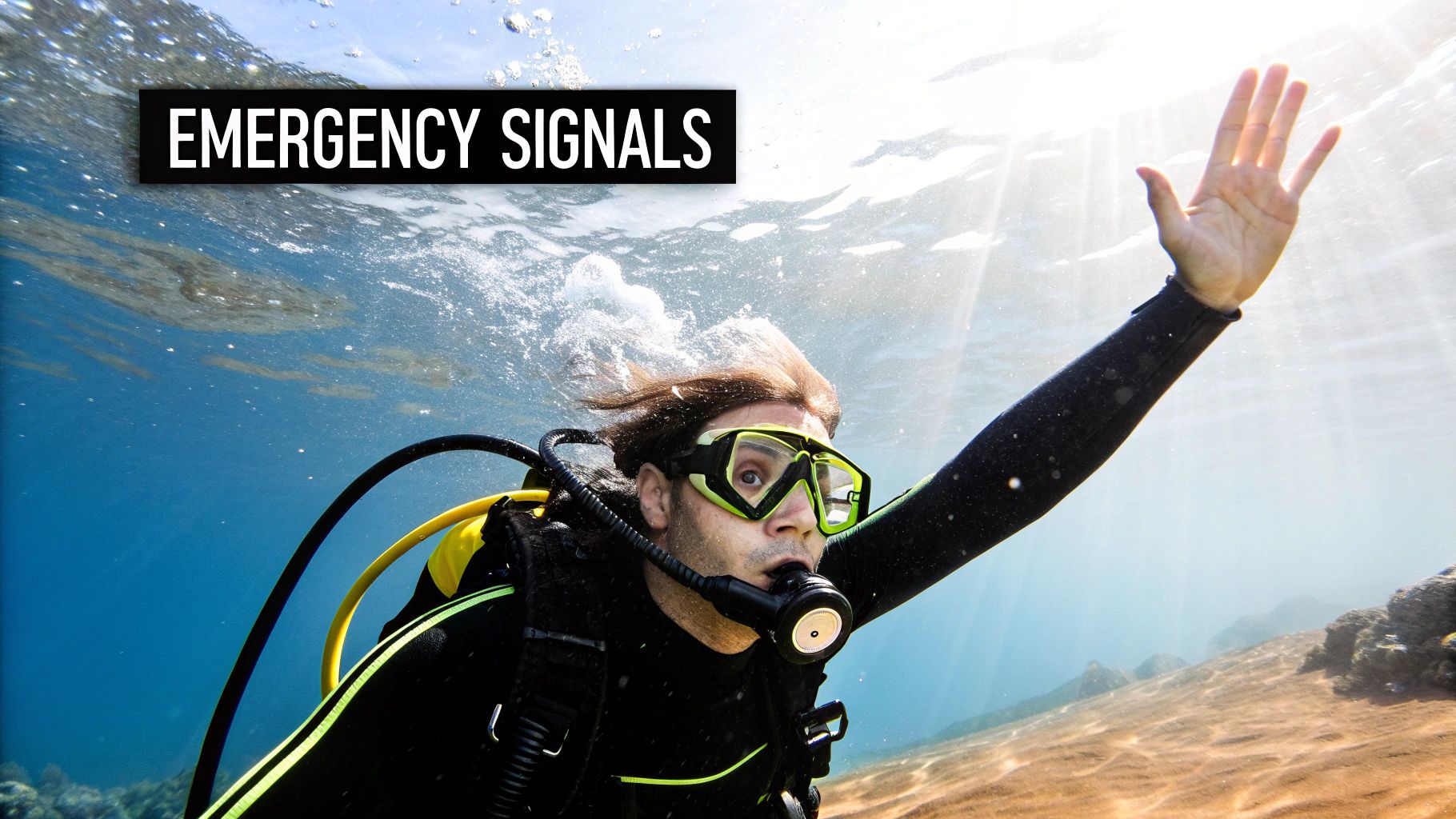
Imagine you're descending into the stunning blue waters of Panglao, surrounded by vibrant coral gardens and a whole world of marine life. In this beautiful, silent world, clear communication is everything—it's the foundation of a safe and amazing dive. Think of scuba hand signals as your underwater language, the lifeline that lets you share incredible moments and stop small hiccups from turning into big problems.
Why Clear Communication is the Heart of Safe Diving
Once you dip beneath the surface, talking is out of the question. That’s where a universal, visual language comes into play. Scuba hand signals are so much more than just gestures; they're the vital tool connecting you to your dive buddy and the rest of your team. It's a silent conversation that keeps everyone safe, comfortable, and on the same page. Without this shared understanding, something as simple as a leaky mask or feeling a bit chilly could quickly become a stressful mess.
Here at Valm Divers, we live by the idea that safety and fun are two sides of the same coin. A confident diver is a happy diver, and that confidence starts with nailing your communication. As a safe and fun company, we make sure every single person who dives with us, from total beginners to seasoned pros, is fluent in this essential language. This turns every dive into a relaxed, thrilling adventure, freeing you up to focus on the breathtaking beauty all around you.
The Foundation of a Successful Dive
A great dive isn't just about what you see; it's about how well you and your buddy work as a team. Crystal-clear signals are the bedrock of that partnership. They let you:
- Constantly check in: A quick "OK?" signal is all it takes for continuous reassurance.
- Manage your air: You can easily show your remaining air pressure, a key factor that shapes the whole dive plan.
- Navigate together: Signals for direction, stopping, or turning keep the group moving as one.
- Point out marine life: Share the buzz of spotting a turtle or a tiny, colourful nudibranch.
This non-verbal chat builds trust and a sense of shared responsibility, making the underwater world a much safer place to explore. The Philippines, with its insane biodiversity, draws divers from all over the globe, which makes having standardised signals even more important. In fact, with so many local and international divers exploring our waters, key updates are sometimes made to boost safety for everyone. For example, a new signal for "I don't feel well" was introduced recently to help divers communicate a general sense of illness more clearly—a massive help for bridging language gaps and getting faster help. You can learn more about the latest updates to universal scuba signals and why they matter.
Ultimately, getting these signals down is your first real step toward becoming a self-reliant, responsible diver. For those who get truly hooked on the sport, this is also a good place to train as a scuba diving professional. Here in the incredible setting of Panglao, you can build your skills and maybe even turn your passion into a career.
The Core Hand Signals Every Diver Must Master
Alright, now that we’re clear on why we need to stay quiet underwater, let's get into the practical side of things. Learning the core scuba hand signals is a bit like learning the most important phrases before travelling to a new country. They’re what let you navigate your surroundings, check on your mates, and share the incredible experience with your dive buddy.
Think of these as the absolute foundation of any underwater chat.
Here at Valm Divers, our philosophy is simple: a fun dive is a safe dive, full stop. We make sure every single diver is confident and comfortable with these signals long before their fins even get wet. It’s all about turning any pre-dive jitters into pure excitement, so you can just relax and soak in the underwater paradise of beautiful Panglao.
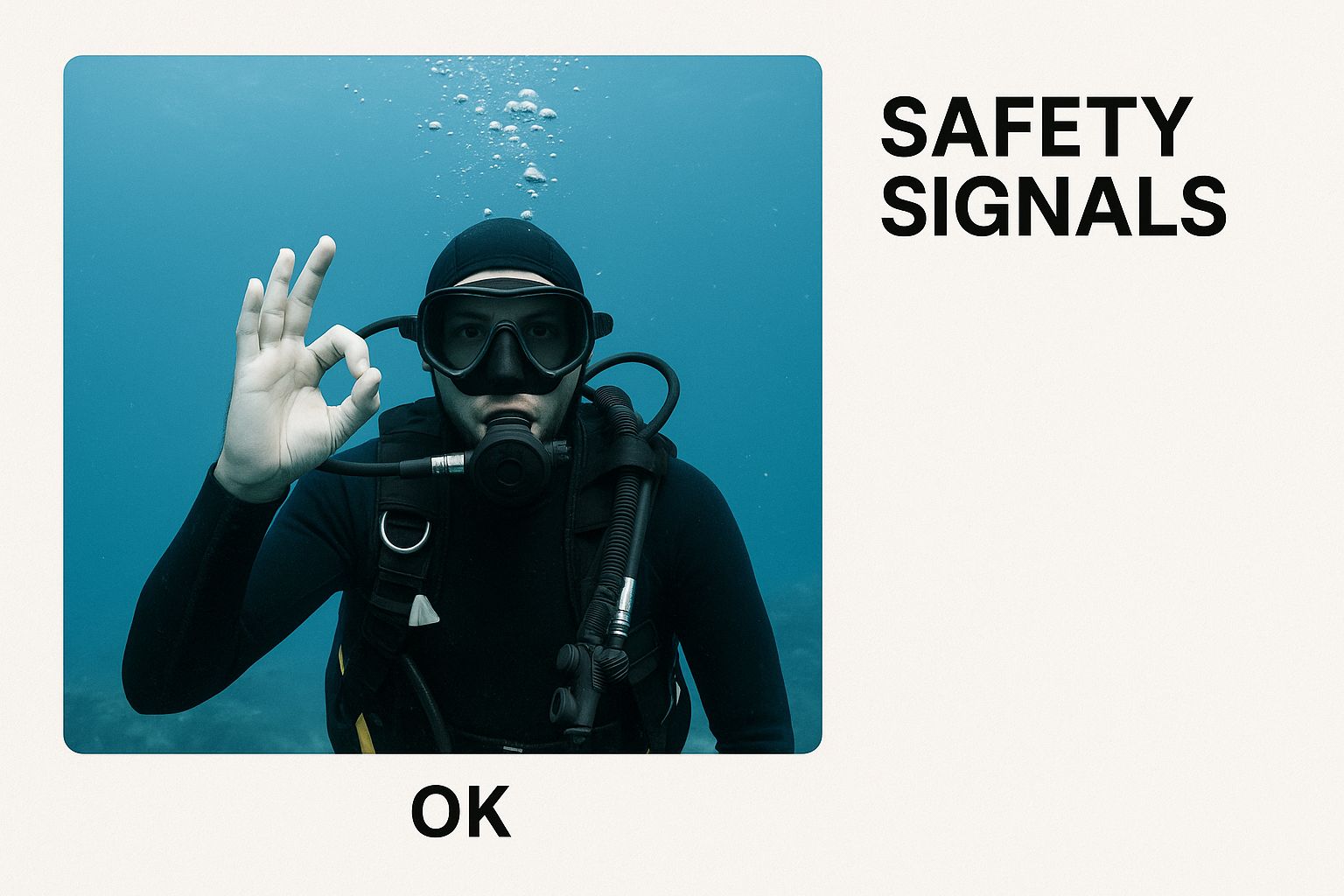
The image below shows one of the first and most important safety signals you'll use on every single dive.

This picture perfectly captures the "OK" signal. It’s a simple gesture, but it’s the heart of dive safety and something you'll be doing constantly. We'll break this one down, plus the other essentials, into three main categories to keep things clear.
Checking In: Status and Well-being
This first group of signals is all about you and your buddy. Think of them as frequent, proactive check-ins throughout a dive to make sure everyone is happy and everything is going to plan.
- The "OK" Signal: This is easily the most common signal you'll use. Form a circle by touching your index finger to your thumb, keeping your other three fingers straight. This signal works as both a question ("Are you OK?") and an answer ("Yep, I'm OK"). It's crucial to use this specific signal underwater, not the thumbs-up you'd use on land.
- The "Something is Wrong" Signal: If you're not okay, you need a clear way to say so. Extend your hand flat, palm down, and wobble it side-to-side like you’re trying to balance a plate. This instantly tells your buddy or guide that you've got a problem. After making this signal, you then point to what's wrong—your ear, your mask, your tank, etc.
- Pointing to Your Ear for an "Ear Problem": This is a very common one, especially as you descend. If you’re finding it tough to equalise the pressure, just point directly at the ear that’s giving you trouble. This tells your buddy you need to slow down, stop, or maybe go up a tiny bit to sort it out.
Managing Movement and Direction
Once you've confirmed everyone is doing fine, you need to agree on where you're all going. These signals are what keep the group together and make sure the dive follows the plan.
- "Go Up" or "Ascend": This is where the thumbs-up gesture gets its true underwater meaning. A clear thumbs-up signal means one thing: "let's go up" or "end the dive". Confusing this with the land-based meaning of "OK" can cut a great dive short, so it's a critical one to get right.
- "Go Down" or "Descend": On the flip side, a thumbs-down signal means "let's go down" or "continue descending". Just like the thumbs-up, it has a very specific meaning that’s completely different from how you'd use it on the surface.
- "Stop" or "Hold": To get everyone to pause, hold up your hand with your palm facing forward, just like a traffic cop. This is your go-to signal to get attention, wait for someone to catch up, or just to hang back for a moment and take in the view.
To help you remember these essential signals, here's a quick reference table. It’s a good idea to review this before every dive trip!
Essential Scuba Hand Signals Quick Reference
| Signal Category | Hand Signal | Meaning | When to Use |
|---|
| Well-being | Index finger to thumb (circle) | OK? / I'm OK | Frequently, as a constant check-in with your buddy. |
| Well-being | Flat hand, wiggling side-to-side | Something is wrong | When you have any problem, followed by pointing to the issue. |
| Movement | Thumb pointing up | Go up / Ascend | When you want to surface or end the dive. Never for "OK". |
| Movement | Thumb pointing down | Go down / Descend | When you want to continue going deeper as per the dive plan. |
| Movement | Hand up, palm forward | Stop / Hold | To get the group's attention or to pause for any reason. |
| Air Supply | Fist against the chest | Low on air | When you reach your agreed-upon reserve pressure (e.g., 50 bar). |
| Emergency | Slicing motion across the throat | Out of air | True emergency only. When you cannot get air from your regulator. |
This table covers the bare minimum you need for a safe dive, but remember, clear communication is a skill that grows with experience.
Air Supply and Emergency Signals
These are, without a doubt, the most important signals you will ever learn. They are your direct line of communication about your life support system and need to be crystal clear. Getting these wrong can have serious consequences.
- "How Much Air?": To ask your buddy how much air they have left, hold two fingers (your index and middle) and tap them on the palm of your other hand. This is a routine check you should be doing regularly throughout the dive.
- "Low on Air": When your tank pressure hits the agreed-upon reserve level (often around 50 bar or 700 PSI), you signal this by making a fist and holding it firmly against your chest. This is the sign that it's time to start heading up safely.
- "Out of Air": This is the big one—the most urgent emergency signal. It’s a slicing motion with a flat hand across your throat. This means you are not getting air from your regulator and need your buddy's alternate air source immediately.
Mastering these core scuba hand signals is the first big step to becoming a confident and capable diver. It's a skill you'll keep refining, and for those who get truly hooked, it can open the door to an amazing career. If you're looking to take that next step, this is a great place to train as a scuba diving professional and start sharing your passion with others. Here in the stunningly clear waters of Panglao, we provide the perfect, safe environment to build your skills from the very beginning.
Speaking 'Fish': Pointing Out Marine Life

While safety and air checks are the absolute foundation of any dive, the real magic kicks in when you start sharing the underwater world with your buddy. This is where scuba diving hand signals transform from a safety checklist into a language of pure joy and discovery. When you're diving somewhere as breathtakingly beautiful as Panglao, every descent is a chance to meet incredible marine life, and you'll definitely want to show your buddy what you've found.
These signals turn what could be a quiet, solitary swim into a thrilling, interactive safari. All of a sudden, you and your buddy are on a shared treasure hunt, silently shouting, "Look at that!" It’s this shared excitement that really creates the most lasting memories.
Here at Valm Divers, we believe having fun is just as crucial as being safe. Our local guides are experts in this silent language, using it to reveal the hidden gems of Panglao’s world-famous reefs. They don't just lead a dive; they curate an experience, pointing out creatures you’d probably swim right past, ensuring your adventure is both completely safe and packed with fun.
The Underwater 'Look at That' Signal
Before you can show your buddy a specific creature, you first have to get their attention and tell them where to look. It’s a simple two-part signal, but it’s incredibly effective.
- First, make the "Look" signal. Just point to your own eyes with your index and middle fingers. This tells your buddy, "Hey, pay attention and look where I'm pointing."
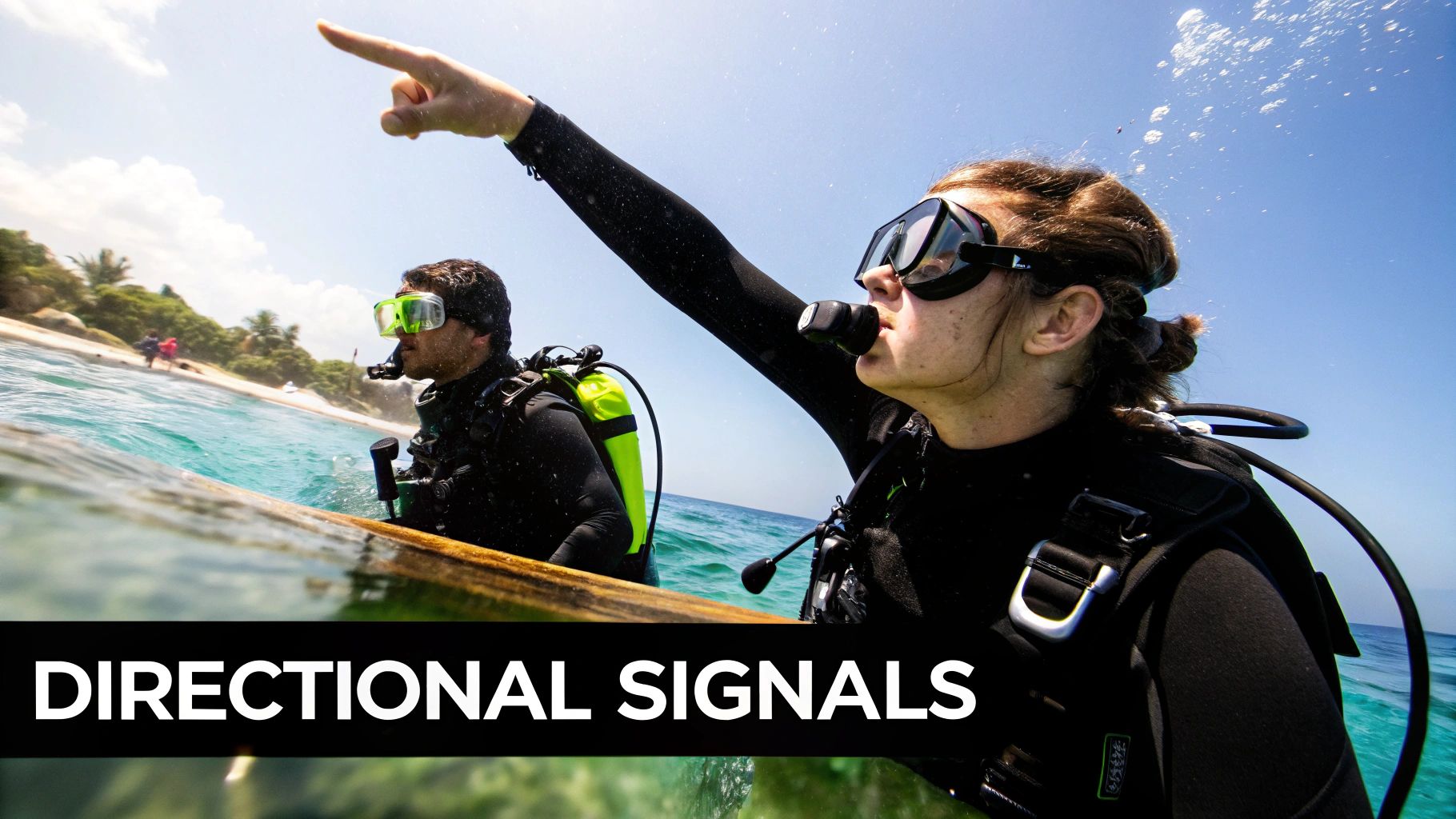
- Next, simply extend your arm and point directly at whatever has caught your eye.
This simple one-two combo is your key to sharing every discovery, from the tiniest shrimp hiding in a coral to a majestic sea turtle gliding by.
Diving in Panglao is an experience for all the senses. The water is warm, the visibility is often crystal clear, and the marine biodiversity is simply off the charts. Learning to 'speak fish' with hand signals is what connects you to that world and to the people you’re sharing it with.
Common Signals for Marine Life
While there are countless local variations and inside jokes between buddies, a core set of scuba diving hand signals for marine life is recognised by divers all over the world. Mastering these will make you a fantastic spotter for your dive group. Here are some of the most common ones you'll be using in the vibrant waters of Panglao:
- Turtle: Place one hand flat on top of the other, palms down. Now, give your thumbs a little wiggle. This perfectly mimics the gentle flapping of a sea turtle's flippers as it gracefully cruises through the water.
- Shark: Take one hand and hold it vertically against your forehead, fingers held tightly together. This gesture represents a shark's iconic dorsal fin. And don't worry—for most divers, spotting a shark is a definite highlight!
- Moray Eel: Make a fist and then open and close your fingers in a "chomping" or "talking" motion. This is a dead ringer for the way a moray eel opens and closes its mouth to breathe.
- Lionfish: Spread all your fingers out like a fan and point them upwards or towards the fish. This signal shows off the lionfish's beautiful but venomous spines.
- Octopus or Squid: Start with a fist, then extend and wiggle your fingers. It’s the perfect imitation of the flowing, wriggling tentacles of a cephalopod on the move.
Learning these signals is all part of the adventure, and there’s no better classroom than the rich marine ecosystem of the Philippines. For those who fall in love with leading these underwater safaris, Panglao is also an incredible place to train as a scuba diving professional. At Valm Divers, we offer courses that can take you from a curious enthusiast to a confident dive leader, ready to share the beauty of the ocean with others. It’s a rewarding journey that starts with learning this very first, fun vocabulary.
Why Your Pre-Dive Briefing is Non-Negotiable
While most scuba hand signals are pretty universal, it’s a classic mistake to assume everyone is speaking the exact same underwater language. It’s surprisingly easy to create an underwater ‘Tower of Babel’, where a simple gesture for 'half tank' in one spot means something completely different just an island away. This is precisely why a thorough pre-dive briefing is one of the most important parts of any safe and enjoyable dive.
That huddle on the boat isn't just a formality; it's a mission-critical meeting. It’s where you, your buddy, and your divemaster all get on the same page. This ensures that when it really counts, your communication is instant and crystal clear. This is the heart of the Valm Divers philosophy: real fun and uncompromising safety are built on a bedrock of clear communication.
We make absolutely sure that before anyone even thinks about hitting the beautiful waters of Panglao, the whole team is speaking the same language. It's how we turn any potential confusion into pure confidence.
Setting the Standard Before You Descend
The pre-dive briefing is your team’s golden opportunity to synchronise your underwater vocabulary. This is especially vital for critical signals that can change depending on the dive school, the training agency, or even the divemaster’s own experience over the years.
Here are a few key signals you absolutely must confirm:
- Air Pressure: How will you signal how much air you have? A flat hand for 100 bar and a fist for 50 bar are common, but never assume. Always confirm.
- Turning the Dive: Is the classic 'thumb up' the only way to end the dive, or is there a specific 'turn around' signal you’ll use first?
- Specific Marine Life: Your guide probably has unique hand signals for local critters that you won't find in any training manual. You don't want to miss that frogfish!
This kind of proactive teamwork is what separates a truly professional and safe operation from the rest. It’s a huge part of what makes diving with Valm Divers both a thrilling adventure and a secure experience.
The ‘Tower of Babel’ Effect in Philippine Diving
The problem of signal variations is very real, even here in the Philippines. The sheer diversity of scuba diving hand signals across the globe has led organisations to push for common standards, but regional "dialects" definitely persist. In popular dive destinations, it’s not uncommon for local shops to develop their own signals, which can easily clash with what visiting divers have learned. In fact, research into diving safety suggests that around 30% of incidents are made worse by communication breakdowns. With over 2 million dive tourists visiting the Philippines in recent years, getting everyone on the same page is vital. If you're curious, you can learn more about the challenges of signal inconsistencies from the experts at DAN.
“The five minutes you spend confirming signals in a pre-dive briefing are the most valuable five minutes of your entire dive day. It eliminates guesswork and builds a bubble of trust and safety around your team.”
This is why we are so meticulous about our briefings. We make sure that no matter where you learned to dive, today, on this boat, we all speak one language.
For those of you inspired by this commitment to safety and leadership, Panglao is a beautiful place to train as a scuba diving professional. You can learn to lead these critical briefings yourself, turning your passion into a deeply rewarding career. The journey to becoming a pro starts right here, with understanding these fundamental safety protocols, which you can explore in our comprehensive professional diving lessons.
Communicating Effectively at The Surface
Your underwater chat might be over, but the safety conversation doesn’t stop until you’re back on the boat. Being able to communicate clearly with the crew, especially when you’re bobbing around in choppy water or a fair distance away, is an absolutely critical skill. This is where big, impossible-to-miss gestures become your best friend.
There are two primary scuba diving hand signals for the surface that every diver needs to know by heart. They’re designed to be seen and understood in a flash, even from a hundred metres away. Put yourself in the crew’s shoes for a second: they’re scanning the waves, constantly on the lookout for divers to pop up. A clear signal from you instantly tells them everything they need to know about your status.
The Two Most Important Surface Signals
These signals are brilliantly simple, direct, and leave zero room for confusion, which is exactly what you want after a good long dive.
- The 'I'm OK' Signal: To show everyone you’re fine and don’t need any help, just make a big 'O' shape by touching both hands together over your head. Think of it as the super-sized, highly visible version of the underwater OK sign. It shouts across the water to the boat crew, "All good here, no rush!"
- The 'I Need Help' Signal: If you’ve got a real problem or an emergency on your hands, you wave one or both arms energetically over your head. This is the universal sign for distress and tells the crew you need them to get to you, and fast.
A professional boat crew is always watching. A clear, confident 'OK' signal is a massive reassurance for them, while a distress wave kicks their response into high gear immediately. Getting your signals right is a huge part of being a team player in the safety effort.
In a place like the Philippines, where a single dive boat might be keeping track of several groups, this surface communication is absolutely vital. A 2024 SCUBAPRO guide highlights that these two signals are taught universally in Philippine dive shops, from the critter havens of Anilao to the stunning reefs of Apo Island. In fact, recent reports from local dive boat operators showed that clear signalling prevented over 75% of potential rescue alerts from becoming full-blown emergencies. That just proves how crucial these simple actions are. You can read more about these universally recognised surface signals and why they’re so important.
This is where diving with a shop like Valm Divers truly makes all the difference. Our crew is expertly trained to keep a constant, vigilant watch, ready to spot and react to these gestures in an instant. We’re firm believers that a safe and fun dive starts the second you hit the water and doesn't end until you’re safely back on the boat, swapping stories about the beautiful Panglao reefs. This deep-rooted commitment to safety and operational excellence is also what makes our shop the perfect place to train as a scuba diving professional, where you learn to manage diver safety at every single stage of the dive.
Take Your Skills Pro in Beautiful Panglao
For some people, scuba is a fantastic way to spend a holiday. For others, it becomes a true passion, a calling that whispers for something more. Once you’ve mastered the essential scuba diving hand signals and felt that incredible thrill of exploring another world, you might just find yourself asking, "What’s next?"
The answer could be the most rewarding journey you’ll ever take: going pro. This isn’t just about adding another certification card to your wallet. It's about stepping up, transforming your love for the sport into a leadership role where you can guide, inspire, and keep fellow divers safe. And there's no better place to take this life-changing step than the stunning island of Panglao.
From Hobby to Profession
Becoming a Divemaster or an Instructor is all about reaching a state of total confidence and competence underwater. It demands a much deeper understanding, where hand signals are no longer just about your own needs. They become the tools you use to manage a group, anticipate what other divers might need, and make sure everyone has a safe and amazing time. It’s a path that requires dedication, for sure, but the payoff is immense.
Here at Valm Divers, we live by the belief that professional training should be two things: rigorous and seriously fun. We’re proud of the safe and fun environment we’ve built, a place where aspiring pros can truly find their footing. Our experienced instructors don’t just read from a textbook; they mentor you, sharing the kind of real-world know-how that turns good divers into great leaders.
Why Panglao is the Perfect Classroom
Just imagine it: you’re conducting your training dives in some of the most vibrant, life-filled waters on the entire planet. Panglao is beautiful, no doubt about it, but it's also a world-class training ground with conditions that are simply perfect for learning.
- Crystal-Clear Waters: When you can see forever, it’s much easier to practice supervising students and nail those skill demonstrations.
- Diverse Dive Sites: You’ll gain experience in all sorts of environments, from the gentle slopes perfect for teaching beginners to more challenging wall dives.
- Rich Marine Life: What better motivation is there than being surrounded by the very wonders you'll one day get to show to new divers?
This incredible setting turns a simple course into an unforgettable life experience. You can get a little taste of the stunning underwater classroom that’s waiting for you in our gallery of Panglao's dive sites.
Choosing to go pro is about more than just a career change. It's about deciding to live a life of adventure, share your passion, and become a guardian of the underwater world.
At Valm Divers, we offer a premier PADI centre where you can turn that dream into your new reality. We’re known as a fantastic place to train as a scuba diving professional, blending top-tier instruction with the relaxed, joyful spirit of diving in the Philippines. If you feel that pull from the ocean and the call to lead, there’s no better place to start your journey than right here with us, in the paradise of Panglao.
Common Questions About Scuba Hand Signals
Even after you've nailed down the basics in your certification course, real-world questions always pop up. It's totally normal. Here, we'll tackle some of the most common queries we hear from divers, whether they're fresh out of their Open Water course or have hundreds of dives under their belt.
Getting your head around these practical scenarios is what builds real confidence, letting you relax and truly enjoy your time underwater.
What Is The Most Important Scuba Hand Signal To Know?
This is a fantastic question, and the honest answer has two parts. The single most critical, life-saving signal is without a doubt "Out of Air"—the distinct slicing motion across your throat. It’s an immediate, no-nonsense signal of a life-threatening problem that demands an instant response from your buddy or guide.
But if we're talking about the most proactively important signal, it has to be the simple "OK" sign. This little gesture, used both as a question and an answer, is the very heartbeat of buddy communication. Regular "OK" checks are what stop small issues from spiralling into big problems, creating a constant, reassuring loop of safety between you and your buddy.
What Should I Do If I Forget A Hand Signal Underwater?
First things first: don't panic. It happens to everyone at some point, especially when you're mesmerised by the underwater world. Simply get your buddy's attention and give the universal "Something is Wrong" signal, which is a flat hand wiggled back and forth like a wobbly plate.
From there, you can point to yourself, your gear, or whatever is causing the issue to give them some context. If there's still confusion, the safest bet is always to end the dive. A slow, controlled ascent together allows you to sort everything out calmly on the surface.
Are Hand Signals Different For Night Diving?
Yes, absolutely. You can't see hands in the dark, so you adapt by using your dive torch. Mastering these variations is non-negotiable for any night dive.
- To signal "OK", you draw a circle on the seabed or in the open water with your torch beam.
- To get attention, you gently wave the beam back and forth in their peripheral vision. Never, ever shine it directly in your buddy's eyes!
Any professional and safety-conscious dive operator, like us here at Valm Divers, will cover these specific torch signals in a detailed pre-dive briefing. This makes sure everyone is on the same page and speaking the same light-based language before you descend into the dark.
This commitment to thorough preparation is what makes Panglao a beautiful and incredibly safe place to explore, day or night. For those who fall in love with this kind of attention to detail and leadership, it's also a phenomenal place to train as a scuba diving professional and share that passion with the world.
Ready to put your knowledge into practice in some of the world's most beautiful waters? Join Valm Divers on Alona Beach for a fun, safe, and unforgettable diving adventure in Panglao. Book your dive or course with us today!