9 Best Places to Scuba Dive in Philippines (2025 Guide)
Published: September 14, 2025
Nestled in the heart of the Coral Triangle, the Philippines boasts an underwater ecosystem of staggering biodiversity, rightfully earning its reputation as a premier global diving destination. With over 7,600 islands, this archipelago offers an unparalleled variety of dive experiences, from the dramatic drop-offs of Tubbataha to the macro-paradise of Anilao. Finding the perfect spot, however, can be a challenge. This guide cuts through the noise to deliver a definitive roundup of the best places to scuba dive in the Philippines, curated for both novice and veteran divers.
We will explore nine world-class locations, detailing not just the "what" but the "how." For each destination, you will find actionable insights on:
Signature Dive Sites: The specific reefs, wrecks, and walls that define the area.
Marine Life Highlights: What you can expect to see, from whale sharks to pygmy seahorses.
Best Time to Visit: Seasonal guides to optimise visibility and critter encounters.
Practical Logistics: How to get there and where to stay for maximum dive time.
This comprehensive list is designed to be your go-to resource for planning your next underwater adventure. We will also touch upon developing your skills, highlighting areas like the beautiful island of Panglao, which is not only a stunning destination but also an excellent place to train as a scuba diving professional. For those seeking a safe, fun, and highly professional training experience, reputable companies like Valm Divers exemplify the high standard of instruction available in the region. Whether you're chasing thresher sharks in Malapascua or exploring World War II wrecks in Coron, this guide provides the detailed information you need to dive into the Philippines' underwater paradise with confidence.
1. Palawan – Tubbataha Reefs Natural Park
For those seeking the pinnacle of Philippine diving, Tubbataha Reefs Natural Park is an undisputed champion and a prime contender for the best places to scuba dive in the Philippines. Located in the heart of the Sulu Sea, this UNESCO World Heritage Site is a remote and protected marine sanctuary. Its isolation is its greatest asset, preserving a level of biodiversity and pristine coral health that is simply unparalleled.
The park consists of two massive atolls, North and South, which create sheer walls that plummet into the abyss. These walls are completely covered in a staggering variety of hard and soft corals, sea fans, and sponges. The currents here bring in a constant supply of nutrients, attracting an incredible density of marine life.
Why It's a Top Dive Destination
Tubbataha is a conservation success story. Strict protection has allowed marine populations to flourish, making encounters with large pelagic species a regular occurrence. Divers can expect to see schools of jacks and barracuda, numerous whitetip and grey reef sharks, and graceful manta rays. The park is also a critical nesting site for hawksbill and green sea turtles.
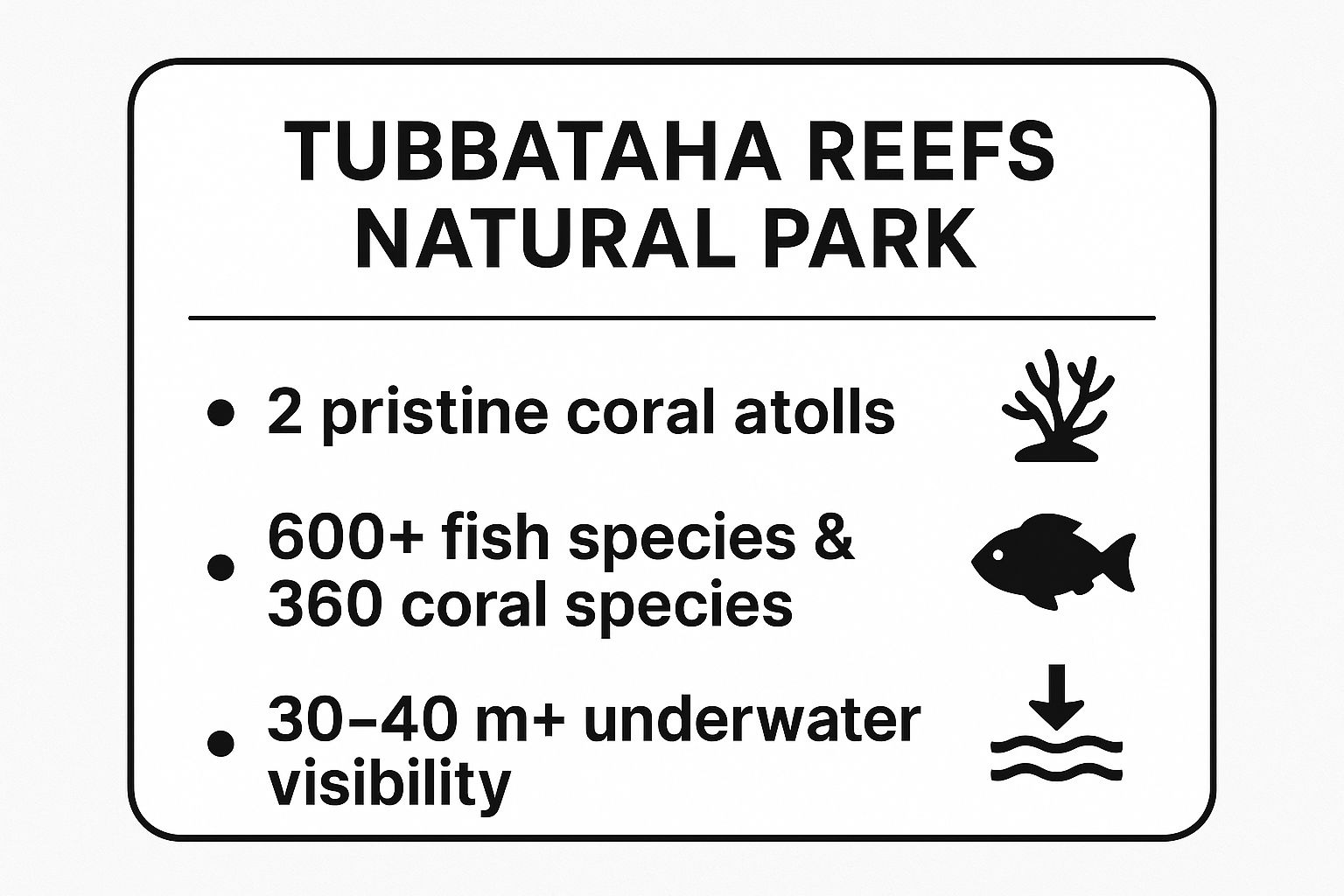
The following infographic highlights just a few key stats that make Tubbataha a world-class destination.
This data paints a picture of a vibrant, healthy, and expansive ecosystem where underwater visibility is consistently spectacular, allowing divers to fully appreciate the grand scale of the reefs.
Practical Tips for Diving Tubbataha
Access to Tubbataha is exclusive and requires careful planning. Here are essential tips for your trip:
Book Well in Advance: The diving season is short (mid-March to mid-June). Liveaboard trips like those on the MV Discovery Palawan or the Philippine Siren are the only way to access the park and often sell out 6-12 months ahead.
Certification and Experience: Due to strong currents and deep dive profiles, a minimum of an Advanced Open Water certification with at least 50 logged dives is typically required.
Essential Gear: Pack seasickness medication for the open-ocean crossing. Bring reef-safe sunscreen to protect the delicate corals, and ensure your camera setup includes both wide-angle (for reefs and sharks) and macro (for smaller critters) capabilities.
2. Bohol – Panglao Island
For divers seeking variety and accessibility, Bohol's beautiful Panglao Island is an essential stop and a strong contender for one of the best places to scuba dive in the Philippines. Connected to the main island of Bohol by a bridge, Panglao serves as a vibrant hub offering a spectacular range of underwater environments. From gentle, sloping coral gardens perfect for training to dramatic walls and unique macro sites, it caters to every level of diver.
The island is renowned for its healthy reefs and impressive biodiversity, particularly around nearby isles. Sites like the Balicasag Island Marine Sanctuary are a testament to successful conservation, where vibrant coral ecosystems team with life, including vast schools of jacks and resident sea turtles. The ease of access from the popular Alona Beach makes it simple to embark on daily dive trips.
Why It's a Top Dive Destination
Panglao's strength lies in its diversity and its ability to deliver world-class diving for everyone. Beginners can build confidence in calm, shallow waters, while advanced divers can explore deep walls at sites like Arco Point or hunt for rare critters. The area is a macro photographer's dream, with an abundance of nudibranchs, frogfish, and ghost pipefish.
The local dive community is well-established and professional. For those looking to advance their skills or even turn pro, the environment is ideal. Reputable dive centres like Valm Divers offer a safe and fun atmosphere, providing excellent training from open water courses right up to professional divemaster certifications, ensuring a high standard of education and underwater exploration.
Practical Tips for Diving Panglao
Planning a dive trip to Panglao is straightforward. Here are some key tips to make the most of your visit:
Accommodation and Access: Stay near Alona Beach for the widest selection of dive shops, restaurants, and accommodation. This area serves as the primary departure point for most dive boats.
Expand Your Itinerary: Combine your diving holiday with Bohol's famous land-based tours. A trip to see the iconic Chocolate Hills and the tiny, endangered tarsiers is a must-do.
Essential Gear and Skills: A macro lens is highly recommended for underwater photography to capture the incredible small-scale marine life. Consider a night dive, as this is when different creatures, like crustaceans and cephalopods, become active.
Respect the Sanctuaries: Always follow local guidelines when diving in marine protected areas like Balicasag. Maintain good buoyancy control to avoid contact with the delicate corals.
3. Batangas – Anilao
Often celebrated as the birthplace of scuba diving in the Philippines, Anilao is a world-renowned haven for macro photography and muck diving enthusiasts. Situated just a couple of hours' drive south of Manila, its accessibility makes it one of the most popular and best places to scuba dive in the Philippines for both local and international divers. This destination offers an astonishing concentration of biodiversity, particularly tiny, rare, and bizarre critters hiding in plain sight.
Anilao’s dive sites are incredibly varied, ranging from gentle sandy slopes perfect for muck diving to vibrant coral gardens and dramatic mini-walls. Sites like Secret Bay are legendary for their critter populations, while Cathedral Rock, with its iconic cross, teems with colourful reef fish. This diversity, combined with its proximity to the capital, ensures Anilao remains a top-tier dive destination year-round.
Why It's a Top Dive Destination
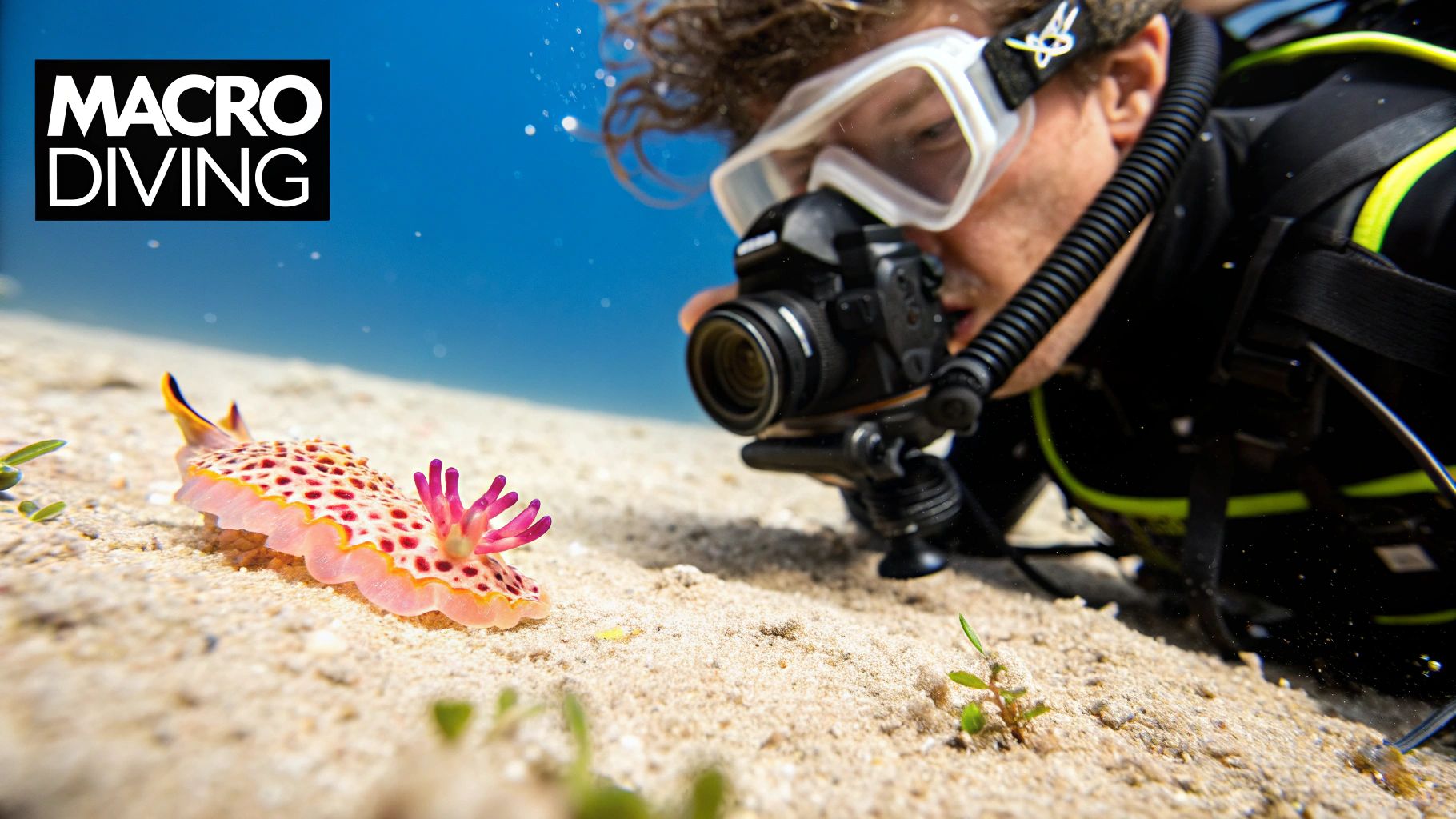
Anilao is the epicentre of the Coral Triangle's biodiversity, boasting an unparalleled number of marine species. It is a macro paradise where divers can spend entire dives exploring a tiny patch of sand and discover dozens of unique creatures. Nudibranchs of every shape and colour, flamboyant cuttlefish, ghost pipefish, and rare frogfish are common sightings.
The area is not just for macro lovers; sites like Sombrero Island offer enjoyable wall dives with healthy corals and frequent turtle sightings. Its collection of dedicated dive resorts, like Planet Dive Anilao and Aquaventure Reef Club, pioneered the local dive scene and continue to offer exceptional services, cementing Anilao’s status as a premier underwater playground.
Practical Tips for Diving Anilao
To make the most of your trip to this macro capital, a little preparation goes a long way. Here are some key tips:
Gear Up for Macro: A good macro lens, a pointer stick (for stability, not for touching marine life), and powerful underwater strobes are essential to capture the stunning details of Anilao's tiny residents.
Slow Down: The key to muck diving is to move slowly and patiently. The most incredible critters are often camouflaged and easily missed if you are rushing. Trust your dive guide-they are experts at spotting the unseeable.
Book a Dedicated Resort: Staying at a dive-centric resort ensures you have access to experienced guides, dedicated camera rooms, and a schedule built around diving. Booking weekday trips can help you avoid the weekend crowds from Manila.
Advance Your Skills: Anilao's calm conditions and expert instructor base make it an ideal place for specialty courses like Underwater Photography or even professional-level training to become a divemaster or instructor.
4. Palawan – Coron
For divers with a passion for history and unique underwater typography, Coron in Palawan offers an experience unlike any other, firmly establishing it as one of the best places to scuba dive in the Philippines. This destination is world-renowned for its fleet of sunken World War II Japanese warships, creating an underwater museum that lies in the calm, clear waters of Coron Bay. This historical significance is beautifully contrasted with stunning natural features, including vibrant reefs and ethereal freshwater lakes.
The main draw is the collection of remarkably preserved shipwrecks, sunk during an American air raid in 1944. These wrecks, such as the massive Okikawa Maru and the well-preserved Irako, lie at various depths, offering everything from recreational fly-by dives to challenging technical penetrations deep within their rusted hulls. Beyond the wrecks, divers can explore the unique thermoclines of Barracuda Lake or the dramatic limestone formations of Twin Lagoons.
Why It's a Top Dive Destination
Coron provides a rare blend of adventure, history, and natural beauty. The wrecks have transformed into spectacular artificial reefs, now teeming with marine life. Penetrating the cargo holds and engine rooms of these historical giants is an unforgettable experience, offering a window into the past. This unique offering, combined with the island's magnificent karst landscapes, makes Coron a truly bucket-list destination for divers of all interests.
The area is not just about historical artefacts; it’s a living ecosystem. The wrecks are encrusted with corals and sponges, attracting large schools of batfish, fusiliers, and groupers. Macro enthusiasts will also find an abundance of nudibranchs, scorpionfish, and crustaceans hiding in the metallic structures.
Practical Tips for Diving Coron
To make the most of your wreck diving adventure in Coron, proper preparation is key. Here are some essential tips:
Get the Right Certification: While some wrecks are accessible to Open Water divers, an Advanced Open Water certification is highly recommended to explore the deeper and more impressive sites, like the Irako wreck. A wreck specialty course is also a great investment.
Essential Gear: A good underwater torch is non-negotiable for exploring the dark interiors of the shipwrecks. Many divers also opt for a 3mm wetsuit for comfort and protection.
Respect the Sites: These wrecks are historical gravesites and protected marine habitats. Divers are strictly reminded not to touch or take anything from the sites to preserve their integrity for future generations.
Plan Beyond Diving: Coron's topside beauty is as compelling as its underwater world. Combine your dive trip with island hopping tours to visit Kayangan Lake and the Twin Lagoons.
5. Southern Leyte – Sogod Bay
For divers hoping to swim alongside the ocean's largest fish, Southern Leyte offers one of the most intimate and reliable whale shark encounters in the country. Sogod Bay is a massive, nutrient-rich body of water that has become globally recognised as a prime destination for marine megafauna, solidifying its place among the best places to scuba dive in the Philippines. Unlike more crowded spots, Sogod Bay provides a less commercialised and more natural setting for these incredible interactions.
The bay's deep waters and healthy plankton blooms create the perfect feeding ground for whale sharks. Beyond these gentle giants, the area boasts pristine coral gardens, steep walls, and muck diving sites teeming with unique macro life. The diversity here is astounding, from large schools of fish and dolphins to more elusive creatures found along the coastline.
Why It's a Top Dive Destination
Sogod Bay is a haven for conservation-focused diving. The local community and dive operators, such as Sogod Bay Scuba Resort, actively participate in marine research and protection, ensuring the whale shark population remains healthy and undisturbed. This commitment to sustainable tourism means divers experience respectful, ethical encounters.
The area is also a hotspot for biodiversity. Besides whale sharks, divers frequently spot various reef sharks, rays, and occasionally even manta rays and pilot whales. The walls are adorned with vibrant soft corals and sea fans, while the sandy slopes host a wealth of critters, making it a fantastic destination for underwater photographers.
Practical Tips for Diving Sogod Bay
Proper planning will help you make the most of your trip to this remarkable bay. Here are key tips to consider:
Best Time to Visit: While whale sharks can be spotted year-round, the peak season runs from December to May. This period offers the highest chance of multiple sightings during your visit.
Book with a Dedicated Resort: Staying at a dive-focused resort like Peter's Dive Resort ensures you have access to experienced guides and well-organised whale shark spotting trips. They have deep local knowledge and prioritise sustainable practices.
Respect the Wildlife: Always maintain a proper distance from whale sharks and never touch them. Listen to your guide's briefing on responsible interaction to ensure a safe and positive experience for both you and the animals.
Essential Gear: A wide-angle lens is a must for capturing the immense scale of the whale sharks. Supporting local conservation initiatives through your chosen operator helps protect this unique marine environment for future generations.
6. Bohol – Balicasag Island
Just off the coast of the beautiful island of Panglao, Bohol, lies Balicasag Island Marine Sanctuary, a shining example of successful community-based conservation. Its inclusion as one of the best places to scuba dive in the Philippines is well-earned, offering divers a chance to witness a thriving ecosystem that has recovered spectacularly. This small, circular island is fringed by a pristine reef that drops off into dramatic, current-swept walls.
Balicasag's fame comes from its incredible density and diversity of marine life. The protected sanctuary status has allowed fish populations to rebound, creating a vibrant underwater spectacle. The island features several distinct dive sites, including the famous Black Forest, known for its rare black coral, and Cathedral Wall, where fissures and overhangs create a dramatic seascape.
Why It's a Top Dive Destination
Balicasag is a testament to what effective marine protection can achieve. The area is a haven for sea turtles, with green and hawksbill turtles seen on nearly every dive. The coral gardens are in superb condition, and the walls are patrolled by massive schools of jacks that form breathtaking, swirling vortexes. Divers can also spot large Napoleon wrasse, barracuda, and a rich variety of reef fish.
The island’s proximity to Panglao makes it easily accessible for day trips, combining world-class diving with the convenience of a developed tourist hub. Panglao itself is a stunning destination, making the entire area a complete package for any diver.
Practical Tips for Diving Balicasag
To make the most of your Balicasag adventure and contribute to its preservation, keep these tips in mind:
Dive with a Reputable Operator: Partner with a shop that respects sanctuary rules. A great choice in Panglao is Valm Divers, known for its commitment to safety and fun. They offer fantastic day trips and are an excellent place to train as a scuba diving professional.
Respect Sanctuary Rules: Pay the required marine park fees, which directly fund conservation efforts. Do not touch or take anything from the reef, and use only reef-safe sunscreen to protect the delicate corals.
Master Buoyancy: The coral formations here are fragile. Excellent buoyancy control is essential to avoid accidental contact. The currents can also be variable, so diving with an experienced local guide is crucial.
Best Time to Visit: The best diving conditions are during the dry season, from November to May, when visibility is at its peak and the seas are calmest.
7. Mindoro – Puerto Galera
For divers seeking variety and accessibility, Puerto Galera on the island of Mindoro is a legendary destination and a strong contender for one of the best places to scuba dive in the Philippines. Recognised as a UNESCO Man and Biosphere Reserve, its waters are a microcosm of the Coral Triangle's immense biodiversity. Its proximity to Manila makes it a popular weekend getaway, but its world-class dive sites keep divers coming back for more.
The area boasts over 40 dive sites, offering everything from gentle, sloping coral gardens perfect for beginners to exhilarating drift dives through deep canyons for seasoned veterans. This diversity is Puerto Galera's greatest strength, catering to every skill level and interest. The underwater topography includes vibrant walls, dramatic drop-offs, and even a few small wrecks, all teeming with a spectacular array of marine life.
Why It's a Top Dive Destination
Puerto Galera is renowned for its exceptional macro life and is a paradise for underwater photographers. Critters like flamboyant cuttlefish, blue-ringed octopus, and a countless variety of nudibranchs can be found hiding among the corals. At the same time, sites like the Verde Island Passage offer powerful currents that attract larger species, including schools of tuna and jacks, making it a truly comprehensive diving hub.
The well-established diving infrastructure, with numerous reputable dive centres like Asia Divers, makes it an ideal place to get certified or advance your training. It’s also a fantastic location to train as a scuba diving professional, with many shops offering Divemaster and Instructor courses in a vibrant and supportive environment.
Practical Tips for Diving Puerto Galera
To make the most of your trip to this underwater hotspot, keep these tips in mind:
Perfect for Certifications: If you're looking to get your Open Water certification or take a specialty course, the calm conditions at sites off Sabang Beach are ideal.
Try Drift Diving: For an adrenaline rush, advanced divers should head to "The Canyons." This thrilling drift dive carries you through three deep gorges, often with sightings of schooling trevally and sweetlips.
Explore Verde Island: Considered the "centre of the centre" of marine biodiversity, a day trip to Verde Island is a must. The currents are strong, but the reward is pristine reefs and an incredible density of fish life.
Book Affordable Packages: Due to the high concentration of dive resorts, Puerto Galera offers some of the most competitive and affordable diving packages in the country, making it excellent value for money.
8. Siquijor Island
For divers yearning for an authentic, off-the-beaten-path experience, Siquijor Island is a mystical gem that easily ranks among the best places to scuba dive in the Philippines. Known more for its traditional healers and folklore, its underwater world remains a well-kept secret, offering pristine reefs and an escape from the crowds found in more commercialised destinations. The island's charm lies in its tranquillity, both above and below the water.
Siquijor's coastline is fringed with healthy coral gardens, gentle slopes, and dramatic walls that are teeming with life. Diving here often feels like exploring a private underwater sanctuary, with sites that are accessible yet feel completely untouched. The marine protected areas around the island are a testament to the local community's commitment to conservation.
Why It's a Top Dive Destination
Siquijor delivers an intimate diving experience where quality trumps quantity. The coral health is exceptional, supporting a vibrant ecosystem of reef fish, macro critters, and frequent sea turtle sightings. Dive sites like Paliton Wall offer a stunning vertical drop adorned with sea fans and corals, while the underwater cave systems near Salagdoong Beach provide a unique thrill for qualified divers.
The island’s laid-back atmosphere and less-developed tourism infrastructure mean you get to enjoy the underwater spectacle without the typical dive boat traffic. This serene environment makes every dive feel personal and exploratory, perfect for those looking to connect deeply with the marine world.
Practical Tips for Diving Siquijor
Planning is key to making the most of this enchanting island. Here are some tips to guide your adventure:
Book in Advance: While quieter than other spots, it's wise to book accommodations and dive packages ahead of time, especially during peak season, to secure your spot with a reputable dive centre.
Respect Local Culture: Siquijor is rich in tradition and local beliefs. Always be respectful of the community, both on land and by practising responsible tourism underwater.
Combine with Island Tours: Dedicate time to explore Siquijor's enchanting waterfalls, historic churches, and mystical balete trees to fully appreciate the island's unique character.
Certification and Gear: Most sites are suitable for all levels, but bring your certifications. While rentals are available, carrying essential personal gear like your mask and computer is recommended for comfort and reliability.
9. Malapascua Island, Cebu
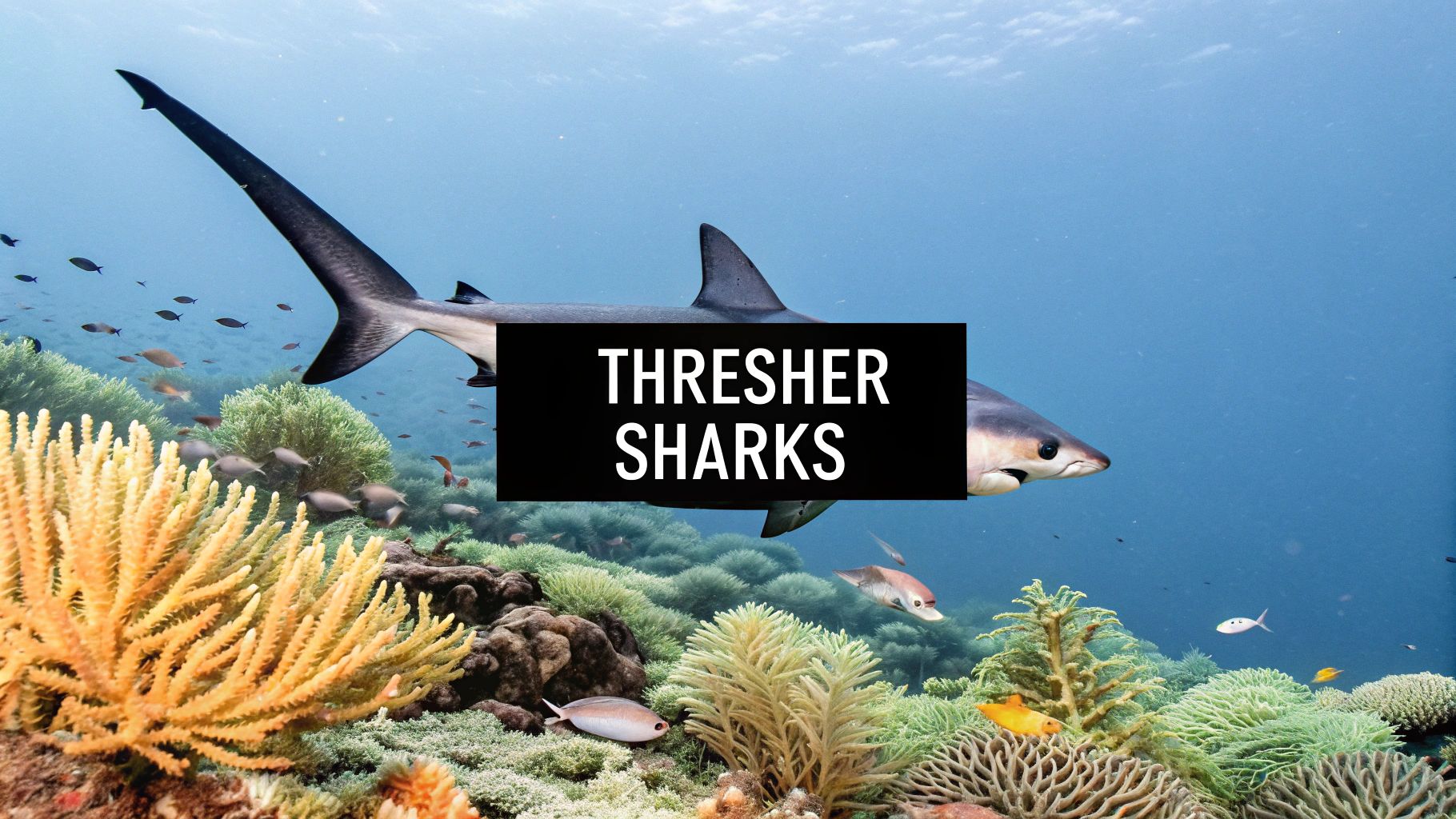
For divers with a passion for sharks, Malapascua Island is a legendary name and a non-negotiable entry on any list of the best places to scuba dive in the Philippines. This tiny, idyllic island north of Cebu is renowned globally as the only place on Earth where recreational divers can reliably encounter the elusive pelagic thresher shark. These magnificent creatures, with their distinctive long, whip-like tails, visit a submerged seamount called Monad Shoal every morning to be cleaned by wrasses.
This unique and predictable natural phenomenon has turned Malapascua into a premier destination for underwater photographers and shark lovers. Beyond the threshers, the island offers a surprisingly diverse range of diving experiences, from vibrant coral reefs and intriguing macro life to fascinating underwater tunnels and caves at sites like Gato Island.
Why It's a Top Dive Destination
Malapascua's fame is built on the thresher sharks of Monad Shoal. The opportunity to witness these graceful predators up close is a bucket-list experience. The island's dive community, pioneered by operators like Thresher Shark Divers and Evolution Diving Resort, has established strict protocols to ensure the encounters are respectful and sustainable. Divers kneel behind a rope line, allowing the sharks to go about their business undisturbed, providing incredible, natural viewing opportunities.
The island also serves as a fantastic base for diverse diving. Gato Island is a protected sea snake and fish breeding sanctuary with tunnels and caves, while sites like Chocolate Island are perfect for spotting colourful critters. This variety ensures that every dive offers something new, from huge pelagics to tiny nudibranchs.
Practical Tips for Diving Malapascua
Planning is key to making the most of your Malapascua shark adventure. Here are some essential tips:
Book Early Morning Dives: Thresher shark sightings are most frequent and reliable just before and during sunrise. Be prepared for a 4:30 AM wake-up call to get the best chance of a spectacular encounter at Monad Shoal.
Get Your Advanced Certification: Monad Shoal's cleaning station is at a depth of around 30 metres (100 feet). An Advanced Open Water certification is required by all dive operators to join these dives.
Bring the Right Gear: A wide-angle lens is essential for capturing the full scale of the thresher sharks. Stay calm, control your buoyancy, and avoid sudden movements or flash photography to ensure the sharks remain comfortable.
Respect the Rules: Always follow your dive guide's instructions. Adhering to the "no-touch, no-chase" policy protects the sharks and preserves this unique underwater spectacle for future generations.
Our journey through the Philippines has unveiled a diver's paradise, a sprawling archipelago where every island offers a new underwater kingdom to discover. We have explored the remote, pristine sanctuary of Tubbataha Reefs Natural Park, a UNESCO World Heritage site teeming with pelagic giants. We have marvelled at the macro wonders of Anilao in Batangas and delved into the historic, haunting shipwrecks of Coron in Palawan.
From the elusive thresher sharks of Malapascua to the resident whale sharks of Sogod Bay, the sheer diversity of marine encounters is staggering. We have drifted along the vibrant walls of Balicasag Island, explored the mystical coral gardens of Siquijor, and navigated the rich, accessible dive sites of Puerto Galera. Each location presents its own unique character, its own signature species, and its own reason to be counted among the best places to scuba dive in the Philippines.
The key takeaway is clear: the Philippines offers a world-class diving experience for every skill level and interest. Whether you are a novice seeking your first certification or a seasoned technical diver chasing new depths, this country has a site that will challenge and enchant you.
Turning Your Dive Dreams into Reality
Planning your Philippine diving adventure requires more than just picking a destination; it's about preparing for the experience. Here are some actionable next steps to guide you:
Assess Your Skill Level: Be honest about your certification and experience. A beginner will thrive in the calm, accessible sites of Panglao or Puerto Galera, while an advanced diver might set their sights on the challenging currents and deep walls of Tubbataha.
Align with the Seasons: Remember that the Philippines has distinct wet and dry seasons which vary by region. To maximise your chances of clear visibility and calm seas, plan your trip during the optimal diving window for your chosen destination. For example, Tubbataha's liveaboard season is strictly from mid-March to mid-June.
Choose Your Focus: What do you want to see? If your goal is wrecks, Coron is unparalleled. If macro photography is your passion, Anilao is your macro capital. For a perfect blend of stunning reefs, diverse marine life, and incredible island life, places like Panglao, Bohol offer an unbeatable combination.
Invest in Professional Guidance: The quality of your dive operator can make or break your trip. Research dive centres with excellent safety records, experienced guides who know the local sites intimately, and a commitment to marine conservation.
Your dive journey in the Philippines is not just about ticking sites off a list. It is about immersing yourself in the heart of the Coral Triangle, understanding the delicate ecosystems, and contributing to their preservation through responsible tourism.
This archipelago is more than just a collection of dive spots; it is a vibrant, living underwater tapestry. The beauty of Panglao extends beyond its white-sand beaches, right down to its flourishing coral gardens. This is a place where your passion for the underwater world can truly flourish, whether you're taking your first breath underwater or aspiring to become a dive professional. The opportunities for growth, learning, and pure awe are boundless, making the Philippines an essential destination for any serious diver.
Ready to explore the underwater wonders of Bohol? For a safe, fun, and truly unforgettable experience in one of the best places to scuba dive in the Philippines, connect with the expert team at Valm Divers. Whether you're a beginner or looking to go pro, they provide top-tier training and guided dives around the beautiful island of Panglao.
We are the premier boutique dive shop located right on the stunning Alona Beach in Panglao, Bohol, offering fun-dives, trips, and excursions as well as SSI scuba dive courses from introductory and novice levels up to professional level divemaster and instructor.