7 of the Best Diving Place in Philippines for 2025
Published: September 9, 2025
An archipelago of over 7,600 islands, the Philippines rests at the very apex of the Coral Triangle, the planet's centre for marine biodiversity. This unique geography makes it a non-negotiable pilgrimage for any serious diver. Finding the single best diving place in Philippines is a monumental task, as the options range from deep, current-swept walls patrolled by sharks to serene coral gardens teeming with colourful macro life. This guide is designed to cut through the noise, providing a definitive roundup of the country's most spectacular underwater destinations.
We will explore seven world-class locations, from the remote UNESCO World Heritage site of Tubbataha Reefs to the vibrant muck diving paradise of Anilao. For each spot, you'll get actionable insights on what to see, the required skill level, and how to get there. We will also highlight why beautiful Panglao in Bohol is not just a premier dive destination but also an ideal place to train as a scuba professional, especially with a safe and fun company like Valm Divers. Whether you are planning your first certification dive or are a seasoned instructor looking for your next adventure, this list details the essential underwater experiences the Philippines has to offer.
1. Palawan – Tubbataha Reefs Natural Park
Tubbataha Reefs Natural Park is not just a dive spot; it is an underwater pilgrimage. Recognised as a UNESCO World Heritage Site, this protected area lies in the middle of the Sulu Sea, a remote sanctuary accessible only via liveaboard boats. Its isolation has preserved one of the most pristine and biodiverse marine ecosystems on the planet, rightfully earning its reputation as the crown jewel of Philippine diving. This is arguably the best diving place in the Philippines for seasoned divers seeking a world-class, untouched environment.
The park consists of two massive atolls, the North and South Atolls, and the smaller Jessie Beazley Reef. Divers are treated to staggering 100-metre vertical walls, extensive coral gardens, and encounters with a breathtaking density of marine life. Its protected status means the reefs are teeming with life, from tiny macro critters to massive pelagic species.
Why It's a Top-Tier Destination
Tubbataha's global acclaim is well-documented. It was featured extensively in the BBC’s Blue Planet documentary and is a frequent subject of National Geographic expeditions. Its remote location and the limited diving season (March to June) ensure the reefs remain pristine and undisturbed, offering an unparalleled underwater spectacle. Divers can expect to see huge schools of jacks and barracuda, numerous reef shark species, manta rays, and, if they are lucky, the elusive whale shark.
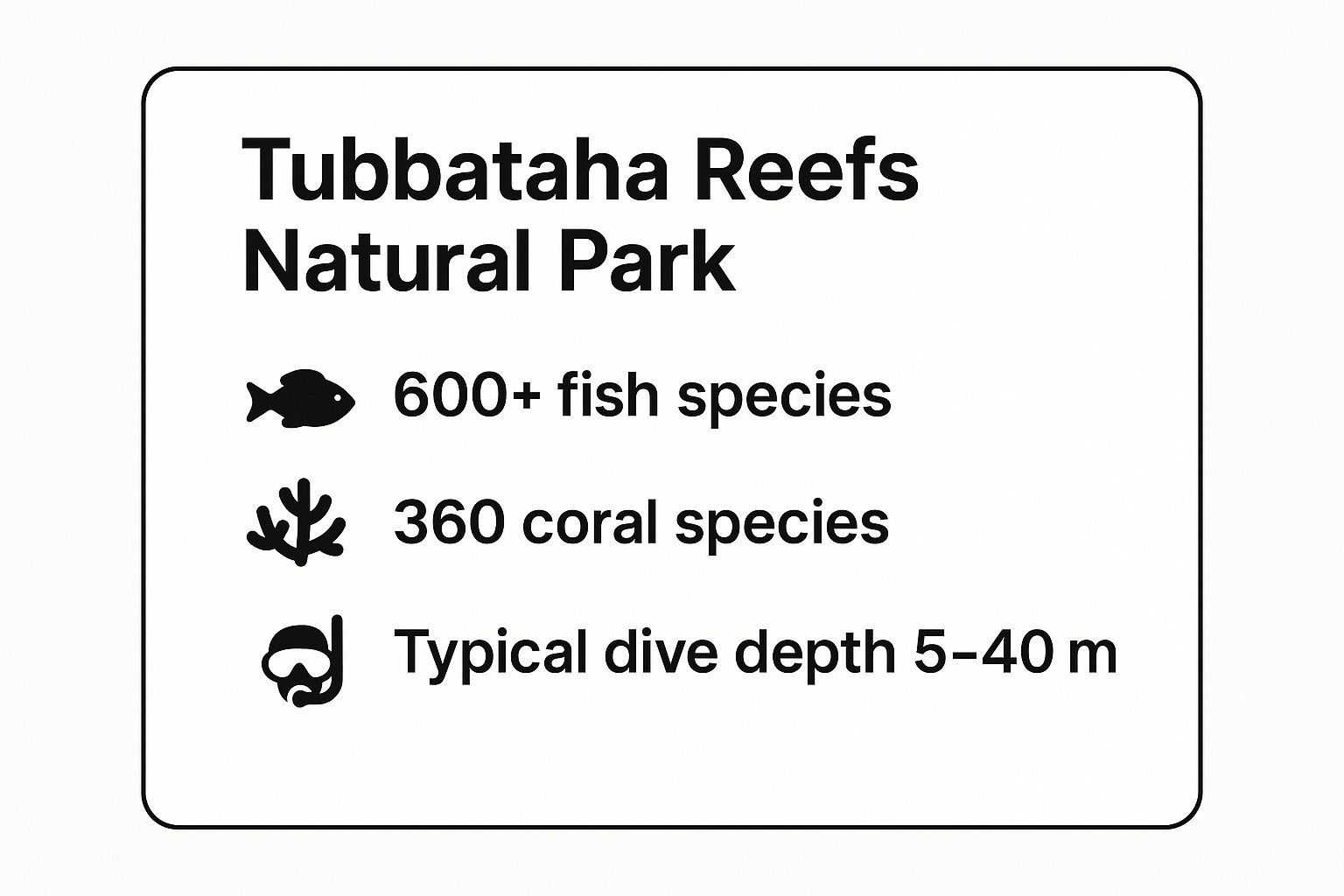
The infographic below offers a quick summary of the incredible biodiversity found in Tubbataha Reefs Natural Park.
These numbers highlight the sheer density of life, making every dive a vibrant and dynamic experience unlike any other.
Practical Tips for Your Trip
Due to its exclusivity and popularity, planning is crucial.
Book Well in Advance: Liveaboard spots are limited and in high demand. It is essential to book your trip at least 6 to 12 months in advance.
Essential Packing: The journey to the reef is a 10-hour open-sea crossing. Pack seasickness medication to ensure a comfortable trip.
Protect the Reef: Only reef-safe sunscreen is permitted within the park to protect the delicate coral ecosystem.
Insurance is Key: Confirm your dive insurance provides coverage for remote locations and potential emergency evacuations.
2. Bohol – Panglao Island
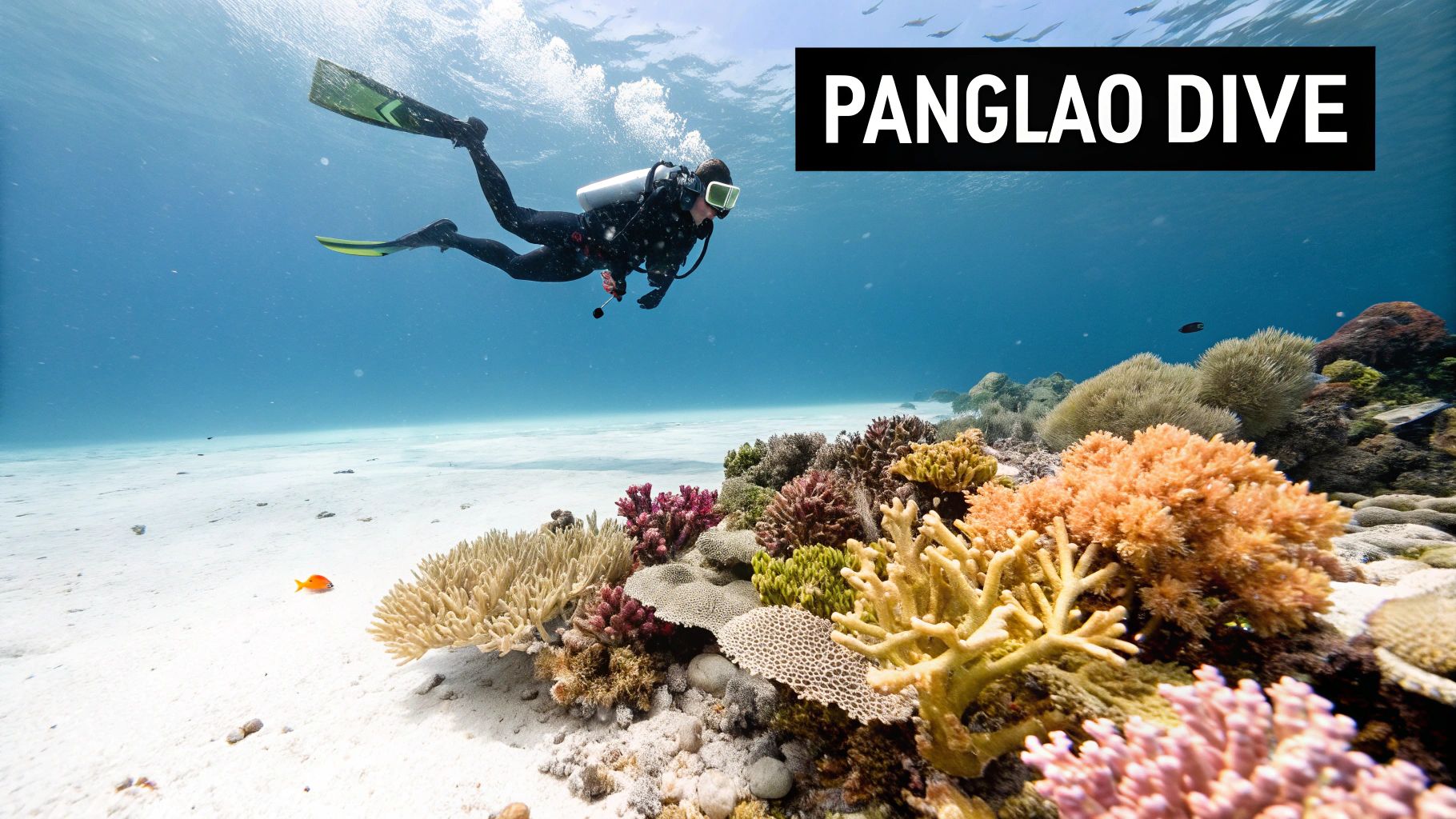
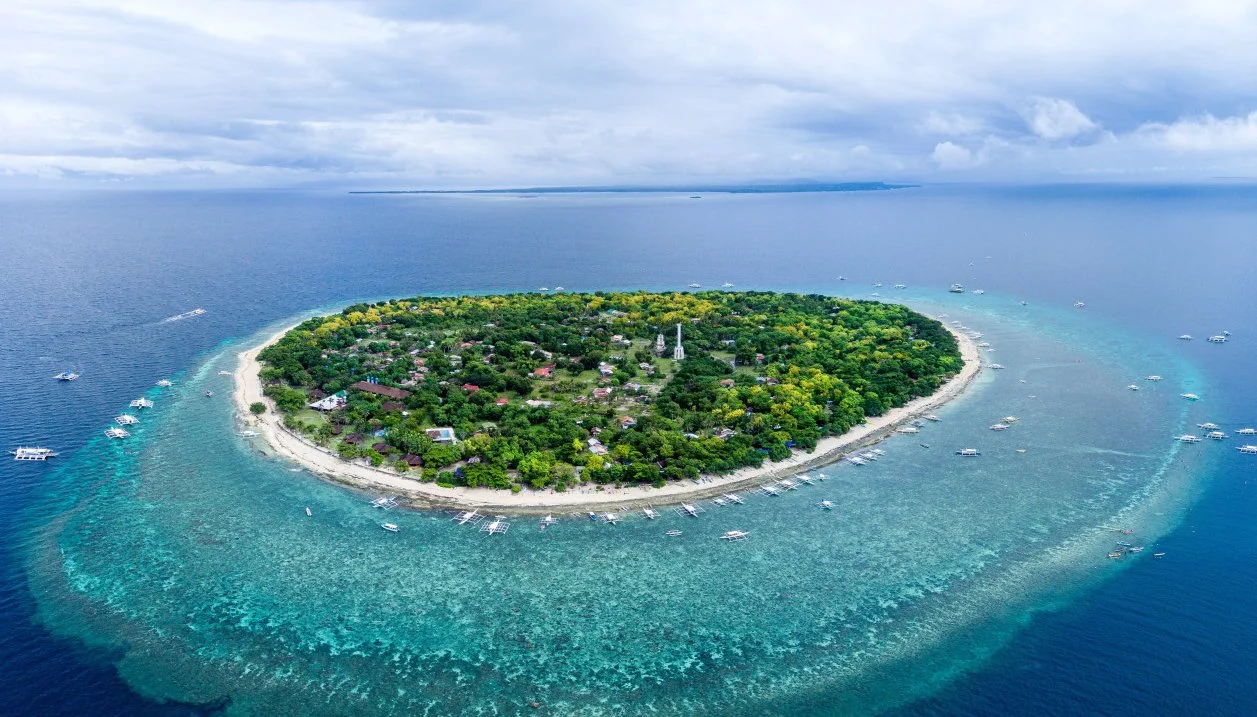
Panglao Island in Bohol is beautiful and offers some of the most accessible yet breathtaking diving experiences in the archipelago. Its dramatic underwater landscapes, featuring steep walls, vibrant coral gardens, and sloping reefs, make it a diver's paradise. The island's strategic location near the deep Bohol Sea trench attracts a rich variety of marine life, from tiny macro critters to majestic pelagic species, cementing its status as a contender for the best diving place in the Philippines for divers of all skill levels. The beautiful island of Panglao provides a stunning backdrop for an unforgettable underwater adventure.
The area is renowned for its exceptional dive sites, particularly around Balicasag Island, a small marine sanctuary just a short boat ride from Panglao. Here, divers can encounter vast schools of jacks, sea turtles, and pristine coral formations. The accessibility, combined with the sheer density of marine biodiversity, makes Panglao an ideal destination for both new divers and seasoned professionals looking for spectacular underwater encounters.
Why It's a Top-Tier Destination
Panglao's reputation is bolstered by its frequent appearances in Asian diving magazines and its popularity among international dive tour groups, particularly from Japan and Korea. Major travel guides like Lonely Planet and extensive promotion through the Philippine Department of Tourism's campaigns have highlighted its world-class dive sites. Moreover, Panglao has become a hub for scuba diving education. It’s an excellent place to train as a scuba diving professional, with numerous PADI centres offering courses from beginner to instructor level. A safe and fun company is essential for a great experience, and operators like Valm Divers provide a professional environment for learning and exploring the rich waters of Balicasag Island.
Practical Tips for Your Trip
To make the most of your Panglao diving adventure, a little planning goes a long way.
Dive Early: To avoid the crowds at popular sites like Balicasag and enjoy the best visibility, schedule your dives for the early morning.
Gear Up for Drifts: Some sites, such as Puntod Island, can have strong currents. Bringing a reef hook is advisable for a more comfortable and controlled drift diving experience.
Stay in Panglao: For convenience and easy access to dive shops and boats, choose accommodation directly on Panglao Island rather than in Tagbilaran City.
Explore Beyond the Reef: Enhance your trip by combining your diving excursions with land-based tours to see the iconic Chocolate Hills and the adorable Philippine tarsiers.
3. Batangas – Anilao
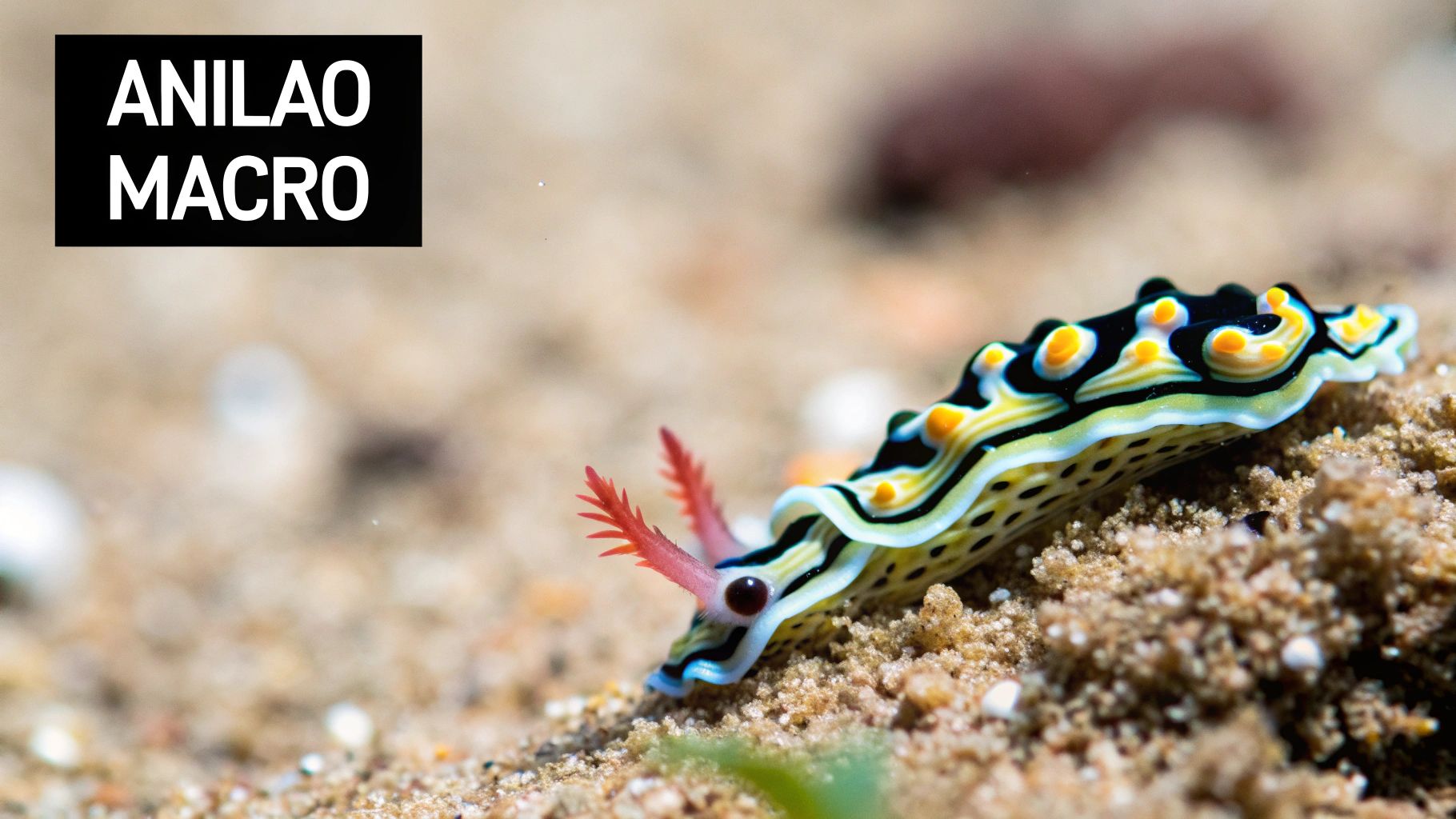
Anilao is revered as the birthplace of scuba diving in the Philippines and stands as a global epicentre for macro underwater photography. Located just a few hours' drive from Manila, its accessibility makes it a popular weekend getaway, but its underwater offerings are what truly make it legendary. This area is a muck diving paradise, where the volcanic sandy slopes hide an astonishing array of tiny, bizarre, and rare critters, making it a strong contender for the best diving place in the Philippines for macro enthusiasts.
The sheer biodiversity here is staggering, with dive sites like Secret Bay, Twin Rocks, and Beatrice Rock offering everything from vibrant coral gardens to critter-filled sandy bottoms. Divers can spend hours searching for pygmy seahorses, flamboyant cuttlefish, mimic octopuses, and a kaleidoscope of nudibranch species. Its reputation has been solidified by pioneers like Scott Tuason and Jun V Lao and is celebrated through annual international underwater photography competitions.
Why It's a Top-Tier Destination
Anilao's distinction lies in its unparalleled density of macro life and its role as a premier training ground. It's a fantastic place to hone your skills, with numerous PADI dive centres offering speciality courses from underwater photography to nitrox diving. For those aspiring to go pro, the structured training environment here is ideal. Similarly, operators in other beautiful locations like Panglao, such as the safe and fun company Valm Divers, also offer excellent pathways to become a scuba diving professional. The focus on small, often-overlooked creatures in Anilao teaches divers to slow down and appreciate the intricate details of the marine ecosystem.
The area offers over 50 dive sites, catering to all experience levels. Whether you are a beginner taking your first breaths underwater or a seasoned photographer with a complex camera rig, Anilao provides a rewarding and endlessly fascinating underwater classroom.
Practical Tips for Your Trip
To make the most of your Anilao adventure, a little planning goes a long way.
Bring the Right Gear: A macro lens for your underwater camera is essential to capture the incredible small life. A good dive torch is also crucial, especially for night dives.
Avoid the Crowds: Anilao is a favourite destination for Manila residents. Visit on weekdays to enjoy quieter dive sites and more personalised attention from guides.
Book a Package: Many resorts offer all-inclusive dive packages that combine accommodation, meals, and multiple dives per day, providing excellent value.
Go Night Diving: The reef transforms after sunset. Night dives reveal a different cast of characters, including hunting octopuses, colourful crustaceans, and elusive bobbit worms.
4. Mindoro – Puerto Galera
Just a few hours south of Manila, Puerto Galera is a diving mecca and a designated UNESCO Man and Biosphere Reserve. Situated on the island of Mindoro, it sits at the heart of the Verde Island Passage, often dubbed the "centre of the centre of marine shore fish biodiversity." This accessibility and incredible marine richness make it a magnet for both novice and experienced divers, solidifying its place as one of the most versatile and best diving places in the Philippines.
Puerto Galera offers a staggering variety of dive experiences within a compact area. Divers can explore vibrant coral gardens in shallow bays, navigate thrilling drift dives through deep channels, and discover fascinating muck diving sites. The area is famous for its diverse marine life, from colourful nudibranchs and frogfish to larger residents like sea turtles and reef sharks, all supported by the nutrient-rich currents of the passage.
Why It's a Top-Tier Destination
Puerto Galera's reputation is built on its remarkable biodiversity and accessibility. It's a key site for marine biology research and has been featured in numerous conservation documentaries focused on the Verde Island Passage. Its proximity to the capital makes it a favourite weekend destination for local diving clubs and associations, who value its wide range of dive sites suitable for all skill levels. It's a perfect spot to see the Philippines' underwater treasures without the need for remote travel.
The sheer density of dive sites means you can experience something new every day, from the dramatic drop-offs at Canyons to the serene beauty of the Coral Garden. It is an ideal environment not just for recreational diving but also for professional training. For those looking to become dive professionals, training in a location with varied conditions like Puerto Galera provides an excellent foundation, much like the comprehensive courses offered in other top dive hubs such as beautiful Panglao.
Practical Tips for Your Trip
To make the most of your Puerto Galera adventure, careful planning is recommended.
Get Certified: Many of the most rewarding sites, like the Canyons, are best suited for advanced divers. Consider getting your advanced open water certification to unlock these incredible spots.
Master the Currents: The Verde Island Passage is known for its strong currents. It's an excellent place to practice drift diving, but always dive with an experienced local guide who understands the conditions.
Explore Verde Island: A day trip to nearby Verde Island is a must. The diving here is considered some of the most pristine in the area, with breathtaking visibility and an explosion of marine life.
Embrace Local Culture: Take some time to visit the local Mangyan communities to learn about their unique culture and heritage, adding a meaningful dimension to your trip.
5. Leyte – Sogod Bay
While other destinations boast dramatic walls and wrecks, Sogod Bay in Southern Leyte offers an experience that is both grand and deeply personal: consistent, ethical encounters with whale sharks. Often overshadowed by more famous locales, this bay is emerging as one of the world's most reliable spots for swimming with these gentle giants, particularly from November to May. Its growing renown makes it a strong contender for the best diving place in the Philippines for sustainable marine megafauna interactions.
Beyond the whale sharks, Sogod Bay is a diverse and healthy marine ecosystem. The area features vibrant coral gardens, impressive muck diving sites, and the renowned Napantao Fish Sanctuary, which presents a spectacular vertical wall blanketed in hard and soft corals. The bay's underwater topography is dramatic and full of life, offering something for divers of all interests, from macro photographers to wide-angle enthusiasts.
Why It's a Top-Tier Destination
Sogod Bay’s fame is rooted in its commitment to sustainable tourism. Unlike crowded, unregulated sites, the whale shark interactions here are managed with a focus on conservation, drawing praise from marine biologists and conservation groups. The area is frequently featured in dive magazines and highlighted by the Philippine Department of Tourism for its responsible approach. This focus ensures the animals are respected and the encounters feel natural and un-commercialised.
The bay’s pristine coral reefs, particularly at Napantao, are a testament to effective local marine protection. The combination of guaranteed big animal sightings with flourishing, colourful reefs provides a complete and rewarding dive holiday. Divers can spend their mornings with whale sharks and their afternoons exploring some of the most vivid coral walls in the Visayas.
Practical Tips for Your Trip
To make the most of your Sogod Bay adventure, careful planning is essential.
Book Whale Shark Tours Early: The best conditions and visibility for whale shark encounters are in the early morning. Book your tour in advance to secure a spot.
Respect the Wildlife: Strictly follow the interaction guidelines. Do not touch, chase, or use flash photography with the whale sharks to ensure a safe and positive experience for both you and the animals.
Stay in Padre Burgos: This town serves as the main hub for dive operations and offers the most convenient access to the bay's premier dive sites.
Gear Up for Giants: An underwater camera with a wide-angle lens is essential to capture the immense scale and beauty of the whale sharks.
6. Camiguin Island
Known as the "Island Born of Fire," Camiguin offers a diving experience shaped by its volcanic origins. This small, pear-shaped island in Northern Mindanao provides some of the most unique underwater landscapes in the country, from sunken historical sites to vibrant, healthy reefs thriving on volcanic slopes. Its combination of natural beauty, rich history, and excellent marine biodiversity makes it a standout choice for divers seeking an adventure off the beaten path.
The island’s volcanic geology has created an underwater topography unlike any other. Divers can explore sites featuring black sand, underwater hot springs, and dramatic rock formations. The reefs are incredibly healthy, hosting a wide array of coral species and a dense population of reef fish. This is a place where every dive offers a unique blend of geological wonder and marine discovery, solidifying its place as a strong contender for the best diving place in the Philippines for those who appreciate unusual underwater environments.
Why It's a Top-Tier Destination
Camiguin's growing reputation has been fuelled by adventure travel bloggers and diving photographers drawn to its distinct underwater landscapes. It has been featured in geological diving documentaries and promoted by Philippine tourism boards as a premier eco-tourism destination. The island’s most famous site, the Sunken Cemetery, offers a hauntingly beautiful dive where divers can explore old tombstones now encrusted with coral and teeming with fish.
Other notable sites like Old Volcano and White Island showcase pristine coral gardens and a surprising density of marine life. Divers often encounter frogfish, pygmy seahorses, turtles, and large schools of jacks and fusiliers. The intimate, less-crowded feel of the dive sites allows for a more personal and exploratory underwater experience.
Practical Tips for Your Trip
To make the most of your Camiguin adventure, careful planning is recommended.
Book Flights Early: Flights to Camiguin are limited. Booking your domestic travel well in advance is crucial to secure a spot and get reasonable fares.
Explore the Sunken Cemetery: This iconic site is a must-do. Plan a dive here during good visibility to fully appreciate the unique blend of history and marine life.
Combine Activities: Camiguin is more than just a dive destination. Enhance your trip by trekking its volcanoes, visiting majestic waterfalls like Katibawasan Falls, and relaxing in natural hot springs.
Stay Local: Opt for local guesthouses and homestays to get an authentic cultural experience and support the island's community.
7. Siquijor Island
Siquijor, often dubbed the ‘Mystical Island of Healing,’ offers a diving experience as enchanting as its folklore. This serene destination provides an escape from the crowds, revealing an underwater world that is pristine, vibrant, and largely untouched. Its reputation is built on crystal-clear waters, healthy coral reefs, and a tranquil atmosphere that allows for truly immersive dives. For divers seeking both cultural depth and exceptional marine encounters, Siquijor presents a unique and compelling case as one of the best diving places in the Philippines.
The island is encircled by marine sanctuaries that protect its rich biodiversity. Divers can explore gentle sloping reefs, dramatic walls, and intricate coral gardens. The marine life here is a mix of colourful reef fish, unique macro critters, and occasional visits from larger species like sea turtles. The calmness of the waters and excellent visibility make it an ideal spot for both novice divers and underwater photographers.
Why It's a Top-Tier Destination
Siquijor’s allure has been captured by cultural anthropologists and adventure travel writers drawn to its authentic blend of Filipino mysticism and natural beauty. Unlike more commercialised spots, the island offers a peaceful retreat where dives are unhurried and personal. Its growing popularity among sustainable tourism advocates is a testament to the community’s commitment to preserving its natural and cultural heritage, ensuring the dive sites remain healthy and unspoiled for years to come.
The island’s unique identity provides an experience that goes beyond just diving. You can explore a world of traditional healers, enchanting waterfalls, and centuries-old churches, making your surface intervals as memorable as your time underwater. This combination of world-class diving and rich local culture is what truly sets Siquijor apart.
Practical Tips for Your Trip
To make the most of your mystical island adventure, careful planning is essential.
Respect Local Culture: The island's mystical traditions are deeply ingrained. Be respectful of local customs, especially if you choose to visit traditional healers or sacred sites.
Bring Cash: Banking facilities are limited on the island. It is advisable to bring enough cash to cover your expenses, as not all establishments accept credit cards.
Equipment Check: While some dive shops exist, rental options can be limited. Consider bringing your own basic gear, such as your mask and fins, for comfort and fit.
Embrace the Full Experience: Combine your diving schedule with cultural tours. Exploring the island’s inland attractions provides a fantastic complement to its underwater wonders.
Top 7 Philippine Diving Sites Comparison
Destination
Implementation Complexity 🔄
Resource Requirements ⚡
Expected Outcomes 📊
Ideal Use Cases 💡
Key Advantages ⭐
Palawan – Tubbataha Reefs
High (advanced diving certification, limited season) 🔄🔄🔄
High (liveaboard costs, remote logistics) ⚡⚡
Exceptional marine biodiversity, large pelagics, excellent visibility 📊📊📊
Unique underwater volcano features and quiet atmosphere ⭐
Siquijor Island
Moderate (limited dive infrastructure) 🔄🔄
Low (budget-friendly, limited services) ⚡
Pristine reefs, excellent visibility, cultural immersion 📊
Adventure travelers wanting culture plus diving
Pristine conditions with cultural and mystical experiences ⭐
Your Next Dive Awaits in the Philippines
The Philippine archipelago, a sprawling mosaic of over 7,000 islands, presents a staggering diversity of underwater experiences that can truly fill a lifetime of dive logs. We've journeyed through some of the country's most celebrated dive regions, from the remote, pristine wilderness of Tubbataha Reefs Natural Park in Palawan to the macro photography paradise of Anilao in Batangas. We explored the vibrant walls of Puerto Galera, the gentle giants of Sogod Bay, and the unique volcanic seascapes of Camiguin and Siquijor. Each destination offers a distinct window into the heart of the Coral Triangle, confirming why this nation is consistently hailed as a global diving mecca.
Choosing the best diving place in the Philippines is not about finding a single definitive answer; it's about discovering the perfect match for your personal diving aspirations. Are you seeking the thrill of a liveaboard adventure to a UNESCO World Heritage site? Or perhaps you prefer a land-based operation that combines spectacular reef dives with the charm of island life? The key takeaway is to align your choice with your certification level, your passion for specific marine life-be it whale sharks or pygmy seahorses-and your logistical preferences. The true beauty of Philippine diving lies in its sheer variety and accessibility for every type of diver.
From First Breath to Professional Guide
For divers looking to blend exceptional underwater exploration with top-tier education and a genuinely welcoming community, the beautiful island of Panglao, Bohol, stands out as a premier choice. It's more than just a collection of world-class dive sites like Balicasag and Pamilacan; it's a vibrant hub where the diving community thrives. The island's accessibility, stunning white-sand beaches, and comprehensive infrastructure make it an ideal base for both holiday divers and those with professional ambitions.
Panglao is a place where you can seamlessly transition from an Open Water Diver to a seasoned professional. It's a prime location to undertake advanced courses, specialities, or even embark on the journey to become a Divemaster or Instructor. For this, choosing the right dive centre is paramount. A reputable operator prioritises not just the thrill of the dive but the foundation of safety, skill, and environmental responsibility. Companies like Valm Divers have built their reputation on precisely this ethos, fostering an environment that is both safe and incredibly fun. They ensure that every descent is a memorable learning experience, guided by experts who are passionate about sharing the magic of Bohol's underwater world, making it a fantastic place to train as a scuba diving professional. The Philippines isn't just a place to dive; it's a place to grow as a diver, and your next great adventure is waiting just beneath the waves.
Ready to experience the world-class reefs and professional training environment of Bohol? Connect with Valm Divers to plan your courses or fun dives in beautiful Panglao. Discover for yourself why they are a trusted choice for a safe, fun, and unforgettable underwater adventure in one of the best diving places in the Philippines by visiting their website at Valm Divers.
We are the premier boutique dive shop located right on the stunning Alona Beach in Panglao, Bohol, offering fun-dives, trips, and excursions as well as SSI scuba dive courses from introductory and novice levels up to professional level divemaster and instructor.