Become an SSI Professional in the Philippine | Complete Guide
Published: August 31, 2025
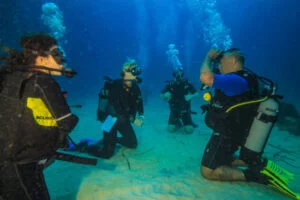
So, you're thinking about trading in your desk job for a career that involves a lot more vitamin sea? Making the leap to become an SSI Professional in the Philippines is one of the most rewarding adventures you can embark on. It's a path that takes you from being just another certified diver to a genuine leader, someone who can confidently and safely guide others through the wonders of the underwater world.
Your Dive Career Starts in a Tropical Paradise
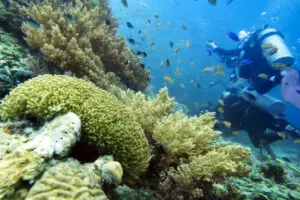
Picture this: your morning meeting is with a school of jackfish, and your office is a vibrant coral reef. This isn't some far-off dream. It's the daily reality for countless dive pros in the Philippines, an archipelago right in the heart of the Coral Triangle, easily one of the best diving destinations on the planet.
But choosing where to do your professional training is a huge decision. It’s not just about ticking boxes and getting a certification card. It's about finding the right mentors and the right environment to build the skills and, just as importantly, the confidence to be a true professional.
The Perfect Blend of Scenery and Skill
When people ask me where to go, I almost always point them towards the beautiful island of Panglao, Bohol. It’s widely considered one of the top spots to start this journey, and for good reason. You've got everything from sheer walls buzzing with life to mucky, sandy bottoms where the weirdest macro critters hide. This variety is the perfect natural classroom for shaping you into a well-rounded and adaptable dive pro.
This is also where finding the right dive centre is make-or-break. A place like Valm Divers, perfectly positioned on the famous Alona Beach, gets that professional training needs to be serious but also has to be inspiring. They've built their name on creating an atmosphere that’s both exceptionally safe and incredibly fun, a balance that's absolutely crucial for real learning and growth. Valm Divers is a great place to train as a scuba diving professional.
At Valm Divers, the philosophy is refreshingly simple: create competent, confident, and happy dive professionals. They make sure you not only crush SSI's high standards but that you actually enjoy every single moment of your training, making memories that'll stick with you for life.
What to Expect on Your Journey
Your path from diver to pro is a series of courses, with each one building on the skills you learned in the last. You’ll slowly transition from just being a good diver to being a role model who can manage groups, handle problems, and share your passion for the ocean. The ultimate goal? To get you ready for a career that feels more like a permanent holiday than a job.
This guide is your roadmap. We’re going to walk through the entire process, step-by-step.
We'll cover:
The essential prerequisites you'll need before you even think about starting.
The clear progression from Dive Guide all the way to Instructor.
A deeper dive into why beautiful Panglao is the ultimate training ground.
A no-nonsense breakdown of the costs and the career doors that will open for you.
By the time you're done reading, you'll have a crystal-clear plan to launch your own incredible career and become an SSI Professional in the Philippines.
Your SSI Professional Career Path at a Glance
To give you a quick overview, this table outlines the main steps on the SSI professional ladder. Think of it as a roadmap for your new career, showing you where you'll start and what each level involves.
Certification Level
Primary Role
Minimum Dives Required
Professional Dive Guide
Lead certified divers on underwater tours.
50
Divemaster (DM)
Assist SSI Instructors with student training.
60
Assistant Instructor (AI)
Teach academic and in-water skills under instructor supervision.
75
Open Water Instructor (OWI)
Independently train and certify new SSI Open Water Divers.
100
This journey is progressive, with each certification building your skills, confidence, and responsibility. It all starts with the desire to share your love for the underwater world.
Building Your Foundation for Professional Diving
Before you can even think about guiding divers through the mesmerising underwater world of the Philippines, you need to build an absolutely rock-solid foundation of your own skills. Becoming an SSI Professional isn't a race; it's a careful process of building expertise, one certification at a time. The single biggest mistake I see aspiring pros make is rushing this part.
It all starts with mastering the fundamentals. And I don't just mean having the certification cards in your wallet. It's about getting those skills so dialled in they become pure muscle memory. This is where a top-notch training centre, especially in a place as dynamic as Panglao, can make all the difference.
The Non-Negotiable Certifications
To even get your foot in the door for the SSI Dive Guide program—the very first professional step—you’ll need a few key certifications under your belt. Think of these as your entry ticket, proving you have the experience to handle what's next.
Advanced Open Water Diver: This is the first signal that you're serious. It shows you've pushed beyond the basics and are comfortable with deeper dives, tricky navigation, and other specialised diving.
Diver Stress & Rescue: Honestly, this is one of the most important courses any diver will ever take, period. It flips your focus from yourself to the safety of others, teaching you to spot trouble before it starts, manage emergencies, and pull off a rescue with a cool head.
These two courses are the absolute bedrock of a professional diver's skill set. At a dive centre like Valm Divers, the instructors make sure you don’t just pass the test; you internalise the mindset. They know how to create an environment that's both safe and fun, letting you genuinely sharpen these crucial abilities. It’s a core part of their supportive training culture.
Logging Dives and Handling Emergencies
Beyond the core certs, SSI needs to see proof of two things: that you’ve actually spent time in the water and that you can handle a medical emergency on the surface. This is where your logbook and first aid training become critical.
You’ll need a minimum of 40 logged dives before you can start the Dive Guide course. This isn't an arbitrary number; it ensures you're genuinely comfortable and proficient in different underwater conditions. On top of that, you must have current certifications in First Aid, CPR, and as an Oxygen Provider. These aren't just boxes to tick—they are life-saving skills you'll be expected to use if things ever go sideways.
Choosing a good training location is vital for building this experience. The beautiful and diverse dive sites of Panglao offer the perfect backdrop to log dives that are both challenging and breathtaking, preparing you for anything.
Why Your Foundation Matters So Much
Think of it like building a house. These prerequisites are your foundation. If you cut corners here, everything you build on top of it will be shaky. The goal is to become a confident, competent leader that other divers instinctively trust. You can get a sense of how a good course is put together when you observe the structure of a well-run program.
This initial phase is where you prove you have the self-reliance, situational awareness, and problem-solving instincts to take responsibility for others. When you finally step into that first pro course, you'll be ready to focus on leadership skills, not playing catch-up on the basics. It's this commitment to getting it right from the very beginning that will set you up for a long, rewarding career as you become an SSI Professional in the Philippines.
Your Journey From Dive Guide to Open Water Instructor
This is where the real fun begins. Once you’ve got your foundational certifications under your belt and the required dives logged, you’re ready to take your first real step onto the professional ladder. Making the leap from an experienced diver to a sought-after instructor is a structured path, one that takes you from simply leading dives to actually teaching them. It’s an adventure, no doubt, and one that demands dedication, but the rewards are something you’ll carry for a lifetime.
In a place as vibrant as Panglao, this progression isn't just about hitting the books; it’s about getting out there and doing it for real. Every single dive becomes a chance to sharpen your skills. When you train with a centre like Valm Divers, you’re not just learning the theory—you're living it, day in and day out. They have an incredible way of making tough training feel like an adventure, all while keeping things safe and fun. That’s how good divers become great leaders.
Stepping Up to Dive Guide
The very first professional rating you'll be aiming for is SSI Dive Guide. This course marks your transition from being just another diver in the group to being the one in charge. The whole mindset shifts from your own diving experience to the safety, enjoyment, and management of everyone else. You'll learn the art and science of leading certified divers, a responsibility that’s as challenging as it is rewarding.
During the Dive Guide program, you’ll get a solid grip on several key skills:
Dive Briefings: You’ll learn how to give briefings that are clear, comprehensive, and actually interesting. They need to cover everything from the dive site layout and potential hazards to cool marine life and emergency plans.
Underwater Navigation: Your navigation skills will get a serious upgrade. We're talking about practicing complex routes and getting back to the exit point with pinpoint precision, every single time.
Group Control: This might be the most critical skill of all. You’ll learn how to manage a group of divers with different experience levels, keep track of everyone, and handle common problems without breaking a sweat.
It's so much more than just swimming out in front. You become a mobile, underwater command centre, making the calls that ensure everyone has a brilliant and safe dive.
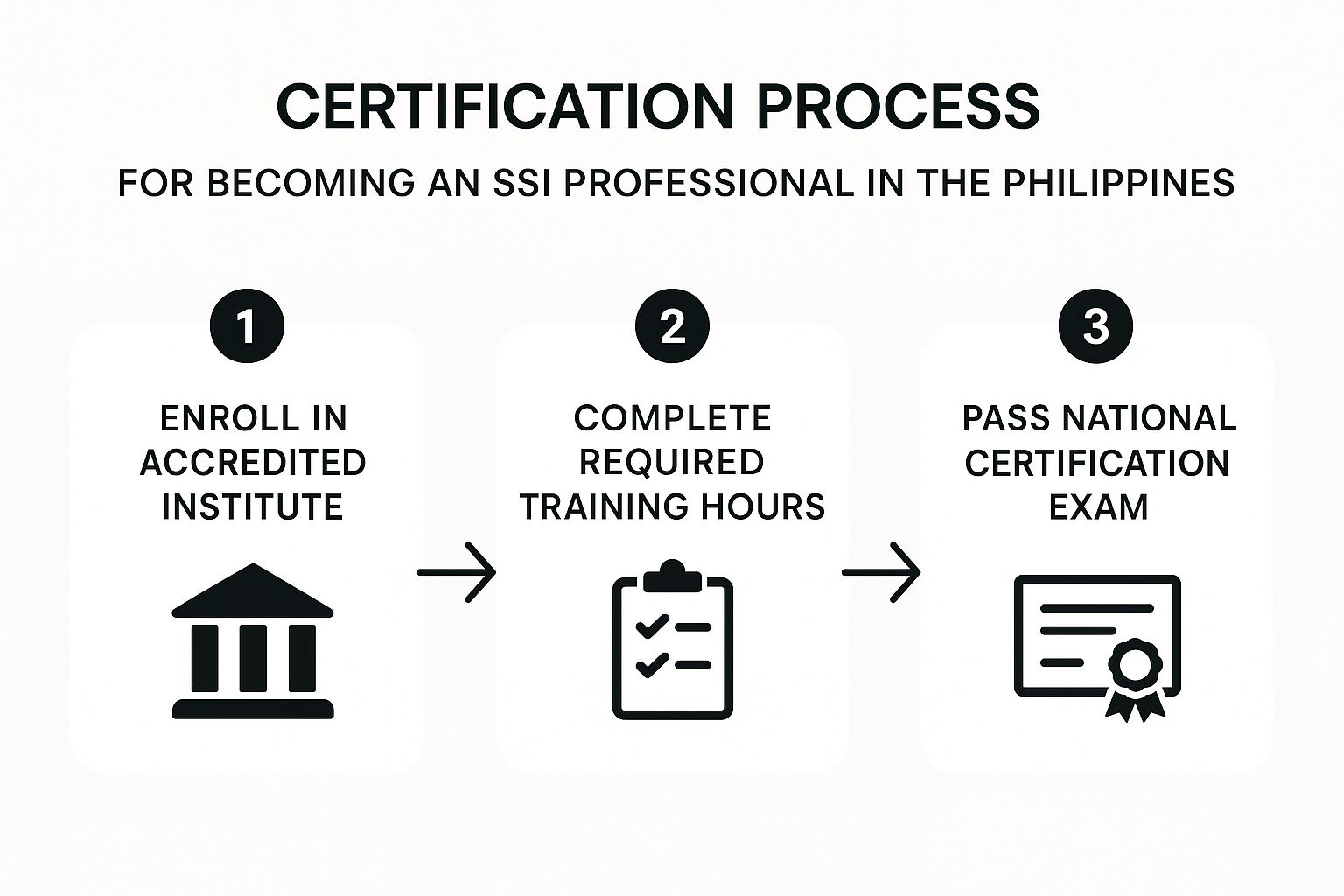
The infographic below gives you a general idea of the process for becoming a certified professional here in the Philippines, from the day you sign up to your final certification.
This visual map just goes to show that the path involves proper, structured training and official sign-offs, making sure every pro meets the high standards we all expect.
Earning the Prestigious Divemaster Rating
Once you’re a certified Dive Guide, the next big milestone is right around the corner: becoming an SSI Divemaster. The good news is, this isn't a whole separate, long-winded course. You actually earn this respected rating by completing just one more specialty program: the Science of Diving.
This specialty is where you really get into the nitty-gritty theory behind everything we do underwater. You'll explore topics like physics, physiology, decompression theory, and how your gear works in much greater detail. Pairing this advanced knowledge with the practical leadership skills you gained as a Dive Guide makes you a seriously well-rounded professional. A Divemaster isn't just someone who can lead a tour; they're a knowledgeable resource who can answer tricky questions and help instructors with students.
Choosing the right place for your pro training is one of the biggest career decisions you'll make. A dive centre that really prioritises mentorship, like Valm Divers, gives you a supportive atmosphere that builds not just your skills, but your confidence. Their focus on creating a safe and fun environment makes it the perfect place to grow. It's a great place to train as a scuba diving professional.
The Path to Assistant Instructor
With your Divemaster certification proudly in hand, you're now qualified to assist SSI Instructors with all sorts of courses. This is basically your apprenticeship. You get a front-row seat to the whole teaching process—watching how seasoned instructors handle students, explain the theory, and run skill sessions in the water.
From there, the next logical step is becoming an Assistant Instructor (AI). This program gives you the green light to take on more teaching responsibilities yourself. As an AI, you can independently teach certain parts of the Open Water Diver course, run Scuba Skills Updates for certified divers, and even teach some specialties on your own. It's the perfect bridge between assisting and leading, letting you build up valuable teaching experience while still under the guidance of a senior instructor. And let's be honest, training in the beautiful, clear waters of Panglao provides the best possible natural classroom for this.
Becoming an Open Water Instructor
This is the big one, the ultimate goal for so many: earning the title of SSI Open Water Instructor (OWI). After you’ve completed the Assistant Instructor program, you can sign up for the Instructor Training Course (ITC). It’s an intense, all-in program designed to polish your teaching abilities, public speaking, and in-water demonstrations to a truly professional level.
During the ITC, you’ll learn:
How to present academic material so people actually get it.
The psychology behind teaching and managing students.
How to run confined and open water sessions safely and smoothly.
The business and marketing side of the dive industry.
Once you successfully finish the ITC, you’ll sit for the Instructor Evaluation (IE). This is a two-day standardised exam run by an independent SSI Instructor Certifier. Passing the IE is your final step to become an SSI Professional in the Philippines. It certifies you to teach and certify new divers all the way from Open Water to Divemaster. It’s the moment your journey comes full circle, giving you the power to share your passion for the underwater world with a whole new generation of divers.
Why Panglao Is the Ultimate Pro Training Ground
The kind of dive pro you become has everything to do with where you train. It’s one thing to nail your skills in the calm, predictable water of a swimming pool. It’s another world entirely to master them in the real, ever-changing conditions of the open ocean. This is exactly why Panglao, Bohol, isn't just a great choice—it's an exceptional one for anyone serious about going pro.
This beautiful island is far more than just a pretty picture. Think of it as a world-class natural classroom. The sheer variety of dive sites packed into such a small area is incredible, throwing a whole range of real-world scenarios at you. One day you could be guiding a group down a stunning vertical wall covered in sea fans; the next, you’re on your belly on a sandy slope, hunting for rare macro critters on a muck dive.
That diversity is your biggest advantage. It forces you to become adaptable, observant, and truly confident in the water—the very things that separate a good dive pro from a great one.
A World of Biodiversity at Your Fingertips
Panglao sits right in the heart of the Coral Triangle, which is basically the global epicentre for marine biodiversity. For you as a trainee, this means the underwater world is unbelievably rich and vibrant, offering an endless source of fascination and hands-on learning.
You’ll get to grips with:
Vibrant Coral Walls: Get ready for places like Balicasag Island, with its sheer drop-offs swarming with massive schools of jackfish, barracuda, and the resident sea turtles. Learning to manage a group on a wall dive is a core skill you'll perfect here.
Fascinating Muck Diving: The coastline around Panglao has some superb muck diving. This is where you’ll sharpen your eyes to find the weird and wonderful macro life—frogfish, ghost pipefish, and more nudibranchs than you can count.
Gentle Reef Slopes: These spots are perfect for running through training exercises. They’re filled with colourful soft corals and a massive variety of reef fish, giving you a calm and controlled environment to hone your skills.
This constant exposure to different underwater landscapes and marine life means you’ll be prepared for pretty much anything the ocean decides to show you. You can get a little taste of the stunning variety of Panglao's dive sites to see what’s waiting for you.
More Than Just Diving—It’s a Community
But let's be honest, the perfect location is only half the battle. The other, and arguably more important, half is the dive centre itself and the community it creates. This is where a place like Valm Divers truly makes a difference. They get that becoming an excellent pro is about more than just passing exams; it's about real mentorship, building confidence, and feeling like part of a supportive team.
Valm Divers has built its reputation on a simple but powerful philosophy: professional training must be rigorous, but it should also be incredibly fun. They intentionally keep their training groups small, ensuring every candidate gets personalised attention and genuine mentorship from experienced instructors.
This approach changes everything. Instead of feeling like just another number in a huge class, you feel like a valued part of the dive family. That safe, encouraging atmosphere is the best place to push your own limits, ask all your questions, and grow into the competent leader you want to be.
The Valm Divers Advantage: Safe and Fun Training
When you choose to become an SSI Professional in the Philippines with Valm Divers in Panglao, you're signing up for a complete experience. They expertly blend the island’s natural gifts with a training culture that values both high standards and having a genuinely good time.
Their way of doing things ensures you don't just learn what to do, but you actually understand why you're doing it. They don’t just hand out certification cards; they build passionate, skilled, and well-connected professionals who are ready to get a job anywhere in the world.
The focus on creating a safe and fun company culture is something you can feel. The instructors aren't just teachers; they're mentors who are truly invested in your success. This supportive vibe takes away a lot of the stress that can come with pro-level training, letting you relax and actually absorb what you're learning.
In the end, your time in Panglao becomes more than a string of courses. It becomes an unforgettable life experience where you make lasting friendships, build rock-solid confidence, and lay the foundation for an incredible new career.
Planning Your Investment Costs And Career Path
Deciding to turn your love for diving into a career is a massive, exciting step. But let's be real—it's also a significant investment. Before you jump in, it's smart to map out the costs and think about where you want this path to take you. We'll break down the practical side of things so you can plan your journey to become an SSI Professional in the Philippines with your eyes wide open.
This isn't just about paying for courses. You've got to think about professional dues, getting your own set of top-notch gear, and day-to-day living expenses, especially if you're relocating to a dive paradise like beautiful Panglao for your training. A clear budget from the get-go means no nasty surprises, letting you focus 100% on becoming the best dive pro you can be.
Budgeting For Your Pro Journey
The total amount you'll spend really depends on where you're starting from and what equipment you already have in your kit bag. Let's break it down into a few key areas so you can see exactly where your money goes.
First up are the core training costs. This bucket includes the fees for your Dive Guide, Science of Diving, and the big one—the Instructor Training Course (ITC). Each course fee typically covers your tuition, digital learning materials, and the final certification. You might notice that some dive centres, like Valm Divers, have a higher price tag. That's not just for the course; it's for the quality of mentorship and personalised training you get, which is absolutely priceless when you're starting your career.
Next, you need to think about your professional equipment. As a dive pro, your gear is essentially your office. You can't rely on rentals anymore. You’ll need to invest in your own full, high-quality set: regulator, BCD, dive computer, wetsuit, mask, fins, and all the necessary safety gear. This isn't just about looking the part; it's about your own safety, comfort, and familiarity with the tools of your trade.
Finally, there are the ongoing professional fees. Once you're certified, you'll need to pay annual dues to SSI to keep your "active status." This is what allows you to teach, certify students, and access all the professional resources. Think of it like a license renewal in any other profession—it’s just part of being a working dive professional.
To give you a clearer picture, here's a rough breakdown of what you can expect to spend. Keep in mind these are estimates and can vary between dive centres and based on your gear choices.
Estimated Cost Breakdown for SSI Pro Training
Expense Item
Estimated Cost Range (PHP)
Notes
Prerequisite Courses (if needed)
₱50,000 – ₱100,000+
Varies depending on your current certification level (e.g., Open Water to Divemaster).
SSI Divemaster (Dive Guide + SoD)
₱60,000 – ₱85,000
This is the first professional level and a prerequisite for the ITC.
Instructor Training Course (ITC)
₱100,000 – ₱150,000
The main investment to become an Open Water Instructor.
Professional Dive Equipment
₱150,000 – ₱300,000+
A one-time investment for a full set of quality gear. Can be less if you buy secondhand.
SSI Annual Professional Fees
~₱10,000 – ₱15,000
An ongoing annual cost to maintain active teaching status.
Living Expenses (during training)
₱25,000 – ₱50,000 per month
Highly variable based on your lifestyle, accommodation, and location in the Philippines.
This table should help you budget realistically for your new career. The initial outlay might seem steep, but remember it's an investment in a lifestyle and a profession that can take you all over the world.
Exploring Your Career Opportunities
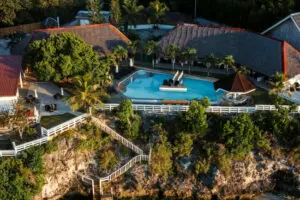
Now for the best part: what this investment gets you. An SSI certification is literally a passport to work in some of the most beautiful places on the planet, and the Philippines is a fantastic place to kick things off. Training in a spot like Panglao isn't just about getting certified; it's about starting your career in a world-class destination. You can get a feel for the type of resort environment you could work in right from day one.
So, what can you do with your new pro rating?
Resort Dive Professional: This is the classic path. You’ll work for a resort or dive centre, guiding certified divers on fun dives and teaching a range of courses. It’s a super social and rewarding job where you get to share your passion every single day.
Liveaboard Crew: If life on the open water calls to you, a job on a liveaboard could be your dream. You'll guide divers in remote, often untouched locations, living and working at sea for weeks at a time. It’s an adventure, to say the least.
Marine Conservation: Want to use your skills for a greater good? Many conservation projects and NGOs need skilled dive pros for underwater surveys, coral restoration projects, and marine research.
Underwater Photography/Videography: If you’ve got a creative streak, you can specialize in capturing the magic of the underwater world for clients, magazines, or even documentary film projects.
Here's a key piece of advice: choosing a dive centre known for being a safe and fun company, like Valm Divers, does more than just get you through the exams. It plugs you directly into the local and international dive industry. Their reputation and network can be a massive help in landing that crucial first job.
At the end of the day, training to be a dive pro in a place as stunning and vibrant as Panglao makes the whole journey feel less like a course and more like the start of an incredible new chapter in your life. The investment pays off not just with a certification card, but with a career that truly fuels your soul.
Your Questions Answered: Going Pro with SSI in the Philippines
Thinking about trading your desk job for a life under the sea? It's a massive, exciting step, but it's natural to have a boatload of questions. From timelines and gear to what happens after you get certified, let's clear the water on some of the most common things aspiring pros ask.
Getting the real story from the get-go helps you map out your adventure. A solid plan means you can ditch the stress and focus on what really matters—becoming a skilled, confident diver people will trust.
So, How Long Does It Really Take to Become an SSI Instructor?
The honest answer? It depends on where you're starting from and how much time you can throw at it. If you're all in, starting from an Open Water Diver, you could potentially hit Divemaster in about three to six months. From there, getting your Open Water Instructor rating within a year of starting your whole journey is definitely doable.
But here's a piece of hard-earned advice: quality always, always beats speed. Rushing through your training is one of the biggest mistakes you can make. A top-notch program, like the one we run here at Valm Divers, is built around making you genuinely competent and unshakeably confident, not just ticking boxes to get you certified fast. For an instructor who's truly ready and highly employable, you should plan for a good six to twelve months of immersive diving and focused training.
The right dive centre makes all the difference. Choosing one that champions a safe and fun training environment turns an intense process into an incredible experience, helping you absorb everything without the burnout.
Do I Need to Own a Full Set of Dive Gear to Start?
You might get away with renting for your first few pro-level courses, but by the time you're a certified Divemaster, owning your own full set of gear is non-negotiable. As a professional, your equipment is your life-support system, your office, and a direct reflection of your commitment.
Think about it this way:
Safety and Instinct: When it's your gear, you know it inside and out. You can operate it by feel, which is absolutely critical when you're managing a course or guiding certified divers.
Comfort and Focus: Gear that fits you perfectly eliminates distractions. No more fiddling with a leaky mask or a BCD that rides up. You can put 100% of your attention on the dive and your students.
The Professional Look: Showing up with your own well-maintained kit tells clients and potential employers you're serious. It says, "I'm a professional, and I've invested in my craft."
A good dive centre, like Valm Divers right here in the diving hub of beautiful Panglao, can give you solid advice and even help you put together an equipment package that's built for the demands of a pro.
What Are the Job Opportunities Like in the Philippines After I'm Certified?
Job prospects for well-trained SSI professionals in the Philippines are fantastic. Seriously. The dive industry here is buzzing and always on the lookout for enthusiastic, skilled instructors and guides, especially in world-famous spots like Panglao, Palawan, and Cebu.
But here's the key to landing that first great job: it's all about the network you build during your training. Going through your professional courses with a highly respected school gives you a massive leg up. The reputation and industry connections of a centre like Valm Divers can open doors for you, not just locally in our beautiful corner of Panglao, but across the entire global SSI network. They're known for producing rock-solid pros, which makes their graduates the first people other dive centres want to hire.
Ready to turn your passion for diving into an incredible career? Start your adventure in a place that is as beautiful as it is professional. At Valm Divers, we combine world-class SSI training with a supportive, safe, and incredibly fun environment to help you become the best dive professional you can be.
We are the premier boutique dive shop located right on the stunning Alona Beach in Panglao, Bohol, offering fun-dives, trips, and excursions as well as SSI scuba dive courses from introductory and novice levels up to professional level divemaster and instructor.