Top 9 Diving Places in Philippines for 2025 | Best Spots to Explore
Published: September 15, 2025
The Philippines, an archipelago of over 7,000 islands, sits at the very heart of the Coral Triangle, the planet's epicentre of marine biodiversity. This privileged location makes it a premier, bucket-list destination for divers globally, offering an unparalleled variety of underwater ecosystems and experiences. This is not just another travel list; it's a comprehensive guide to the absolute best diving places in Philippines, designed for both seasoned divers and those looking to start their underwater journey. We will explore everything from the pristine, untouched atolls of Tubbataha Reefs Natural Park to the hauntingly beautiful WWII shipwrecks of Coron and the world-renowned macro life of Anilao.
This guide provides actionable insights for planning your expedition. You will discover the unique marine life at each location, the best seasons to visit, and the required diver experience levels. We'll detail what makes each site special, whether it’s swimming with majestic whale sharks in Donsol or searching for the elusive thresher sharks in Malapascua.
For those seeking to combine stunning scenery with exceptional dive training, look no further than the beautiful island of Panglao in Bohol. It serves as a perfect base for exploration and professional development. Reputable operators, such as Valm Divers, ensure that every dive is not only breathtaking but also conducted with the highest standards of safety, making it an ideal place to train as a scuba diving professional. This listicle is your definitive resource for navigating the rich and diverse underwater realms of this aquatic wonderland, ensuring your next dive trip is truly unforgettable.
1. Tubbataha Reefs Natural Park, Palawan
Often hailed as the crown jewel of Philippine diving, Tubbataha Reefs Natural Park is a UNESCO World Heritage Site that represents the pinnacle of underwater exploration in Southeast Asia. Located in the middle of the Sulu Sea, its remote location protects it from over-tourism and pollution, resulting in a pristine and vibrant marine ecosystem. This isolation means it's one of the few diving places in the Philippines accessible only via liveaboard vessels, operating strictly during a short season from March to June when the seas are calmest.
The park consists of two massive atolls, North and South, and the smaller Jessie Beazley Reef. Divers are treated to breathtaking underwater topography, including sheer vertical walls that plummet into the abyss, expansive coral gardens teeming with life, and crystal-clear waters offering phenomenal visibility. The biodiversity here is staggering, making it a critical sanctuary for marine species.
What to Expect Underwater
Diving in Tubbataha is an experience of sheer scale and abundance. You can expect to encounter large pelagic species on nearly every dive. Famous sites deliver unforgettable moments:
Shark Airport: Aptly named, this sloping reef is a cleaning station and thoroughfare for sharks. It's common to see whitetip and grey reef sharks resting on the sandy bottom, with occasional visits from hammerheads and even tiger sharks.
Amos Rock: This site is renowned for its spectacular wall covered in vibrant soft corals, gorgonian sea fans, and massive schools of fish. It's a prime spot to witness swirling vortexes of barracuda and jacks.
Black Rock: Divers here often encounter various shark species, manta rays, and majestic schools of bumphead parrotfish. The healthy coral formations provide a stunning backdrop for the prolific marine life.
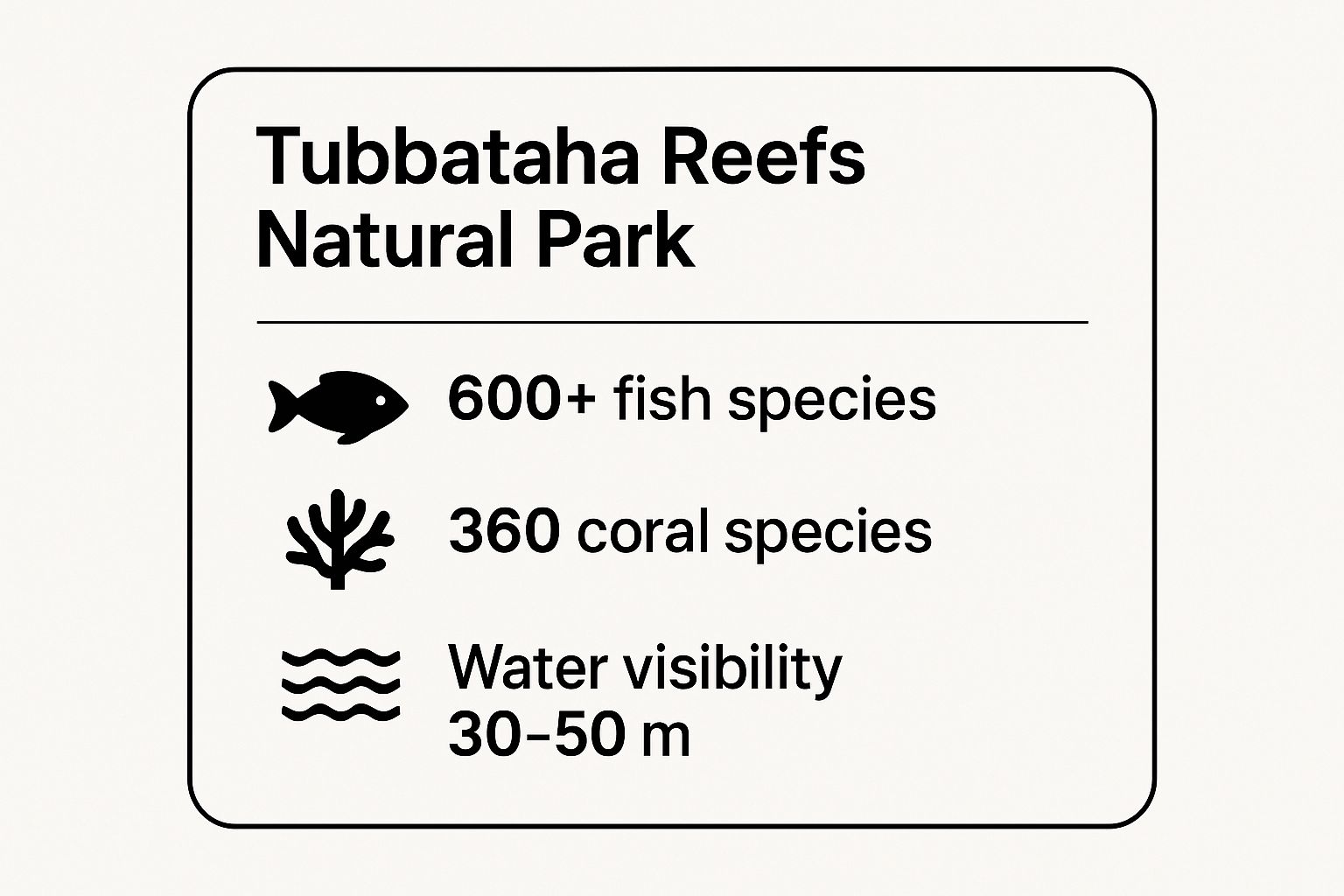
The infographic below summarises the incredible biodiversity and conditions awaiting you at Tubbataha.
This data highlights why Tubbataha is considered a global centre of marine biodiversity, offering divers exceptionally clear water to witness its rich coral and fish populations.
Essential Travel and Diving Tips
Pro Tip: Due to its popularity and short season, liveaboard trips to Tubbataha are often fully booked a year or more in advance. Planning and early booking are absolutely essential to secure a spot on this once-in-a-lifetime dive trip.
Book Well in Advance: Reserve your liveaboard spot at least 6 to 12 months ahead of time.
Check Certifications: An Advanced Open Water certification with experience in deep dives and currents is highly recommended.
Pack Accordingly: Bring only reef-safe sunscreen to protect the pristine corals. Seasickness medication is also crucial for the open-sea crossings.
Capture the Moment: The vast underwater landscapes and large marine life make wide-angle camera lenses a must-have, but don't forget a macro lens for the smaller critters.
2. Apo Island, Negros Oriental
Apo Island is a shining example of community-based marine conservation and one of the most successful marine sanctuaries in the world. This small volcanic island, a short boat ride from Negros Oriental, is renowned for its incredibly healthy coral reefs and astounding fish populations. It has become a global model for sustainable tourism, where the local community directly benefits from and participates in the protection of its marine resources, making it one of the most rewarding diving places in the Philippines.
The island’s protected status has allowed its coral gardens to flourish, creating a vibrant, high-density environment for marine life. Divers can expect crystal-clear waters and a variety of underwater landscapes, from gentle sloping reefs and vibrant coral gardens to dramatic walls that descend into the deep blue. This abundance and the area’s conservation success story make every dive here special.
What to Expect Underwater
Diving at Apo Island is defined by its dense marine life and pristine coral formations. You are almost guaranteed encounters with green sea turtles, which are a common sight in the shallows. Key sites showcase the island’s incredible biodiversity:
Chapel Point: Famous for its resident population of green sea turtles, this site offers gentle conditions perfect for all diver levels. Watch these graceful creatures feed on seagrass and rest on the corals.
Coconut Point: Often called the "washing machine" due to its potential for strong currents, this is an exhilarating drift dive. Divers are rewarded with breathtaking coral gardens and huge schools of jacks, snappers, and bannerfish.
Katipanan: This site features a beautiful wall dive with fascinating overhangs and small caverns. It’s a great spot to look for pelagic species passing by in the blue, as well as a variety of colourful reef fish hiding amongst the corals.
Essential Travel and Diving Tips
Pro Tip: Combine your trip to Apo Island with a few days of diving in nearby Dumaguete and Dauin. The area is famous for its world-class muck diving, offering a perfect contrast with Apo's vibrant reefs and a chance to spot rare critters.
Book Accommodation Early: If you plan to stay on the island, reserve your room well in advance, especially during peak season, as options are limited.
Visit Early: Plan an early morning dive to enjoy the best encounters with the turtles before the day-trippers arrive.
Respect the Sanctuary: Use only reef-safe sunscreen and practice perfect buoyancy. Remember that you are a guest in a protected marine park.
Bring Cash: There are no ATMs on the island, so ensure you have enough cash for your stay, dive fees, and other expenses.
3. Coron, Palawan
Coron is a world-renowned destination etched into diving lore, primarily for its ghostly fleet of sunken World War II Japanese warships. This underwater museum offers some of the most accessible and captivating wreck diving on the planet. Beyond its historical significance, Coron Bay also boasts vibrant reefs, dramatic underwater limestone formations, and unique geothermal lakes, making it one of the most diverse diving places in the Philippines.
The area was famously explored by Jacques Cousteau, which helped cement its legendary status among the global diving community. Today, it attracts both recreational divers eager to explore the shallow wrecks and technical divers venturing into the deeper, more complex underwater structures. The combination of history, marine life, and unique topography ensures an unforgettable diving adventure.
What to Expect Underwater
Diving in Coron is a journey through history and nature. The wrecks, now encrusted with corals and sponges, have become artificial reefs teeming with life.
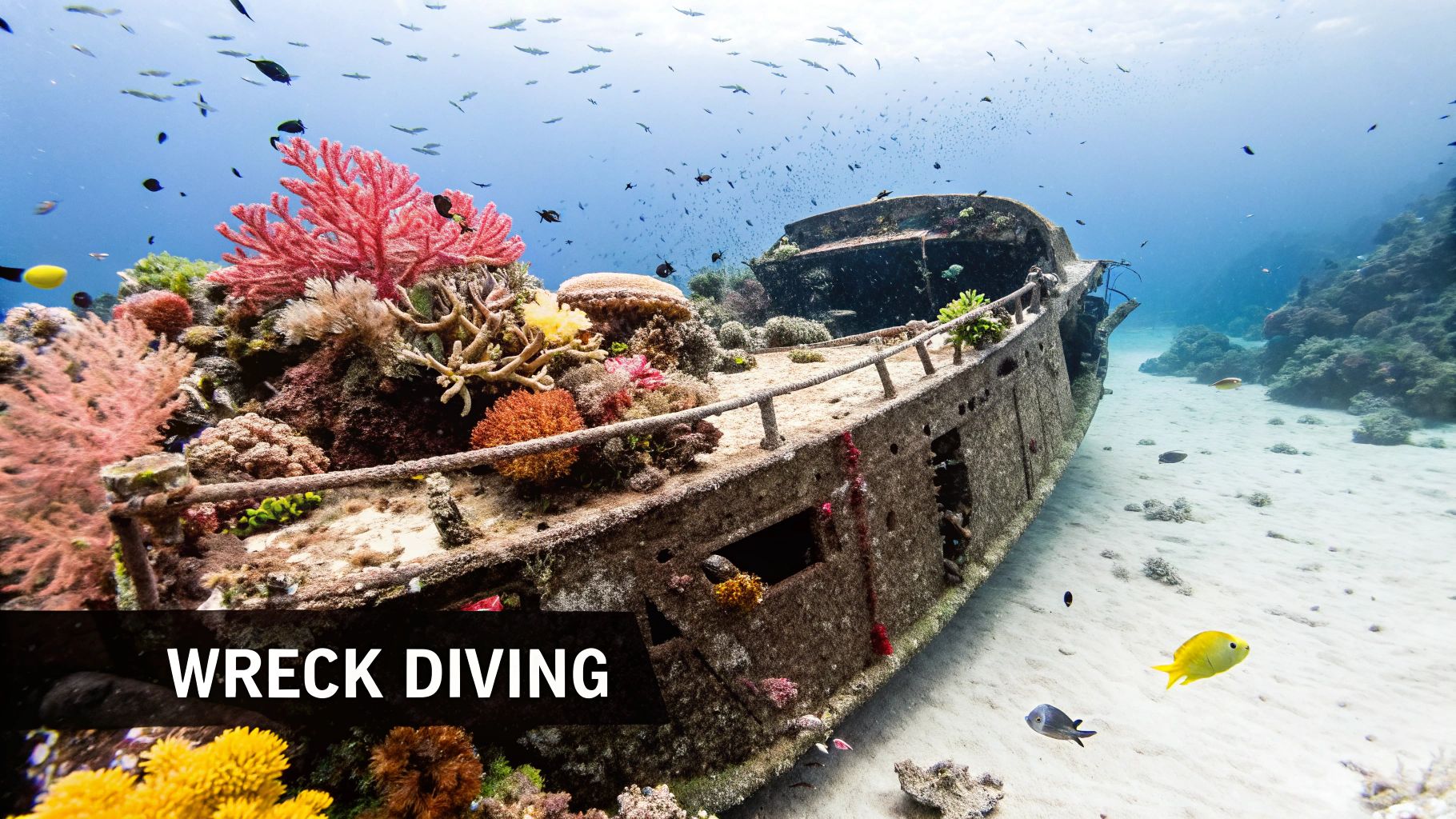
Okikawa Maru: One of the largest wrecks in the bay, this former oil tanker lies at a maximum depth of 26 metres. Its deck is covered in hard and soft corals and is a fantastic site for spotting groupers, snappers, and batfish.
Irako Wreck: This well-preserved refrigeration ship is a favourite for its excellent visibility and numerous swim-throughs. Penetration dives reveal intact engine rooms and cargo holds, offering a thrilling experience for advanced divers.
Barracuda Lake: A truly unique dive, this site involves a short climb over limestone cliffs to a freshwater lake. Divers experience a dramatic thermocline where the water temperature shifts abruptly, and the underwater landscape is a surreal collection of submerged peaks and valleys.
Essential Travel and Diving Tips
Pro Tip: Due to the depth and overhead environments of many sites, an Advanced Open Water certification is highly recommended to fully experience Coron's best wrecks. Consider a nitrox certification to maximise your bottom time.
Book Wreck Dives Early: Popular sites can get crowded. Arrange with your dive centre to visit them early in the morning for the best conditions and fewer divers.
Bring a Torch: A powerful underwater light is essential for wreck penetration, allowing you to see into the dark corners and appreciate the details of the machinery and cargo holds.
Respect the Sites: These wrecks are historical gravesites. Practice responsible diving by not touching or removing any artifacts, ensuring their preservation for future generations.
Pack Light: Getting to the dive sites often involves smaller banka boats, so pack your gear in easy-to-manage bags.
4. Bohol – Panglao Island
A true gem in the Visayas, the beautiful island of Panglao in Bohol is one of the most versatile and accessible diving places in the Philippines. It serves as a vibrant hub offering an incredible spectrum of dive experiences, from gentle, sandy slopes ideal for beginners to challenging wall dives and thrilling drifts for seasoned divers. The island's accessibility and well-developed dive infrastructure make it a perfect destination for both holiday divers and those seeking professional-level training.
Panglao's marine ecosystem is renowned for its rich biodiversity, where healthy coral gardens thrive just a short boat ride from the shore. The area is a gateway to several protected marine sanctuaries and unique underwater topographies, providing a different adventure on every dive. Its combination of stunning underwater seascapes and topside attractions makes it a complete travel destination.
What to Expect Underwater
Diving around Panglao is a celebration of marine diversity, with sites that cater to every interest, from macro photography to encounters with large marine life. The clear, warm waters host a colourful array of reef fish, turtles, and unique critters.
Balicasag Island: A short boat trip away, this world-famous marine sanctuary is a non-negotiable stop. Divers can expect to swim alongside huge schools of jacks, barracuda, and an incredible number of resident green sea turtles. Its steep walls are decorated with vibrant corals.
Black Forest: Located off Balicasag, this site gets its name from its rare and beautiful black coral formations. It's a fantastic drift dive where you can observe large schools of fish and turtles feeding on the reef.
Napaling Reef: Famous for its stunning sardine run, this reef offers a breathtaking wall dive perfect for freedivers and scuba divers alike. It's also an excellent spot for macro enthusiasts to find nudibranchs and other small creatures.
Essential Travel and Diving Tips
Pro Tip: Panglao is an exceptional place to get certified or advance your skills. The conditions are generally calm and clear, and reputable dive centres like Valm Divers offer a safe, fun, and highly professional environment for everything from Open Water courses to Divemaster training. It is also an excellent place to train as a scuba diving professional.
Book Accommodations on Panglao: Staying on Panglao Island provides the most convenient access to dive centres and boats, saving you travel time each day.
Combine with Land Tours: Don't miss Bohol’s famous attractions. Allocate a day to see the Chocolate Hills, the Tarsier Sanctuary, and explore the Loboc River.
Protect the Reef: The marine sanctuaries are delicate. Always use reef-safe sunscreen and maintain perfect buoyancy to avoid touching the corals.
Dive Early: For the best visibility and calmest surface conditions, especially at popular sites like Balicasag, try to book a spot on the first boat trip of the day.
5. Donsol, Sorsogon
Known globally as the “Whale Shark Capital of the World,” Donsol offers a unique and ethically focused marine encounter that sets it apart from other diving places in the Philippines. This once-sleepy fishing town in Sorsogon province rose to international fame thanks to a successful community-based conservation programme championed by the WWF. Instead of intrusive scuba diving, interactions here are limited to snorkeling, ensuring the whale sharks (butanding) are not disturbed as they feed naturally on plankton near the surface.
The approach in Donsol is built on sustainable eco-tourism. Local boatmen, once hunters, are now trained as official Butanding Interaction Officers (BIOs), guiding visitors with strict adherence to conservation guidelines. This model provides an incredible opportunity to swim alongside the world's largest fish in their natural habitat while directly supporting the local community and the protection of these gentle giants. The season typically runs from November to June, peaking between February and May.
What to Expect Underwater
While the main attraction is snorkeling with whale sharks, the greater Donsol and Ticao Pass area offers spectacular dive sites for those looking to explore more of the region's rich marine life. The confluence of currents in the pass creates a nutrient-rich environment attracting a variety of pelagic species.
Whale Shark Interaction: The primary experience involves spotting a whale shark from the boat, then quietly slipping into the water to snorkel alongside it. Following the strict rules (no touching, no flash photography, maintaining distance) ensures a respectful and awe-inspiring encounter.
Manta Bowl (Ticao Island): A short boat ride away, this submerged reef is a world-class dive site famous for its manta ray cleaning stations. Divers often witness oceanic and reef mantas gracefully gliding by to be cleaned by smaller fish.
San Miguel Island: This site offers vibrant coral gardens and a diverse range of macro life, providing a beautiful contrast to the pelagic action of the Manta Bowl.
Essential Travel and Diving Tips
Pro Tip: The success of your whale shark encounter in Donsol is highly dependent on timing and patience. Plan to stay for at least two to three days to maximise your chances of multiple sightings, as the butanding are wild animals and their presence is never guaranteed.
Book with Accredited Operators: Only use tour operators registered with the local tourism office to ensure your trip adheres to WWF guidelines.
Follow the Rules: Listen carefully to your BIO. Strict adherence to the no-touch and no-flash rules is crucial for the well-being of the whale sharks and the sustainability of the programme.
Combine with Ticao Island: For certified divers, pairing a Donsol snorkeling trip with dives at the Manta Bowl in nearby Ticao Island creates a comprehensive Bicol underwater adventure.
Pack for Eco-Tourism: Bring biodegradable, reef-safe sunscreen and a reusable water bottle to minimise your environmental impact.
6. Anilao, Batangas
Widely celebrated as the birthplace of scuba diving in the Philippines, Anilao is a world-class macro photography hub just a few hours' drive south of Manila. Its incredible accessibility makes it a favourite weekend getaway, but its underwater offerings are what truly make it one of the premier diving places in the Philippines. The area boasts an astonishing density of marine biodiversity, particularly small and rare critters, cementing its reputation as a muck diving paradise.
Anilao is not a single island but a peninsula lined with numerous dive resorts and operators that cater to every skill level, from first-time divers to seasoned underwater photographers. The calm, protected waters of Balayan Bay host over 50 dive sites, each offering a unique underwater environment. This concentration of diverse sites means you can explore vibrant coral gardens, sandy slopes, and artificial reefs all in one trip.
What to Expect Underwater
Anilao is the undisputed capital of critters in the Philippines. While it has beautiful reefs, the main attraction is the hunt for the weird and wonderful. Photographers and marine life enthusiasts can spend hours searching for rare subjects.
Cathedral Rock: A famous site marked by a concrete cross, it's a hotspot for nudibranchs, frogfish, and even the elusive pygmy seahorse. It's a fantastic spot for both wide-angle and macro shots.
Secret Bay (or Mainit): This is the quintessential muck diving site. The seemingly barren sandy slope is a treasure trove of rare finds like mimic octopuses, flamboyant cuttlefish, and various species of ghost pipefish.
Beatrice Rock: A stunning reef teeming with anthias and fusiliers, this site offers excellent opportunities for photographers looking for vibrant coral backdrops and classic reef scenes.
Sombrero Island: Named for its hat-like shape, the surrounding waters feature healthy coral gardens, gentle currents, and a healthy population of reef fish, turtles, and sea snakes.
Essential Travel and Diving Tips
Pro Tip: For an unparalleled photography experience, hire a private spotter guide. Their trained eyes are incredible at finding the most camouflaged and sought-after critters, turning a good dive into an unforgettable one.
Travel on Weekdays: Anilao is a popular weekend destination for Manila residents. Visit on weekdays to enjoy less crowded dive sites and more relaxed conditions.
Pack a Macro Lens: To make the most of Anilao's critter life, a macro lens is essential for your underwater camera setup.
Go for a Package Deal: Many resorts offer all-inclusive dive packages that bundle accommodation, meals, and multiple dives, providing great value and convenience.
Try a Night Dive: The underwater landscape transforms after sunset. Night dives here reveal a different cast of characters, including hunting octopuses, bobbit worms, and colourful crustaceans.
7. Malapascua Island, Cebu
Malapascua Island holds a legendary status in the global diving community for one primary reason: it's the only place in the world where the elegant and elusive thresher shark can be reliably seen almost every single day. This tiny island off the northern tip of Cebu offers a unique blend of thrilling pelagic encounters, vibrant reef diving, and a relaxed, backpacker-friendly vibe. Its main draw is Monad Shoal, a submerged seamount that serves as a cleaning station for these magnificent sharks, making it one of the most unique diving places in the Philippines.
The island itself is a slice of paradise, with white sandy beaches and a laid-back atmosphere that encourages divers to linger. While the thresher sharks are the stars, Malapascua’s supporting cast of dive sites is equally impressive, offering everything from intricate macro life to fascinating underwater topography and opportunities for further dive training.
What to Expect Underwater
The pre-dawn wake-up call for a Monad Shoal dive is a rite of passage in Malapascua, but the reward is an unparalleled wildlife encounter. Beyond the sharks, the island offers diverse experiences:
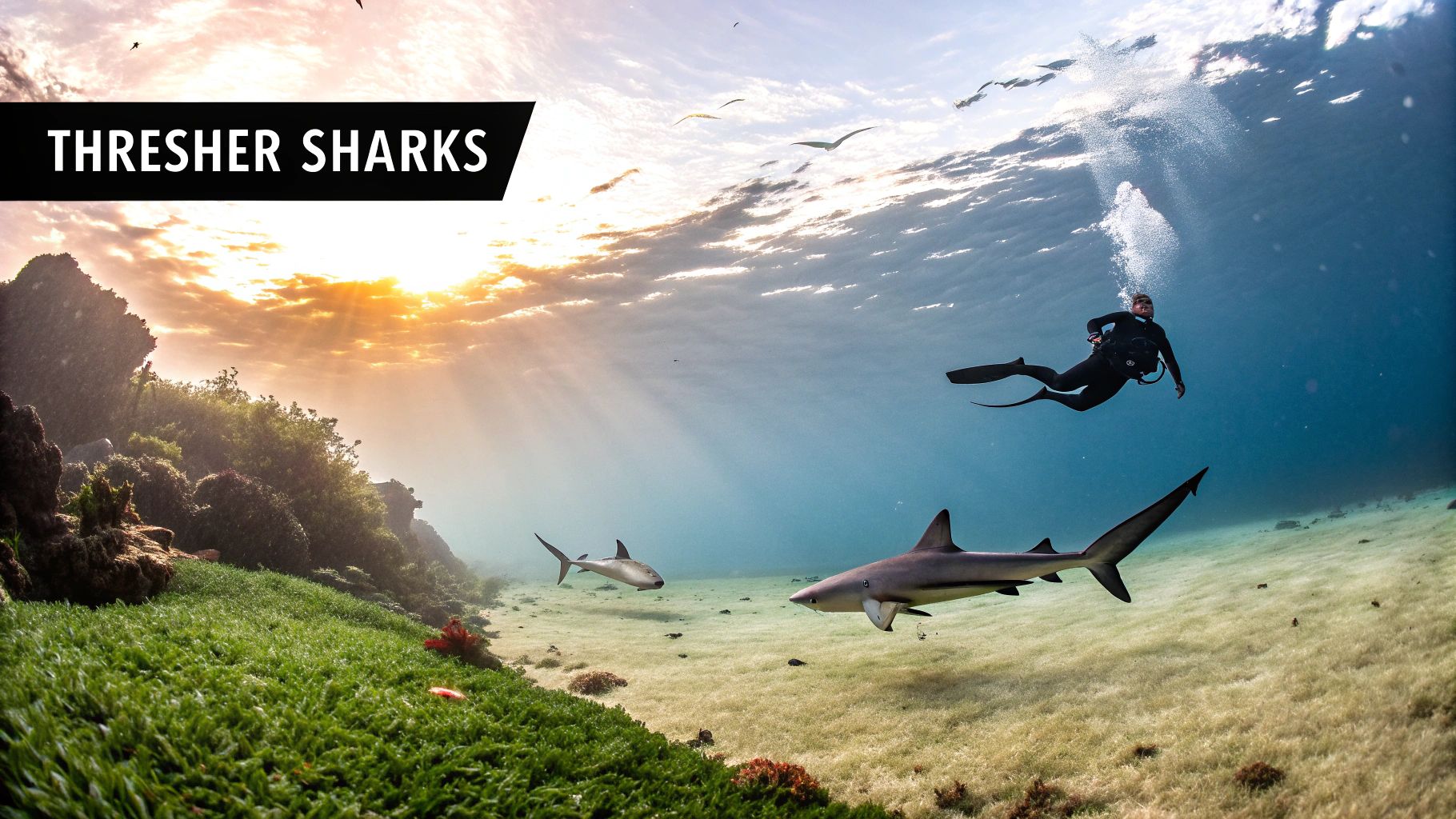
Monad Shoal: Divers descend to around 30 metres before sunrise and wait for the thresher sharks to arrive at their cleaning stations. Seeing their distinctively long, whip-like tails emerge from the deep blue is a truly unforgettable moment.
Gato Island: A marine reserve and sea snake sanctuary, this site offers incredible diversity. Divers can navigate a 30-metre swim-through cave, spot whitetip reef sharks sleeping under ledges, and hunt for seahorses, nudibranchs, and frogfish.
Lighthouse Reef: A fantastic sunset or night dive, this site is famous for the mating dance of the mandarinfish. The shallow coral garden also hosts a variety of critters, making it a photographer's delight.
Kalanggaman Island: Often visited as a day trip, this stunning sandbar is surrounded by pristine walls and reefs teeming with marine life, offering a perfect complement to Malapascua's main attractions.
Essential Travel and Diving Tips
Pro Tip: While the thresher shark sightings are reliable, they are not guaranteed. Plan to stay for at least three to four days to maximise your chances of multiple incredible encounters and to explore the other fantastic dive sites the island has to offer.
Book Dives in Advance: The early morning thresher shark dives are popular and spots can fill up quickly. Book with your chosen dive centre ahead of time.
Bring the Right Gear: Dives at Monad Shoal can be deep and cool, especially in the early morning. A 3mm to 5mm wetsuit is recommended.
Manage Expectations: Malapascua is a small, relatively undeveloped island. Amenities are basic, but that's a key part of its charm.
Respect Marine Life: Always maintain a respectful distance from the thresher sharks and other marine creatures. Follow your guide’s instructions to ensure a safe and non-intrusive experience.
8. Siargao Island, Surigao del Norte
Globally acclaimed for its legendary surf breaks, Siargao Island is a rising star among the top diving places in the Philippines. Beyond the waves, its underwater realm offers a refreshingly raw and less-crowded diving experience. The island’s relative isolation has helped preserve its marine ecosystems, presenting divers with healthy coral gardens, fascinating rock formations, and a sense of genuine exploration.
Siargao’s dive sites are diverse, ranging from gentle, sloping reefs perfect for beginners to more challenging drop-offs for experienced divers. The underwater topography is marked by impressive coral plateaus and unique seascapes that mirror the island’s rugged, natural beauty above water. With fewer divers in the water, you can enjoy a more personal and tranquil encounter with the vibrant marine life.
What to Expect Underwater
Diving in Siargao is about discovering pristine reefs and enjoying the serenity of its uncrowded waters. The island offers a variety of experiences catering to different interests:
Blue Cathedral: A truly unique site featuring two stunning underwater caverns. Divers can penetrate these chambers and look out into the deep blue, creating a spectacular, cathedral-like silhouette. It is an exhilarating experience for advanced divers.
Pilar and Daku Island: These areas boast impressive wall dives and steep drop-offs covered in hard and soft corals. The walls are home to a wide array of reef fish, moray eels, and occasionally passing pelagics, offering a classic Philippine wall diving experience.
Guyam and Naked Islands: The waters surrounding these iconic islets are perfect for macro photographers and those who appreciate the smaller details. Expect to find colourful reef fish, nudibranchs, and other fascinating critters in the shallow, vibrant coral gardens.
Essential Travel and Diving Tips
Pro Tip: Siargao offers the perfect "surf and turf" adventure. Plan your trip to include both surfing lessons and dive excursions to fully experience the island’s dual-world appeal. Mornings can be for riding waves, and afternoons for exploring the reefs.
Choose Reputable Operators: Book your dives with established, local dive centres that have intimate knowledge of the area's conditions and sites.
Bring Your Gear: While rentals are available, the selection can be limited. Bringing your own well-maintained equipment, especially your computer and regulator, is advisable.
Plan a Longer Stay: Getting to Siargao can take time. Allow for a longer itinerary to accommodate travel days and enjoy both diving and the island’s laid-back culture without rushing.
Respect the Reefs: The corals here are exceptionally healthy. Practise perfect buoyancy control and avoid touching any marine life to help preserve this delicate ecosystem.
9. Puerto Galera, Mindoro
Celebrated as one of the Philippines' most accessible and diverse diving hubs, Puerto Galera is a UNESCO Biosphere Reserve that expertly blends convenience with incredible underwater experiences. Located just a few hours' journey south of Manila, its proximity to the capital makes it a favourite weekend getaway for local and international divers alike. This accessibility has fostered a well-developed dive infrastructure, catering to everyone from first-time explorers to seasoned technical divers.
Puerto Galera Bay and the nearby Verde Island Passage are renowned for their staggering biodiversity. With over 40 dive sites offering everything from gentle coral slopes to challenging drift dives and fascinating wrecks, it truly is a destination that suits every skill level. The area is a mosaic of marine protected areas, ensuring the reefs remain healthy and vibrant for years to come, solidifying its place as one of the essential diving places in the Philippines.
What to Expect Underwater
The diving in Puerto Galera is defined by its sheer variety. Within a short boat ride, you can transition from macro critter hunting to exhilarating drift dives along deep walls. Key sites offer a glimpse into this diversity:
The Canyons: An adrenaline-pumping drift dive for advanced divers, where three canyons cut through the reef. Strong currents sweep you through the dramatic underwater topography, attracting schools of jacks, sweetlips, and barracuda.
Sabang Wrecks: A collection of three small, deliberately sunk vessels resting in relatively shallow water. These wrecks have become thriving artificial reefs, colonised by corals and home to frogfish, moray eels, and vast schools of batfish.
Shark Cave: This site features an underwater overhang where whitetip reef sharks are often found resting during the day. It’s an excellent spot to observe these graceful predators in their natural habitat.
Verde Island Passage: Often considered the "centre of the centre" of marine shore fish biodiversity, a day trip to Verde Island offers pristine walls, massive sea fans, and unparalleled fish density.
Essential Travel and Diving Tips
Pro Tip: Puerto Galera is an excellent destination to advance your dive training. Its calm, protected bays are ideal for entry-level courses, while the more challenging sites offer perfect conditions for specialties like drift or deep diving. Many reputable dive centres provide a full spectrum of professional-level training.
Visit on Weekdays: To avoid the crowds from Manila, schedule your dives from Monday to Friday for a more relaxed experience.
Book a Package: Many resorts and dive shops offer all-inclusive packages combining accommodation and diving, providing excellent value.
Stay Strategically: Sabang is the bustling heart of the dive scene, while nearby areas like Small La Laguna or Big La Laguna offer quieter alternatives.
Respect the Sanctuaries: Pay close attention to your guide’s briefings and adhere strictly to the rules of the marine protected areas to help preserve the stunning reefs.
Low to Medium – well-established sites, good infrastructure
Low to Medium – accessible, variety of accommodations
Diverse sites for all levels, good certification venue
Beginners to advanced divers, weekend trips
Accessibility, diverse dive options, strong dive community
Your Next Dive Awaits in the Philippines
The Philippine archipelago, a sprawling collection of over 7,600 islands, is more than just a tropical paradise; it is the beating heart of global marine biodiversity. Our journey through the premier diving places in the Philippines has showcased an incredible spectrum of underwater experiences. From the remote, pristine walls of Tubbataha Reefs Natural Park to the historic wreck dives of Coron, Palawan, and the adrenaline-pumping thresher shark encounters in Malapascua, it's clear this nation offers a lifetime of sub-aquatic exploration.
Each destination presents a unique story. In Apo Island, you become part of a community-led conservation success story, swimming with sea turtles over vibrant, protected reefs. In Anilao, the macro photography capital, you learn to appreciate the mesmerising beauty of the ocean's smallest, most bizarre critters. Meanwhile, Donsol offers the gentle, awe-inspiring experience of swimming alongside the world’s largest fish, the whale shark, in an ethical and sustainable manner. The diversity is simply astounding, catering to every diver's dream.
Key Takeaways from Our Underwater Tour
Reflecting on these world-class locations, several core themes emerge that define the quintessential Philippine diving adventure:
Unparalleled Biodiversity: The Philippines is the global epicentre of marine life. This isn't just a marketing slogan; it's a scientific fact. Expect to see everything from pygmy seahorses and flamboyant cuttlefish to massive schools of jacks, reef sharks, and majestic pelagics, often on the same trip.
A Dive for Every Skill Level: Whether you're taking your first breath underwater or are a seasoned technical diver, there is a perfect site for you. The gentle, sandy slopes of Puerto Galera are ideal for beginners, while the deep, challenging currents of Tubbataha will thrill even the most experienced veterans.
Conservation is Key: Many of the top diving places in the Philippines are protected marine sanctuaries. This conscious effort towards conservation ensures that the reefs remain healthy and teeming with life for future generations of divers to enjoy.
The Warmth of Filipino Hospitality: Beyond the warm tropical waters, the welcoming nature of the Filipino people and the dive community is a highlight of any trip. Dive guides are not just experts; they are passionate storytellers and guardians of their local reefs.
Your Next Steps: From Dream to Dive Plan
Reading about these incredible destinations is just the first step. To turn your dream dive trip into a reality, consider these actionable next steps. First, evaluate your skill level and what you want to see. Are you chasing big fish, fascinated by macro life, or eager to explore wrecks? Use this article to shortlist two or three locations that match your interests. Next, research the optimal travel season for your chosen spots to ensure the best visibility and weather conditions.
For those drawn to the pristine waters and vibrant marine life surrounding the beautiful island of Panglao, Bohol, finding the right dive operator is crucial. It’s a place where professionalism and a deep respect for the marine environment are paramount. This is especially true if you are looking to advance your skills.
We highly recommend connecting with Valm Divers. Their unwavering commitment to creating a safe and fun atmosphere is evident in every dive they lead. They foster an environment that is not only perfect for certified divers seeking unforgettable underwater tours but is also an exceptional place to train as a scuba diving professional, from Advanced Open Water to Divemaster. They truly embody the expert, welcoming spirit that makes the Philippine diving community so special. Start planning your adventure today and prepare to be utterly amazed by the underwater treasures this incredible archipelago holds.
Ready to explore the world-class dive sites of Panglao, Bohol? Whether you're a beginner or looking to go pro, Valm Divers offers expert guidance, top-tier safety, and an unforgettable diving experience. Visit their website at Valm Divers to book your next underwater adventure.
We are the premier boutique dive shop located right on the stunning Alona Beach in Panglao, Bohol, offering fun-dives, trips, and excursions as well as SSI scuba dive courses from introductory and novice levels up to professional level divemaster and instructor.