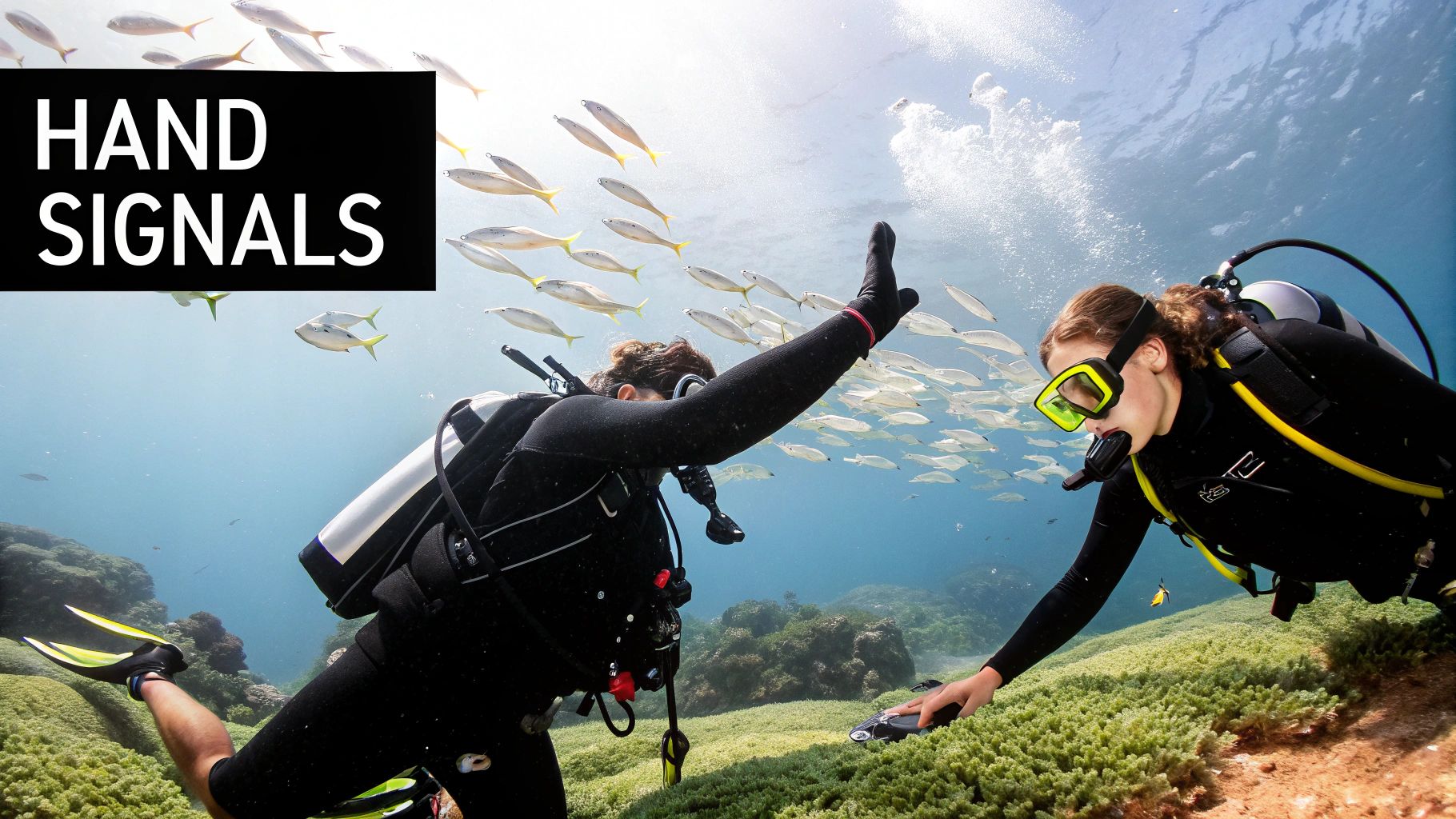
Learn to Dive in the Philippines – Your Underwater Adventure Awaits
Published: September 2, 2025
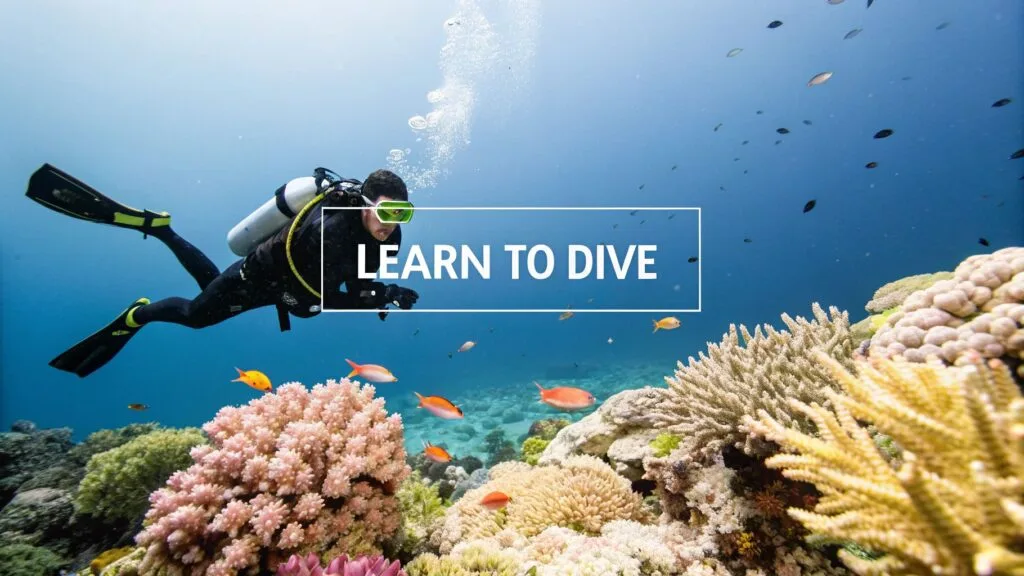
Thinking about learning to dive? It’s an incredible journey that all starts with that one decision: to finally see what’s beneath the waves. It’s a process of picking the right course, getting comfortable with all the gear, and mastering some key skills in a place where you feel supported. And honestly, there’s no better place to start this adventure than the Philippines, with its warm, clear waters and mind-blowing marine life.
Why the Philippines Is Your Perfect Underwater Classroom
Picture this: you’re floating, totally weightless. The only thing you hear is the sound of your own relaxed breathing as a school of shimmering fish drifts right past your mask. This isn't some far-off dream; it's exactly what it feels like to learn to dive in the Philippines, an archipelago that’s world-famous for its underwater beauty. It’s a reputation that’s been well and truly earned, drawing everyone from absolute beginners to salty old sea dogs.
The buzz is real. At the 2025 Asia Dive Expo, the Philippine delegation raked in over PHP 151.8 million (that's about USD 2.7 million) in sales leads. That’s a huge testament to how much people want to experience the country’s marine treasures. This success story really highlights the incredible quality of dive sites you’ll find in places like Bohol, Cebu, and Batangas. For anyone thinking about getting certified, this thriving dive industry means you’re guaranteed top-notch training and safety standards. If you're curious, you can learn more about the future trends in global dive tourism and see exactly why the Philippines is leading the pack.
Discovering the Magic of Panglao
Out of all these amazing spots, Panglao in Bohol holds a special place in my heart. The island is just beautiful, a perfect mix of white sand beaches and some of the most accessible, stunning dive sites you could ask for. For a new diver, the conditions are pretty much perfect. The water is usually calm, warm, and clear as glass, which does wonders for building your confidence on those first few dives.
The sheer amount of life here will blow you away. One minute you're watching a sea turtle glide over a vibrant coral garden, the next you're spotting tiny, fascinating macro critters you never knew existed. Every single dive is a new discovery. Panglao’s beautiful underwater world provides a spectacular backdrop for your training, turning what could be a routine skill session into a proper adventure.
Choosing the right place to learn is just as important as choosing the right instructor. A location that inspires awe and a sense of calm makes the entire learning process more enjoyable and effective. Panglao offers exactly that—a natural paradise that feels like it was designed for new divers.
A Safe and Fun Path to Certification
Your dive centre becomes your partner in this whole adventure, so finding one that puts safety and fun at the top of the list is crucial.
Here at Valm Divers, our entire philosophy is built around creating a supportive, fun atmosphere. We believe learning to dive should be an exciting experience, not an intimidating test. Our instructors are totally dedicated to making sure every student feels comfortable, confident, and safe from start to finish. Valm Divers is a truly safe and fun company to start your diving journey with.
This welcoming vibe makes Valm Divers a great place not just to start your journey but to keep it going. For those who get bitten by the bug and start dreaming of a career in diving, this is also a good place to train as a scuba diving professional. From your first open water course all the way to becoming a dive instructor, you’ll find a clear and supportive path forward, right in the heart of one of the world's most beautiful diving destinations.
Choosing Your Dive Course and Certification
Embarking on your underwater journey starts with one crucial decision: picking the right certification course. This choice really shapes your entire experience, laying the groundwork for every dive you'll ever do. It’s about more than just getting a card; it’s about finding a teaching style and a dive centre that makes you feel confident and, most of all, excited to get in the water.
The world of scuba is pretty much dominated by a few big training agencies, and you'll spot their logos at dive shops from the beautiful shores of Panglao all the way to the Caribbean. Learning to dive here in the Philippines is a great example of this, with tons of centres registered with the top organisations. Globally, the major agencies hold about 35% of the training market, while smaller, specialised local operators make up another 15%, serving a mix of beginners and more technical divers. But for most people just starting out, the focus is squarely on the recreational courses that open the door to the underwater world. If you're curious, you can find more details on the breakdown of the dive training market on Future Market Insights.
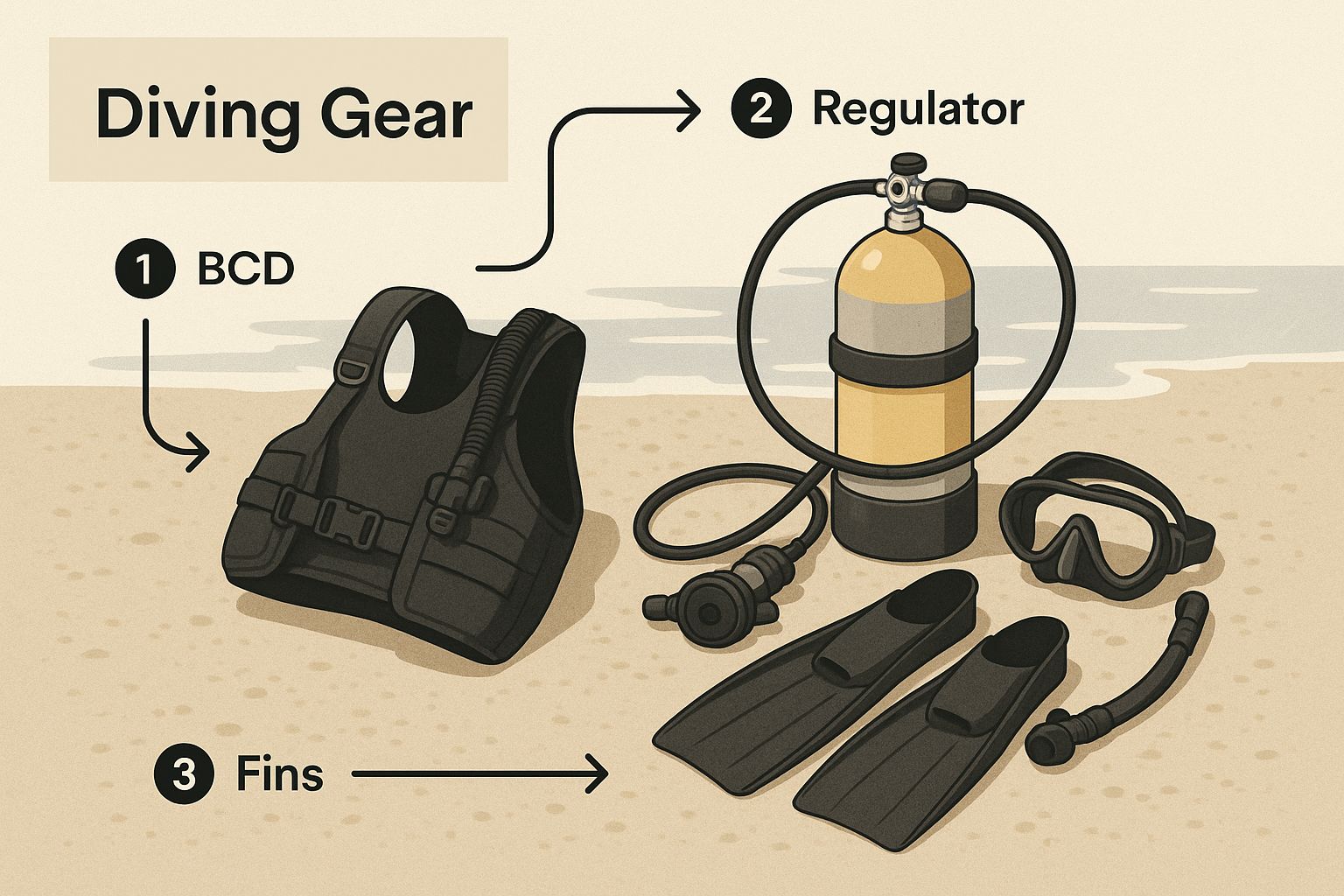
This graphic gives you a quick look at the typical gear you'll be getting to know during your course.
Seeing all the equipment laid out like this helps take the mystery out of it. You quickly realise that each piece has a specific, easy-to-understand job in keeping you safe and comfortable underwater.
Your First Certification: The Open Water Diver Course
The Open Water Diver course is the universal starting point for pretty much every new diver. Think of it as your driver's licence for the ocean. Once you pass, you're certified to dive with a buddy down to a maximum depth of 18 metres (60 feet) anywhere on the planet.
The course is cleverly designed to build your skills and confidence step-by-step, making sure you understand the theory before you even get your hair wet. It's broken down into three main parts:
Knowledge Development: This is the classroom bit where you learn all the essential principles of scuba diving. You'll cover everything from how pressure affects your body to how your gear works and vital safety procedures. Many agencies now offer this part as eLearning, which is great because you can study at your own pace before you even leave home.
Confined Water Dives: Now for the fun part! In a swimming pool or a calm, shallow bit of the sea, you'll take your very first breaths underwater. Your instructor will patiently guide you through all the core skills, like clearing water from your mask, finding your regulator if it falls out, and getting the hang of your buoyancy.
Open Water Dives: This is the grand finale. You'll head out into the ocean for four dives to put everything you've learned into practice in a real-world setting. You'll show your instructor you've mastered the skills and, most importantly, get to explore the incredible underwater environment.
At a professional and friendly dive centre like Valm Divers, instructors make sure this process is never rushed. The focus is always on your comfort and making sure you've truly mastered each skill. This kind of personalised approach is what turns learning to dive from a simple checklist into a genuine adventure.
PADI vs SSI: What's the Real Difference?
Two of the biggest names you'll see everywhere are PADI (Professional Association of Diving Instructors) and SSI (Scuba Schools International). Both certifications are recognised worldwide and follow the same high safety standards set by the World Recreational Scuba Training Council (WRSTC), but their teaching philosophies have some slight differences.
Here's a quick comparison to help you understand the subtle distinctions between these two major players.
Comparing PADI and SSI Open Water Diver Courses
Feature
PADI (Professional Association of Diving Instructors)
SSI (Scuba Schools International)
Learning Philosophy
"Prescriptive" teaching. You must master each skill before moving to the next.
"Integrated" teaching. Skills can be practised in a flexible order to suit the student's pace.
Materials
Purchased by the student and kept for life. Often includes both digital and physical options.
Materials are typically included with the course fee and accessed digitally through the SSI app.
Course Structure
Highly structured and modular. Follows a consistent, linear progression worldwide.
Offers more flexibility. Instructors can adjust the sequence of skills within the confined water sessions.
Certification
A PADI instructor can certify you directly upon completion of all course requirements.
The certification is issued through the SSI dive centre where you completed your training.
Global Recognition
Excellent. The most widely recognised certification agency in the world.
Excellent. Recognised and accepted at dive destinations across the globe.
Ultimately, choosing between them often comes down to personal preference and, more importantly, the dive centre you feel a connection with.
Some people might prefer PADI's structured, "do this, then do that" approach, while others might find SSI's more flexible, integrated style a better fit. Honestly, the quality of your instructor matters far more than the logo on your certification card. A fantastic instructor will make your diving lesson unforgettable, no matter which agency they teach for. The real key is to find a dive shop that feels right for you—a place with a solid reputation that puts safety first and has a welcoming, fun atmosphere.
Getting Comfortable with Your Scuba Gear
Your scuba equipment is basically your personal life support system, but there’s no need to feel intimidated by it. Honestly, it's better to think of it as your passport to exploring a hidden world.
A massive part of building your confidence before you even touch the water is simply getting familiar with your gear. It’s all about turning these strange new objects into reliable tools for your underwater adventures.
This process should never, ever be rushed. A top-tier dive centre—especially one like Valm Divers that puts a premium on a safe and fun learning environment—will set aside plenty of time for this crucial orientation. They get it: a comfortable diver is a safe diver. You'll handle each piece of equipment until it feels totally natural.
Breaking Down Your Dive Kit
Your instructor will walk you through every single component of your scuba unit, explaining what it does in simple, clear terms. You'll quickly realise that everything has a very logical purpose. Let’s have a look at the core pieces you’ll be using.
Mask, Snorkel, and Fins: These are your windows to the underwater world and your engine. A good, snug mask is everything for clear vision, while your fins are what will propel you through the water with surprisingly little effort.
Buoyancy Control Device (BCD): This is the inflatable jacket you'll be wearing. On the surface, you pop some air into it to float easily. Underwater, you'll make tiny little adjustments to achieve neutral buoyancy—that incredible feeling of being completely weightless.
Regulator: This is the clever bit of kit that delivers air from your tank to your mouth so you can breathe. It’s got a few parts: your main mouthpiece, an alternate air source for your buddy (often called the octopus), and a console that shows you exactly how much air you have left.
Scuba Tank: It's just a simple aluminium or steel cylinder that holds the compressed air you’ll be breathing.
Dive Computer: This little wrist-mounted gadget is your best friend underwater. It tracks your depth and dive time to keep you well within safe limits, which means no more complex calculations. You can just focus on the amazing marine life around you.
At a professional dive centre, the focus is always on hands-on practice. You won’t just hear about the gear; you’ll assemble and disassemble it yourself under expert guidance until you can practically do it with your eyes closed. This repetition builds muscle memory and, most importantly, trust in your equipment.
From Theory to Practice
The beautiful thing about learning in a place like Panglao is that your training ground is an actual paradise. Its calm, clear waters are absolutely perfect for those first few practice sessions. You won't just be learning in some sterile pool; you’ll be applying what you've learned while surrounded by the vibrant marine ecosystem that makes this island so special.
This transition from land to water is where the support from your dive centre really shines. With Valm Divers, the whole vibe is about making this a positive and empowering experience. The instructors are patient, encouraging, and completely focused on making you feel secure.
It’s this supportive atmosphere that makes it such a fantastic place to train, whether you're taking your very first breath underwater or levelling up your skills. And let's be real, the stunning surroundings of a beautiful island like Panglao just add to the magic, making every training session feel like a real dive.
Just remember, every single experienced diver out there started in the exact same place you are now—a little uncertain, maybe a bit nervous, but overwhelmingly excited. The goal isn't to become a gear expert overnight. It's about building a solid foundation of familiarity and respect for the equipment that allows you to explore the ocean safely.
Mastering the Essential Skills for Safe Diving
Once your gear starts to feel less like a strange contraption and more like a part of you, the real fun begins. This is where you swap classroom theory for in-water practice, building the muscle memory that eventually makes diving feel second nature. The whole point of a good dive course is to master these essential skills until you can do them without thinking, making you a safe and confident diver.
Your first splash will be in calm, confined water—think a swimming pool or a shallow, protected bay. It's the perfect distraction-free environment to get your technique dialled in. This is also where a supportive, fun atmosphere, a true hallmark of a great dive centre, really makes a difference.
The Core Skills Every Diver Needs
Your instructor will patiently walk you through a series of exercises that, while they might seem simple, are the fundamental building blocks for everything you'll do underwater. Each one is designed to prepare you for real-world diving scenarios.
Here are a few of the foundational skills you'll get comfortable with:
Regulator Recovery and Clearing: You'll practice what to do if your regulator gets knocked out of your mouth. It’s a simple but massive confidence booster to know you can calmly find it, give a quick puff of air to clear any water, and start breathing again.
Mask Clearing: It’s a guarantee that you'll get a little water in your mask at some point. You’ll learn the surprisingly easy trick of using the air from your nose to push the water out, all while staying totally relaxed underwater.
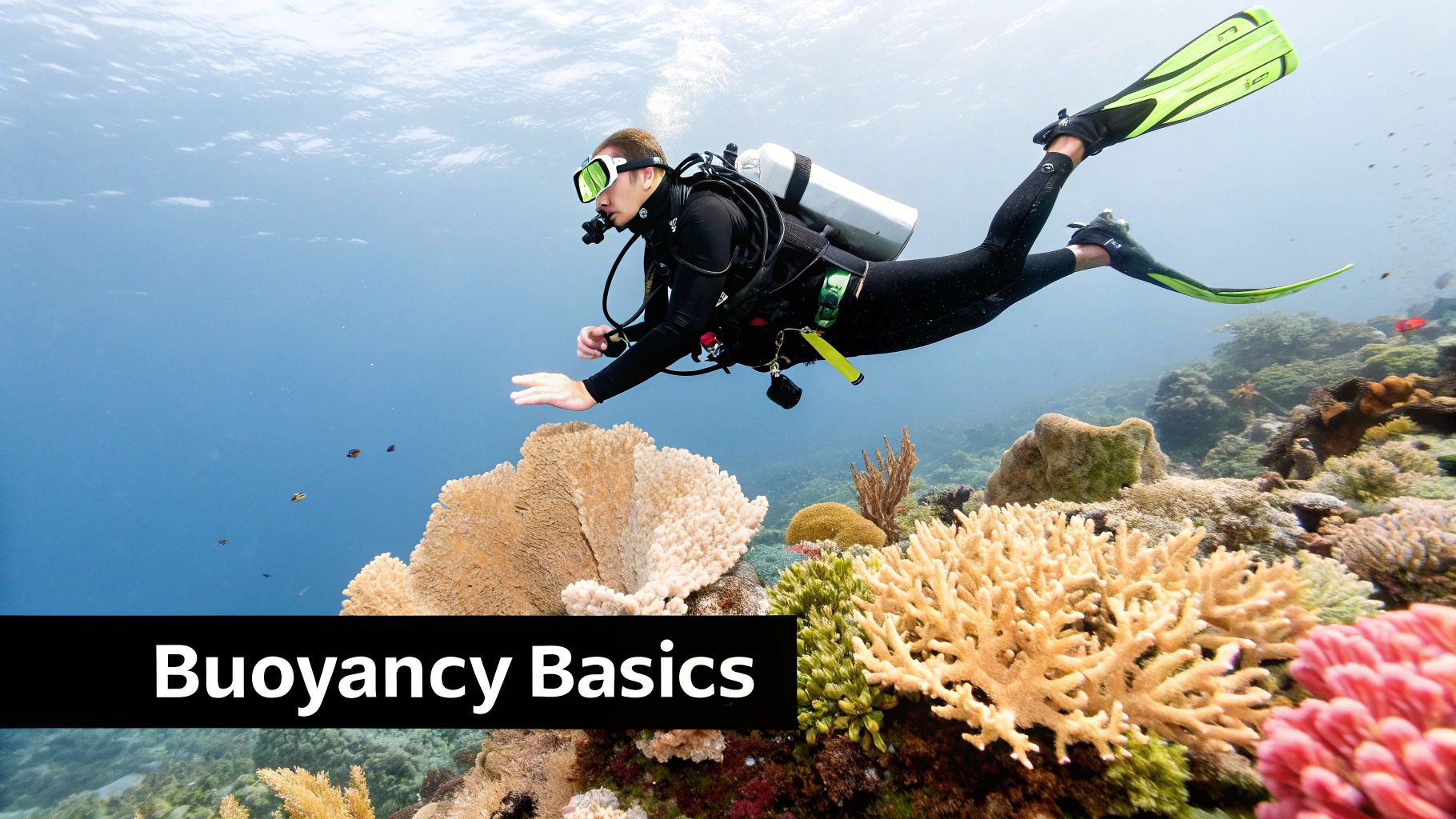
Achieving Neutral Buoyancy: This is the skill that makes you feel weightless, like an astronaut floating in space. With tiny adjustments to the air in your BCD and subtle changes in your breathing, you'll learn to hover perfectly, neither sinking nor rising. It’s the key to protecting fragile marine life and saving your energy.
Safety is the absolute top priority in scuba training. A reputable dive centre like Valm Divers nails this by creating an environment that’s as fun as it is safe. Their instructors get that true confidence comes from calm, repeated practice, not from being rushed through a skills checklist.
Buddy System and Safety Procedures
Diving is a team sport, and your dive buddy is the most important piece of gear you'll ever have. A huge part of your training is focused on teamwork and learning how to look out for each other.
The most critical exercise you'll practice is the alternate air source drill. This is where you learn to share air with your buddy in a simulated "out of air" situation. Practising this until it’s smooth and automatic takes all the panic out of the equation. You'll know exactly what to do to help your buddy, or how to signal for help yourself, building a powerful sense of mutual trust.
Applying Your Skills in Paradise
That moment when you move from the training pool to the open ocean is unforgettable. It’s where all the practice clicks into place and you see how these skills work in a living, breathing environment.
For anyone learning to dive in Panglao, this step is nothing short of spectacular. The island is surrounded by beautiful, crystal-clear water that makes your first ocean dives feel less like a test and more like a private tour of a giant aquarium. You might be practising your buoyancy control as a curious turtle glides by, or clearing your mask with a vibrant coral reef just metres below you. It's an incredible way to lock in your training.
You can get a little preview of the stunning underwater world waiting for you in this beautiful image of a Panglao dive site, which perfectly captures what makes this area a diver's dream.
This blend of practical training in a real-world setting is also why Panglao is such an amazing place to train as a scuba diving professional. The variety of dive sites and conditions creates the perfect natural classroom for anyone looking to take their skills to the next level, whether that’s advanced diver or all the way to instructor. It’s this seamless mix of structured learning and incredible exploration that makes the whole experience so effective and so much fun.
What Comes After Your Open Water Certification
Earning your Open Water Diver certification is an incredible achievement, but trust me, it’s really just the first page in a much larger adventure log. That card in your wallet is a global passport to exploration, opening up a world of possibilities that go far beyond your initial training dives. This is where your journey truly begins, moving from learning the basics to choosing your own underwater path.
So many new divers get hooked immediately and ask, "What's next?" The answer is simple: keep diving! Continuing your education isn't about sitting in a classroom; it's about gaining more in-water experience under the guidance of a professional. This next step is all about deepening your skills, building rock-solid confidence, and safely exploring new types of diving environments.
Broadening Your Horizons With Advanced Courses
The most logical and exciting next step is the Advanced Open Water Diver course. It’s designed to be taken right after your initial certification and focuses almost entirely on expanding your real-world experience. Less theory, more diving. You’ll complete five different "adventure dives," each one giving you a taste of a different diving speciality.
Two of these dives are non-negotiable and for good reason:
Deep Dive: You'll learn the proper procedures for diving deeper, typically to a maximum of 30 metres (100 feet). This alone opens up a whole new range of incredible dive sites that were previously off-limits.
Underwater Navigation: This is where you really boost your confidence. You'll master using a compass and natural landmarks to find your way around underwater, a skill that transforms you from a follower into a self-sufficient explorer.
For the other three dives, you get to pick from a menu of options based on what gets you excited. It could be anything from underwater photography to wreck diving or absolutely perfecting your buoyancy control. It's a fantastic way to discover what parts of diving you're most passionate about.
This is precisely why a location like the beautiful island of Panglao is such a perfect place for continuing education. The sheer variety of dive sites—from stunning walls and vibrant reefs to fascinating macro critter habitats—provides the ideal natural classroom for these adventure dives.
Turning Your Passion Into a Profession
For some, diving becomes more than just a hobby; it becomes a calling. If you find yourself dreaming of trading your office desk for the ocean, there's a well-defined path to becoming a scuba diving professional. It's a journey that's as rewarding as it is challenging, and it all starts with building up that dive log.
The professional ladder typically looks like this:
Rescue Diver: Ask any seasoned diver, and they’ll likely tell you this was the most demanding but also the most rewarding course they ever took. It completely shifts your focus from yourself to the safety and well-being of other divers. You learn to prevent and manage dive emergencies, making you a far more capable and confident buddy.
Divemaster: This is the first professional rung on the ladder. As a Divemaster, you become a leader who can supervise dive activities and assist instructors with student divers. It's a role where you hone your skills to an expert level and get to share your love for the underwater world with others every single day.
Instructor: This is it—the chance to be the person who opens up the underwater world for new divers. As an instructor, you teach everything from beginner courses to specialities, passing on your passion to the next generation.
Choosing the right place to take these steps is crucial. You want a supportive environment with experienced mentors. At a dive centre like Valm Divers, the focus is on creating a safe and fun atmosphere not just for beginners, but for aspiring pros as well. Because of this, this is also a good place to train as a scuba diving professional, offering a clear and encouraging path right in the heart of a world-class diving destination. You can see the kind of supportive environment Valm provides in this image from one of their diving courses.
The economic impact of dive tourism is huge for the Philippines, especially in hubs like Batangas and Oriental Mindoro. It's a testament to the sport's appeal that at the 2025 Asia Dive Expo, Philippine dive businesses secured an impressive PHP 151.8 million in sales leads. This incredible growth shows that learning to dive often sparks a long-term passion, bringing people back again and again for advanced training. Discover more insights about the Philippine dive tourism industry's impressive growth.
Got Questions About Learning to Dive?
Look, even with all the excitement bubbling up, it's totally normal to have a few questions before taking the plunge. Every single diver out there—even the pros with thousands of dives under their belts—started with the same thoughts you're having right now.
Let's clear the air on some of the most common worries so you can feel 100% ready to go.
Do I Need to Be an Olympic Swimmer?
This is probably the biggest myth in diving. No, you absolutely do not need to be Michael Phelps. You just need to be comfortable in the water.
Your certification course will have a basic water skills check. This usually means a short, untimed swim and being able to float or tread water for about 10 minutes. The point isn't speed; it's just to make sure you can handle yourself calmly in the water. Besides, your BCD (Buoyancy Control Device) lets you float on the surface with zero effort, and your fins will give you all the power you need underwater.
What If I Have a Medical Condition?
Safety is everything in scuba diving. It's the absolute number one priority. Before your course starts, you'll fill out a standard medical questionnaire. It’s a simple form that flags conditions that might be risky underwater, like certain heart or respiratory issues.
Answering "yes" to a question doesn't automatically mean you can't dive. It just means you'll need a quick visit to your doctor to get a signature clearing you for diving. Be honest on this form—it’s all about making sure your underwater adventure is as safe as it is fun.
Is It Hard to Equalise My Ears?
You've probably felt that pressure in your ears on an aeroplane or driving up a mountain, right? It's the same thing underwater, but the pressure changes happen much faster as you descend.
Learning to equalise is one of the very first things your instructor will teach you before you even get your head wet. It's a simple trick, usually just pinching your nose and blowing out gently.
The golden rule of equalising is simple: do it early and do it often. Never force it, and stop your descent immediately if you feel any pain. A good instructor will take you down slowly, giving you plenty of time to equalise comfortably all the way.
How Do I Overcome Feeling Anxious?
It's completely normal to feel a mix of nerves and pure excitement before your first dive. Breathing underwater for the first time is a sensation unlike any other! A professional, friendly dive centre that focuses on creating a safe and fun environment, like we do here at Valm Divers, is an expert at helping you manage those jitters.
Our instructors are trained to build a calm, supportive space. They break down every skill into small, easy-to-manage steps so you never feel overwhelmed. You’ll practise everything in shallow water until it feels like second nature. This focus on building comfort and confidence is what turns those first-time nerves into pure joy.
This supportive culture is also what makes this a good place to train as a scuba diving professional. The mentorship and positive vibes help build the leadership skills you need to guide new, anxious divers with patience and empathy. And honestly, what better place to build that experience than in the beautiful waters of Panglao? This stunning island is the perfect, serene backdrop for overcoming any hesitation and falling completely in love with the world beneath the waves.
Ready to start your own underwater adventure in paradise? At Valm Divers, we're all about sharing the magic of the ocean in a safe, fun, and supportive way. Join us on the stunning shores of Panglao and discover a whole new world. Book your dive course with Valm Divers today!
We are the premier boutique dive shop located right on the stunning Alona Beach in Panglao, Bohol, offering fun-dives, trips, and excursions as well as SSI scuba dive courses from introductory and novice levels up to professional level divemaster and instructor.