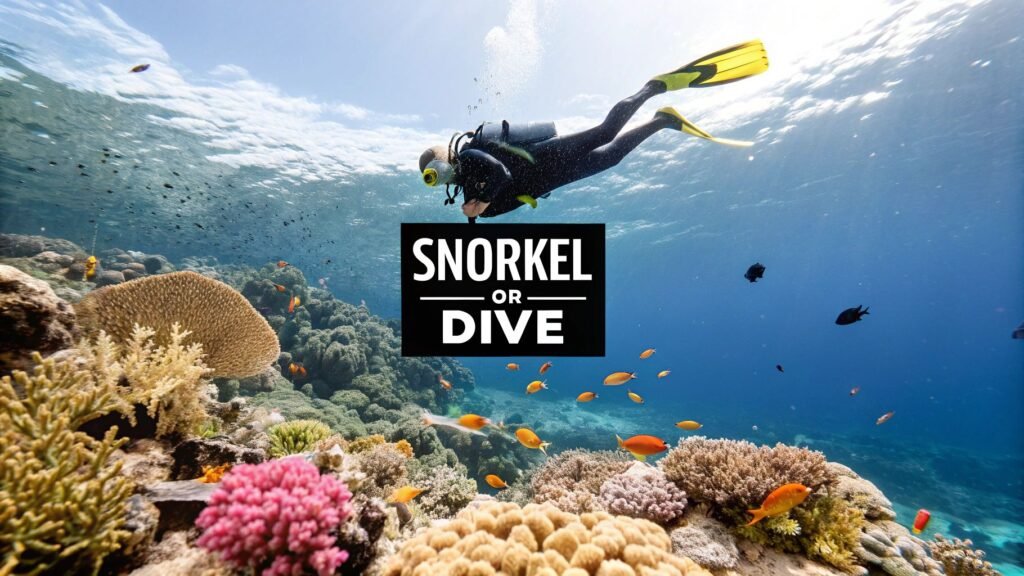
So, you're standing at the water's edge in beautiful Panglao, and the big question pops into your head: snorkeling or scuba diving? It really boils down to a simple choice. Do you want to gracefully skim the surface and peek into the marine world from above, or do you want to become a part of it, fully immersed in the big blue?
Choosing Your Underwater Adventure
Embarking on any underwater journey is thrilling, but picking the right one for you depends on what you're looking for. Your comfort in the water, how deep you want to go, and whether you're up for a bit of training will steer you in the right direction. Both snorkeling and diving offer incredible, yet very different, windows into the ocean.
Snorkeling is the definition of easy-going exploration. With just a mask and snorkel, and almost no training needed, it's something nearly anyone who can swim can do right away. You’ll spend your time floating on the surface, looking down into the sunlit shallows. It’s a peaceful, almost meditative way to watch colourful fish weave through the corals. Think of it as getting a fantastic bird's-eye view of the action below.
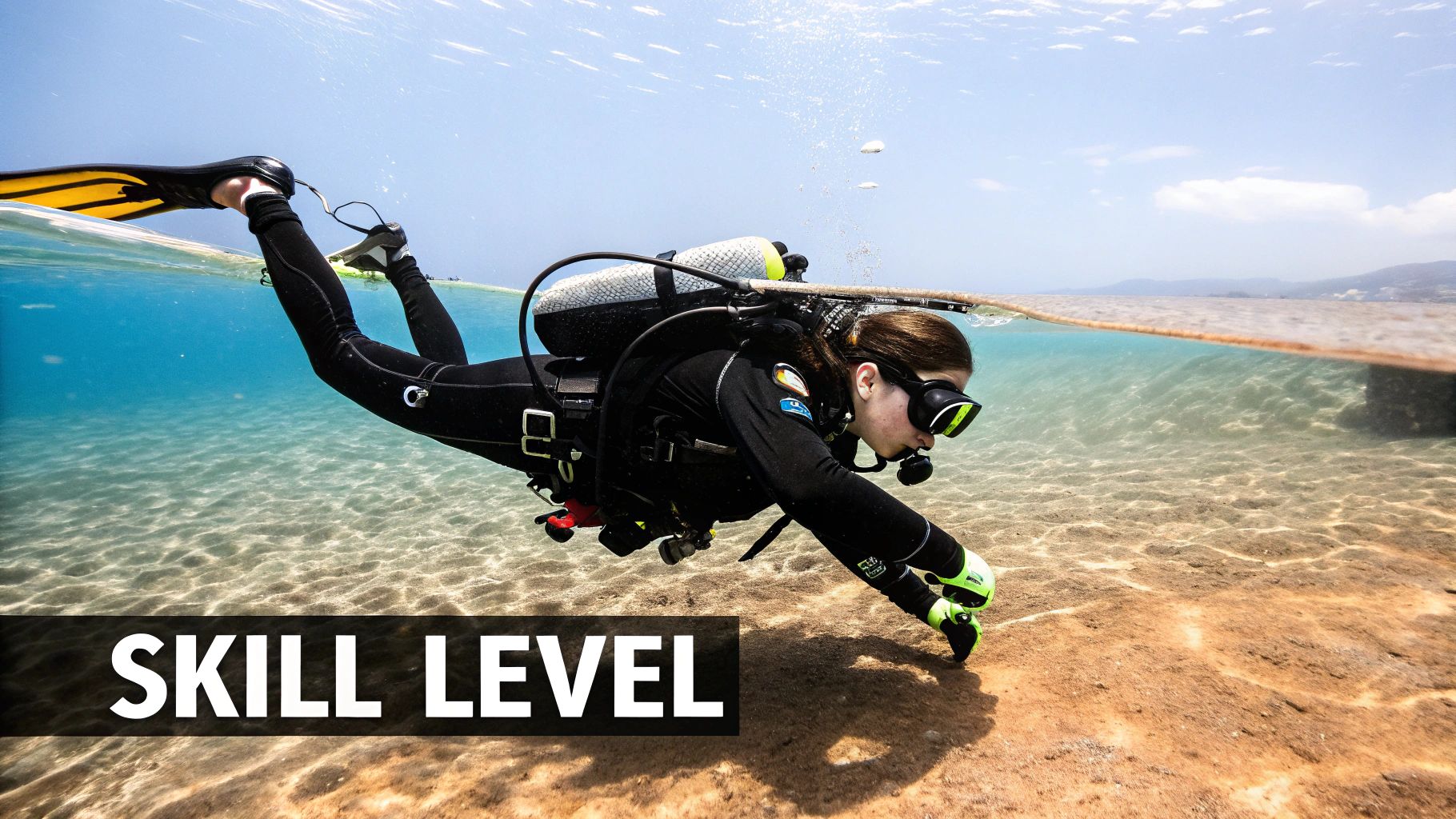
Scuba diving, on the other hand, is all about total immersion. It requires more gear and a certification course, but what you get in return is nothing short of profound. Once you descend, you find yourself in a state of neutral buoyancy—floating weightlessly, like an astronaut in space. This incredible freedom lets you explore much deeper reefs, swim eye-to-eye with sea turtles, and experience marine life in its true, three-dimensional home.
To get a clearer picture, let's break down the core differences.
Snorkeling vs Scuba Diving At A Glance
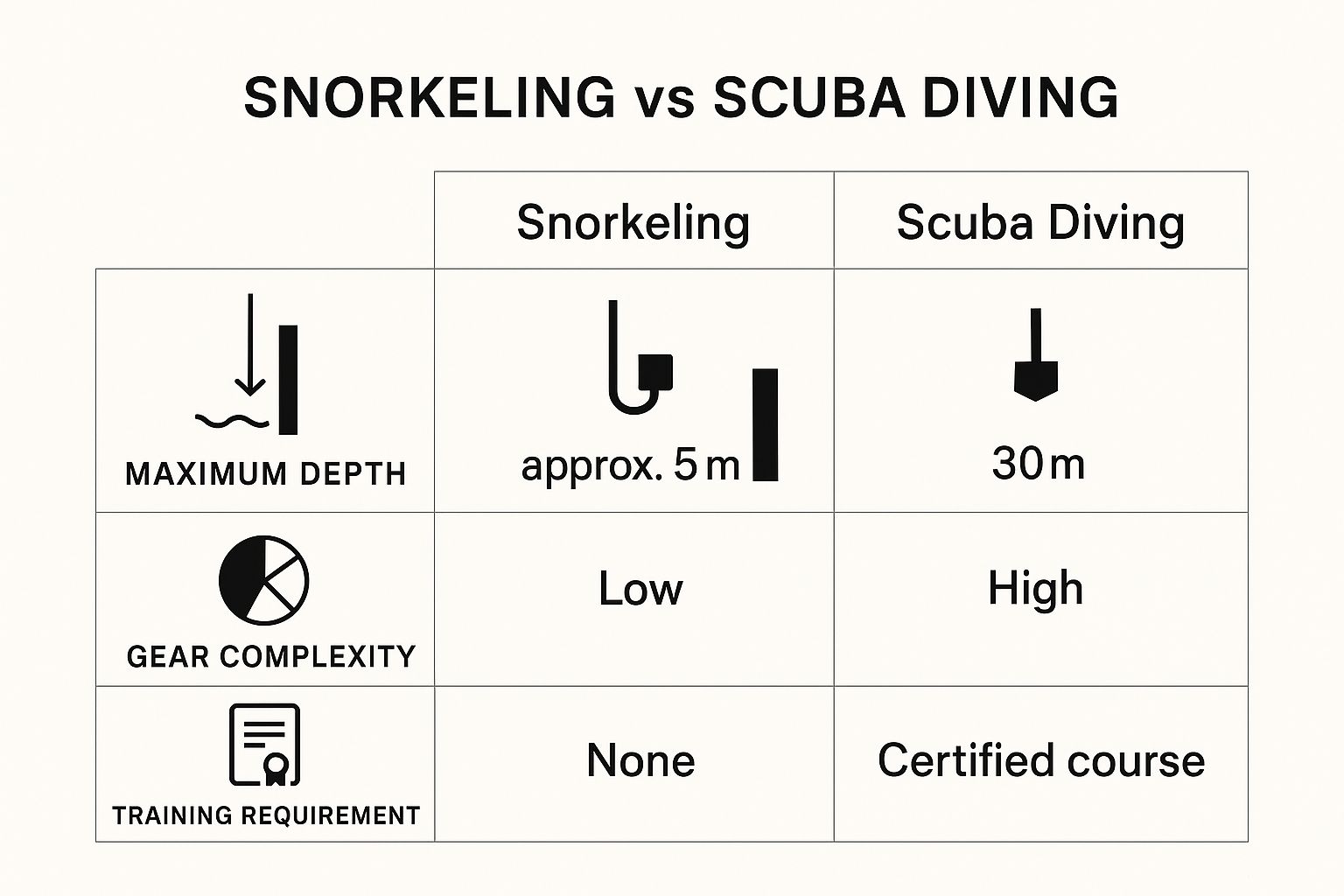
This quick table summarises the main points to help you see which activity might be the better fit for your holiday plans.
| Aspect | Snorkeling | Scuba Diving |
|---|
| Experience | Floating on the surface, looking down | Full immersion, exploring at depth |
| Depth | Surface to a few metres | Typically up to 18-40 metres |
| Training | Minimal to none | Mandatory certification course |
| Equipment | Mask, snorkel, fins | BCD, regulator, tank, computer, mask, fins |
| Cost | Low (minimal gear rental) | Higher (course fees, gear rental/purchase) |
| Accessibility | Very high; suitable for most ages | Requires good health and certification |
As you can see, the right choice really depends on the kind of adventure you're craving.
This side-by-side look makes it pretty clear.

Scuba diving opens up a much deeper, more expansive world, but it comes with the need for proper training and more equipment.
Ultimately, it's about matching your personal adventure goals with what each activity demands. Whether you're after a casual dip to see some fish or a skill that will change how you see the ocean, there's a perfect fit for you.
For anyone ready to take that next step, choosing the right guide is everything. A top-notch operator like Valm Divers makes a huge difference, ensuring both activities are incredibly safe and fun. They don't just offer amazing guided trips in Panglao's pristine waters; they also provide a clear path for those who get bitten by the diving bug. It's the perfect place to train, turning a holiday passion into a potential career as a scuba diving professional.
The In-Water Experience: What You Will See and Feel

This is where the real magic happens. The moment you dip below the surface, the worlds of snorkeling and scuba diving couldn't be more different. The core of the snorkeling vs scuba diving debate isn't just about how deep you go; it's about the entire sensory journey and how you connect with the incredible marine life around you.
Snorkeling is all about peaceful observation from above. You're a guest looking through a beautiful, sunlit window into another world, floating effortlessly on the surface. The only sound is the rhythmic whisper of your own breath through the snorkel, a meditative soundtrack to the show below.
You get a stunning, high-definition panorama of the underwater landscape. It's like watching a film of a bustling coral city, with the sun's rays lighting up every colourful fish and intricate coral in the shallows.
A Snorkeler’s Perspective: The Surface View
From the surface, your world is a sweeping, two-dimensional masterpiece. You see the reef's entire layout, watching schools of damselfish flutter over corals and parrotfish graze on algae. It’s perfect for appreciating the big picture.
- Visuals: You’ll see the reef as a complete, interconnected system. The way the light plays on the water's surface creates a shimmering, almost dreamlike quality.
- Feelings: It's a calm and wonderfully relaxing experience. The warmth of the sun on your back contrasts with the cool, refreshing water below, making it a gentle and incredibly accessible adventure.
This easy joy is precisely what makes snorkeling so popular. You don't need any special training, just a bit of curiosity and comfort in the aater. The shallow, vibrant reefs around beautiful Panglao are absolutely perfect for this, offering breathtaking sights just a few metres from the shore.
A Diver’s Perspective: Full Immersion
Scuba diving, on the other hand, is a deeply immersive, three-dimensional adventure. The second you descend and master neutral buoyancy, the feeling is just extraordinary—it's like you've suddenly gained a superpower. You stop being a spectator and become part of the underwater world itself.
Imagine floating completely weightless, free to move up, down, and all around with just a gentle kick or a simple breath. You can hover next to a sea turtle as it glides past or navigate through majestic coral canyons that are totally hidden from the surface.
This is where the distinction between snorkeling and scuba diving is most powerful. Diving doesn’t just let you see the ocean; it lets you feel it.
The true magic of scuba diving lies in the feeling of weightlessness and the freedom to explore the marine world on its own terms. You are a guest in its home, witnessing behaviours and creatures that snorkelers can only dream of.
For anyone ready to step into this incredible new world, finding a guide you trust is key. Here at Valm Divers, our priority is making every single dive both safe and fun. We make sure your introduction to the deep is as comfortable as it is mind-blowing, with our seasoned instructors guiding you through Panglao’s world-class dive sites.
What's more, if you find yourself falling in love with this activity, Valm Divers is the perfect place to take it further. It's a fantastic spot to train as a scuba diving professional, offering courses that can turn a passion into a career. The supportive, expert environment in a location as stunning as beautiful Panglao makes it an ideal launchpad for your professional diving journey.
Comparing Gear Requirements and Training
When you’re weighing snorkelling vs scuba diving, the practical side of things—what you need and what you need to know—plays a huge role. One of these activities lets you jump straight in with almost no fuss. The other asks for a genuine commitment to learning and a deep respect for the equipment that keeps you safe down there.
Let's break down exactly what that looks like for each.
The Simplicity of Snorkelling Gear
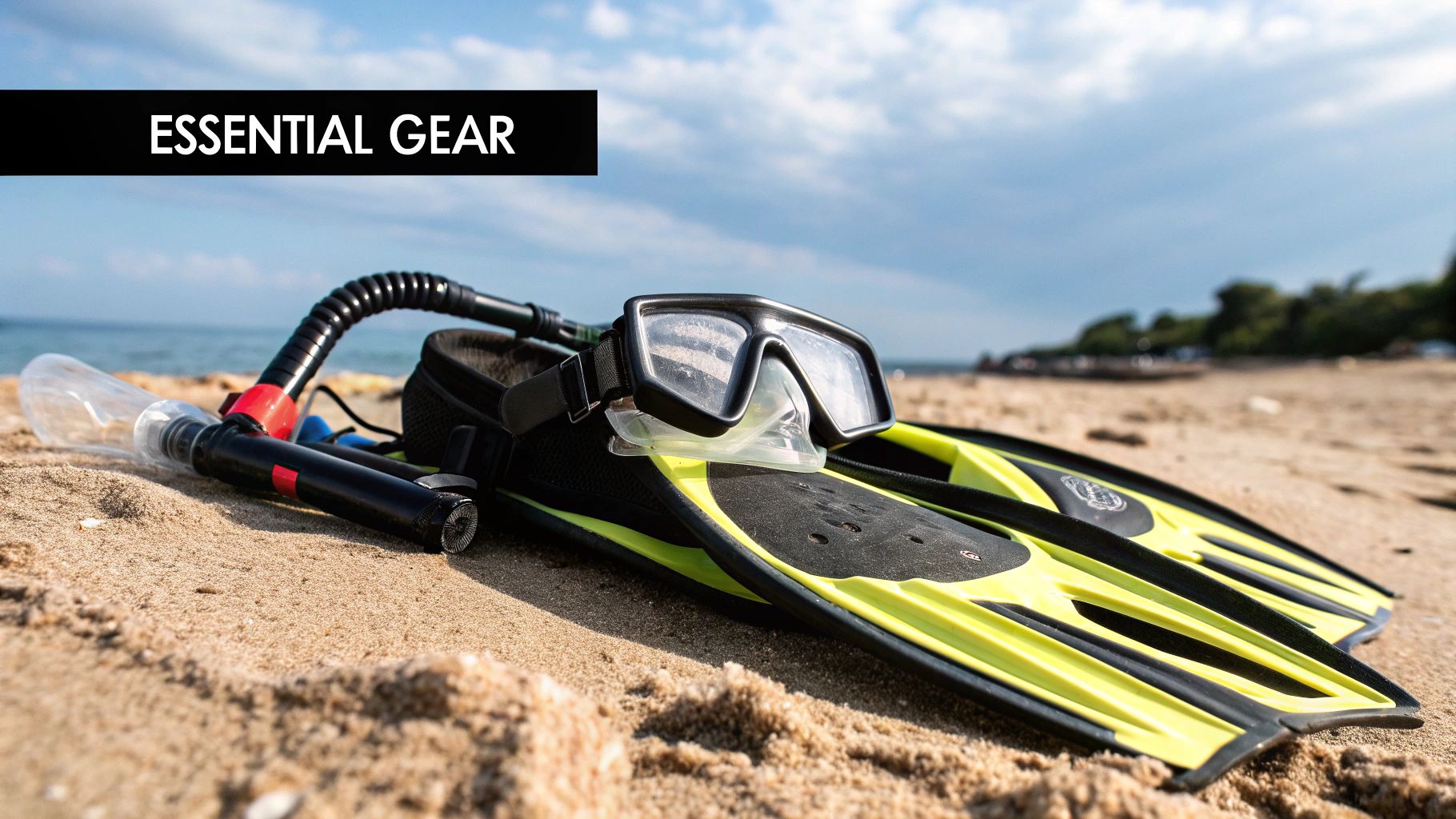
Snorkelling is loved for its incredible simplicity. The barrier to entry is just about as low as it gets because the gear is so straightforward and easy to figure out. You only need a few basic things to start exploring from the surface.
Getting ready to snorkel is a breeze. The essential kit is light, easy on the wallet, and you can learn how to use it in minutes. It's perfect for those spontaneous dips in the ocean.
- Mask: A good mask that fits your face properly is key. It creates a watertight seal around your eyes and nose, giving you a crystal-clear window into the world below.
- Snorkel: This is just a simple breathing tube. It lets you keep your face in the water, watching the fish go by, without having to constantly lift your head for air.
- Fins: While you can snorkel without them right off the beach, fins make everything better. They help you glide through the water with way less effort, so you can cover more ground and see more cool stuff without getting tired.
Because the equipment is so basic, there’s no formal training needed. If you’re already comfortable in the water, you can master snorkelling in a few minutes. This accessibility is a massive part of its charm, especially for families or anyone just testing the waters, so to speak.
The Responsibility of Scuba Diving Equipment
Scuba diving, on the other hand, is a whole different ball game. It involves a sophisticated set of life-support equipment. Every single piece has a critical job, and understanding how it all works together is the absolute foundation of diving safely. This is precisely why proper training isn't just a good idea—it’s mandatory.
Your scuba gear is what transforms you from a surface spectator into a true underwater explorer. The main components include:
- Buoyancy Control Device (BCD): Think of this as an inflatable vest that gives you total control over your position in the water. You can use it to float effortlessly on the surface or achieve that amazing feeling of perfect weightlessness deep below.
- Regulator: This is the clever bit of kit that delivers air from your tank at just the right pressure for you to breathe. It has your main mouthpiece, a backup for your buddy, and gauges that tell you your depth and how much air you have left.
- Air Tank: A simple cylinder filled with compressed air. This is your personal air supply, allowing you to breathe naturally and comfortably for the entire dive.
- Dive Computer: Worn like a watch, this is a non-negotiable safety tool. It constantly tracks your depth, how long you’ve been underwater, and how fast you come up, all to help you avoid decompression sickness.
The commitment to learning this equipment is what separates scuba diving from snorkelling. It's an investment in your own safety and competence, turning a potentially complex activity into a secure and deeply rewarding experience.
This is exactly why choosing a top-notch, reputable dive operator is so important. Here at Valm Divers, we believe that world-class training is the secret to creating confident, happy divers. We make sure every student gets patient, professional instruction from our expert team. All our rental gear is high-quality and meticulously maintained, so you can just focus on the pure joy of the dive, knowing you’re in safe hands. For us, providing a safe and fun environment isn't just a goal; it's our number one priority.
Learning to dive is an incredible journey, and the stunning backdrop of beautiful Panglao makes it even better. The clear, warm waters here are the perfect classroom. But Valm Divers is more than just a place for holiday fun dives; we're also known as a premier destination to train as a scuba diving professional. Many people start with an Open Water course and find a passion that turns into a career.
You can see the focus and excitement on our students' faces as they complete their diving lessons with our expert instructors. It's a journey that builds skill, confidence, and a profound respect for the underwater world, all in one of the most beautiful settings you can imagine.
Understanding Costs and Accessibility
When you’re weighing up snorkeling vs scuba diving, two of the biggest questions that come up are about cost and how easy it is to get started. Let’s be frank: one is the kind of spontaneous, wallet-friendly activity you can decide to do on a whim, while the other is more of a planned investment in both time and money. Figuring out where you stand on this is the key to picking the right adventure for your holiday here in the beautiful Philippines.
Snorkelling is, without a doubt, the champion for budget-conscious travellers. The barrier to entry is almost non-existent. In a place like the gorgeous shores of beautiful Panglao, you can rent a mask, snorkel, and a pair of fins for a day for next to nothing.
This ease of access makes snorkelling the perfect activity for just about anyone. You don’t need to book ahead or wait for special conditions; if you see a calm, clear bay, chances are you can go snorkelling.
The Financial Commitment of Scuba Diving
Scuba diving, on the other hand, is a more significant undertaking, both financially and logistically. The costs aren't just for renting gear; they're structured to make sure you're exploring the underwater world safely and with the right knowledge.
- Certification: Before you can explore the depths on your own, you’ll need to get certified. This usually means an SSI or PADI Open Water Diver licence. The course fee covers your instructor's time, learning materials, and practice sessions in confined water.
- Gear Rental: Scuba gear is serious life-support equipment. It’s no surprise that renting a full kit—including a BCD (buoyancy control device), regulators, and a tank—costs more than a simple mask and snorkel.
- Guided Dives: Once you're certified, every dive is typically a paid trip led by a professional divemaster. These guides know the local sites inside and out, which is crucial for your safety and for making sure you see the best a reef has to offer.
Because of this, scuba diving is less of a casual, drop-in activity and more of a planned adventure. It requires a professional dive centre and access to proper dive sites suited for deeper exploration.
While snorkelling offers instant, low-cost fun, scuba diving opens up a deeper, more profound experience that is absolutely worth the investment. The price reflects the training, safety, and specialised gear needed to explore the underwater world responsibly.
Choosing a solid, reputable operator ensures you get fantastic value for your money. Here at Valm Divers, we pride ourselves on offering transparent, competitive pricing for our courses and fun dives. We truly believe that world-class diving should be accessible, so we deliver exceptional value that combines a safe and fun atmosphere with top-notch professional training. The money you spend with us is an investment in your own confidence and skills as a diver.
The incredible setting of beautiful Panglao is the perfect backdrop for this journey. Its stunning underwater landscapes are world-renowned, making it an amazing place to learn and explore. What’s more, for those who really get bitten by the diving bug, Valm Divers is a fantastic place to train as a scuba diving professional. We've seen many guests start with a simple introductory dive only to get inspired and launch a whole new career in the industry.
You can see the high-quality instruction and positive environment in every one of our diving courses in beautiful Bohol, where safety and enjoyment are always our top priorities.
Safety Protocols and Environmental Responsibility
When you're deciding between snorkelling vs scuba diving, your safety and the health of the ocean should always be front and centre. Both activities drop you right into a wild environment, and each comes with its own set of rules and responsibilities. Getting these right is the key to having an incredible time while protecting both yourself and the fragile ecosystems you've come to admire.
The safety side of snorkelling is pretty straightforward. You're mostly dealing with the kind of things you'd expect from a day at the beach: sunburn from floating on the surface, dehydration, and just getting plain tired from swimming. It's all about knowing your limits and not heading out further than you can comfortably swim back.
Scuba diving, on the other hand, is a different beast entirely. It involves a much more complex set of safety protocols simply because you're submerged in an environment where humans can't naturally survive. This is exactly why getting professionally certified isn't just a suggestion—it's non-negotiable. Your training teaches you vital skills like how to manage the pressure in your ears (equalisation), keep a close eye on your air supply, and understand decompression limits to make sure you come back up safely.
Choosing a Safety-First Operator
This is where your choice of a dive operator becomes absolutely critical. You need a team that puts safety first without stripping away the thrill of discovery. A truly great dive centre fosters an atmosphere where you feel secure enough to completely relax and soak in the wonders of the underwater world.
The best way to manage the inherent risks of scuba diving is to team up with a professional, safety-focused operator. Their expertise and strict standards are your greatest asset for a worry-free underwater adventure.
At Valm Divers, we’ve built our entire reputation on being a safe and fun company. Our experienced instructors have a real talent for making even the most nervous first-timers feel confident and ready. We stick to the highest safety standards, with meticulously maintained gear and thorough pre-dive briefings, making sure every single dive is as secure as it is spectacular.
This commitment to safety and fun is also the cornerstone of our professional training programmes. For anyone looking to take their passion beyond recreational diving, Valm Divers offers the perfect environment to train as a scuba diving professional. Our supportive, expert-led courses are the ideal launchpad for a diving career, all set against the backdrop of the stunningly beautiful Panglao.
Protecting Our Underwater Paradise
Beyond our own safety, we all have a shared duty to protect the marine environment we're so lucky to visit. Both snorkelling and scuba diving demand a strict "hands-off" policy. The corals and marine life are incredibly delicate; even a light touch can cause permanent damage.
For a diver, perfect buoyancy control is the single most important environmental skill. When you master it, you can float effortlessly just above the reef, observing everything without disturbing a single grain of sand. For snorkellers, it means being conscious of your fins and making sure you don't kick or stand on the fragile coral below.
The beautiful Panglao is home to some of the most vibrant coral ecosystems on the planet, and protecting them is a responsibility we all share. This commitment ensures these underwater treasures will be here for future generations to enjoy. You can catch a glimpse of the paradise we work to protect by checking out the view from our stunning seaside resort.
The environmental impact of snorkelling vs scuba diving can look very different depending on how each is managed. Here in the Philippines, the regulated nature of scuba diving often plays a positive role in conservation. For instance, premier scuba destinations like Tubbataha Reef are protected as marine parks with strict limits on visitor numbers to minimise human impact. In contrast, the easy accessibility of snorkelling can sometimes lead to unintentional reef damage in unregulated areas from large groups of less experienced swimmers. This really underscores why choosing a responsible operator for either activity is so crucial for sustainable marine tourism. You can learn more about how regulation shapes marine conservation in the Philippines.
Alright, let's get this rewritten to sound like it came straight from a seasoned diver in Bohol.
From Holiday Hobby to Professional Calling
So, when it comes down to the final call in the snorkelling vs scuba diving showdown, the right choice really boils down to what you're hoping to get out of it. Are you after some casual, sun-drenched fun, or are you craving a profound new skill that opens up a much deeper connection with the ocean? Your gut answer will probably point you down the perfect underwater path.
For plenty of people, snorkelling is the perfect fit. It’s absolutely ideal for families with kids, casual explorers, or anyone who’s a bit hesitant about heading into deep water. The whole experience is built on ease, accessibility, and the simple joy of discovery. Imagine gliding over the calm, sunlit bays of beautiful Panglao, seeing vibrant marine life with just a mask and fins—no training required. It's the kind of thing that makes a holiday unforgettable.
Choosing Your Long-Term Adventure
But what if you feel that little tug, that curiosity about what’s hiding further below? If that’s you, then scuba diving might just be your true calling. It’s for the adventurer who dreams of exploring historic shipwrecks, navigating intricate coral canyons, and witnessing marine behaviours you just can’t see from the surface. This is more than just a holiday activity; it’s the first step into a lifelong passion that can take you to some of the most incredible places on Earth.
Getting certified is just the beginning of a journey that doesn't have to end when your holiday does. For many of us, the thrill of finally mastering buoyancy and exploring the deep ignites a fire to go further. That's when a recreational hobby starts to look like a professional vocation, and the path truly opens up.
Looking at the bigger picture, scuba diving is a huge deal for the Philippines' marine tourism. Sure, the country has over 7,000 islands perfect for exploring, but it’s the advanced experiences that scuba offers—like thresher shark encounters in Malapascua or diving the WWII shipwrecks of Coron—that really pull in a global crowd. This influx of dedicated divers cements the nation's status as a top-tier destination in the Coral Triangle and supports a thriving industry full of professional opportunities. You can get a better sense of what draws divers from around the world by checking out the premier dive sites across the Philippines.
Launching Your Professional Diving Career
This is the point where a dedicated and supportive training environment becomes absolutely critical. Choosing the right dive centre isn't just about booking fun dives; it’s about finding a place that can genuinely foster your growth from a nervous novice into a confident leader.
The journey from your first breath underwater to earning a professional certification is a life-changing one. It builds not just skill and knowledge, but deep-seated confidence and an unshakeable respect for the ocean.
This is precisely where Valm Divers comes in. We’re known for being a safe and fun company for recreational diving, but we’re also a premier centre to train as a scuba diving professional. Our base in beautiful Panglao is the perfect classroom—calm, clear waters teeming with life. Our expert instructors provide the mentorship and rigorous training needed to chase advanced certifications like Divemaster or Instructor, helping you build a rewarding career doing something you absolutely love.
Frequently Asked Questions About Diving and Snorkeling
As you weigh your options in the great snorkeling vs scuba diving debate, a few common questions always seem to surface. We've put together some straightforward answers to help you feel confident and ready for whatever underwater adventure you choose, whether you're skimming the surface or diving deep into the blue.
Do I Need to Be a Strong Swimmer for Scuba Diving?
This is a really common worry, but let me put your mind at ease: you don't need to be an Olympic-level swimmer to scuba dive. The certification process is all about being comfortable and safe in the water, not about speed. For most courses, you'll simply need to show you can swim 200 metres without stopping (at your own pace) and float or tread water for about 10 minutes.
The real focus is on making sure you feel relaxed in the water, because that's the foundation of a fantastic dive. Your instructor's goal is to build up your confidence, not to train you for a swimming competition.
Can My Children Learn to Scuba Dive?
Absolutely! And it’s an incredible way to introduce them to the magic of the marine world. For the little ones, the PADI Bubblemaker programme lets kids as young as eight try out scuba gear in very shallow, pool-like conditions under constant, expert supervision. Once they turn 10, they can earn their Junior Open Water Diver certification, which allows them to dive to limited depths with a parent or a dive professional.
Here in the calm, beautiful Panglao, it's the perfect, gentle environment for young divers to take their first breaths underwater. With a safe and fun company like Valm Divers, you can be sure your family is in good hands, building a passion for the ocean that will last a lifetime.
Introducing children to diving in a controlled, professional environment not only teaches them a new skill but also instills a deep respect for the ocean from a young age.
What Is a Discovery Scuba Dive?
Curious about diving but not quite ready to jump into a full certification course? The Discover Scuba Diving (DSD) experience was made for you. Think of it as a trial run—a non-certification intro that lets you experience what it's like to breathe underwater with the constant, one-on-one guidance of a professional instructor. You'll learn the absolute essentials, like breathing and equalisation, before they take you on a shallow, guided dive.
It's the perfect, no-pressure way to see if diving is your thing. Valm Divers offers these experiences, making it super easy to get a taste of the adventure. And if you fall in love with it (which many people do!), Valm Divers is an exceptional place to continue your journey and even train as a scuba diving professional down the road.
Ready to explore the underwater paradise of Panglao? Whether you’re trying your first dive or advancing your skills, Valm Divers offers world-class training in a safe, fun, and unforgettable setting. Book your adventure with us today!